
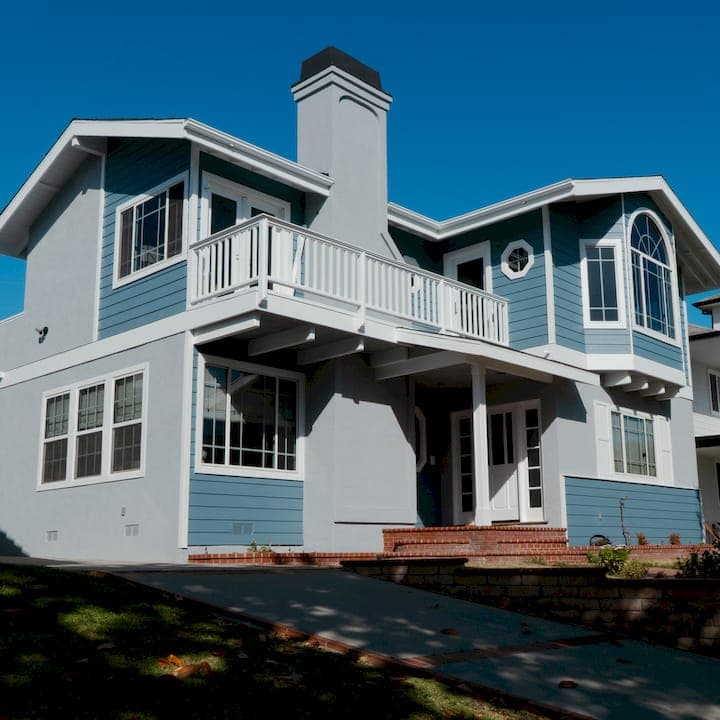
Most South Bay homeowners think about repainting when the color looks faded or the walls feel outdated. That instinct isn’t wrong, but it barely scratches the surface of what a fresh coat of paint actually does for your home. Repainting is one of the highest-return upgrades you can make, protecting your surfaces from coastal weather, signaling care to potential buyers, and adding measurable value to your property. This article breaks down the real reasons to repaint, what the numbers say about ROI, how to time and plan your project, and when to trust a pro versus roll up your sleeves.
Table of Contents
Key Takeaways
| Point | Details |
|---|---|
| Boost curb appeal | Repainting instantly refreshes your home’s look and creates a positive impression for visitors and buyers. |
| Increase home value | Fresh paint can raise your property sale price by 2–5% and signal good maintenance to buyers. |
| Prevent damage | Regular repainting protects your home’s exterior from weather, wear, and costly repairs. |
| Choose quality materials | Investing in weather-resistant and durable paints ensures long-lasting beauty and protection. |
| Professional results matter | Hiring experienced painters delivers higher quality, improved longevity, and fewer headaches. |
The real reasons to repaint your home
Paint does a lot more than make your home look good on a Sunday afternoon drive. Think of it as your home’s first line of defense. Every year, the South Bay’s coastal air, intense UV exposure, and occasional rain cycles quietly eat away at unprotected wood, stucco, and siding. A quality paint system seals those surfaces, slowing moisture intrusion, preventing rot, and keeping pests from finding easy entry points.
Here are the core reasons homeowners repaint, ranked by how often they’re actually brought up versus how important they really are:
-
Aesthetic refresh: Updated colors make your home feel modern and inviting, which matters both for your own enjoyment and for curb appeal.
-
Surface protection: Paint creates a barrier against moisture, UV rays, and salt air that would otherwise degrade your siding, trim, and stucco.
-
Maintenance signal: Repainting signals ongoing care and upkeep to anyone who sees your home, including future buyers.
-
Minor repair coverage: A repaint project often uncovers cracked caulk, small rot spots, or failing sealant that would become costly issues if left alone.
-
Market value: A well-executed paint job positions your home competitively. Boosting curb appeal through exterior painting is one of the most cost-effective improvements before a sale.
“Repainting can be used as a low-cost ROI lever during sale preparation by improving curb appeal and signaling maintenance and repair status to buyers.” Redfin
What most people miss is the compounding effect. When you stay ahead of paint degradation, you avoid the much larger cost of replacing siding, repairing rotted wood, or dealing with water damage inside your walls. Working with experienced professional house painters who know how to prep surfaces properly makes that protection last far longer than a quick roll-and-go approach.
How repainting impacts home value and curb appeal
Numbers tell a clearer story than opinions, so let’s look at what repainting actually does for your bottom line. The South Bay real estate market is competitive. Buyers form impressions within seconds of pulling up to a property, and the exterior sets that tone completely.
Fresh paint can boost home value by roughly 2 to 5%, and at South Bay home prices, that percentage translates into real dollars. A home priced at $1.2 million could see an $24,000 to $60,000 jump in perceived value from a well-executed exterior paint job. That’s a significant return on an investment that typically costs a fraction of that amount.
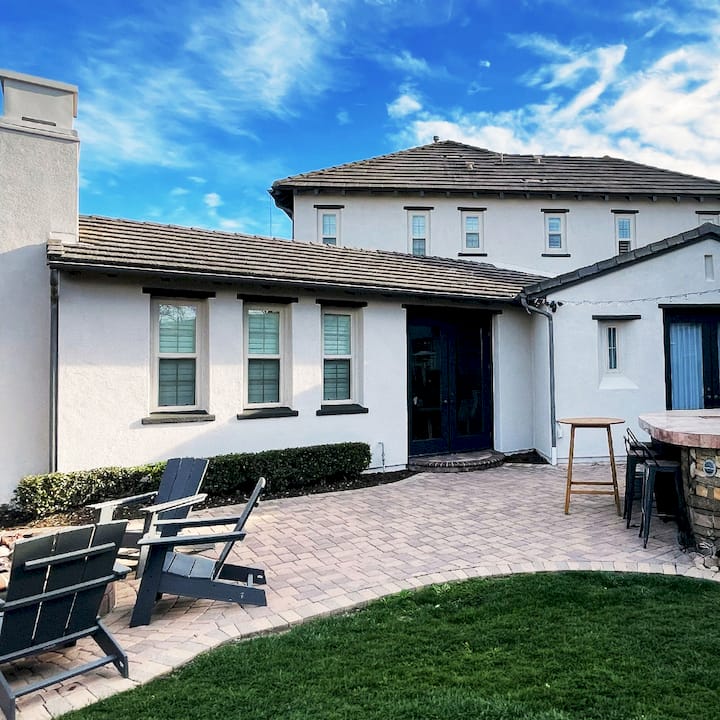
Here’s a quick comparison of interior versus exterior repainting costs and value added:
| Project type | Typical cost range | Value impact | ROI estimate |
|---|---|---|---|
| Exterior full repaint | $4,000 to $12,000 | High curb appeal boost | 51% to 100%+ |
| Interior full repaint | $3,000 to $8,000 | Improved move-in readiness | 50% to 107% |
| Exterior touch-up/trim | $800 to $2,500 | Moderate curb appeal lift | 60% to 80% |
| Single interior room | $500 to $1,500 | Targeted refresh | Varies by room |
These ranges reflect typical South Bay project sizes and local labor rates. Costs shift based on prep requirements, paint quality, and surface conditions.
Beyond the sale price, consider how paint affects the speed of a sale. Homes that show well attract more offers, which gives sellers leverage. Buyers who see fresh paint assume the home has been maintained, which reduces negotiation pressure around credits or repairs. That’s a real financial advantage, even if it’s harder to put an exact number on.
When choosing house painters for a value-driven project, the quality of prep work and materials matters just as much as the final color. A paint job that peels within two years doesn’t just look bad, it signals neglect and can actually hurt your market position.
For a complementary look at lasting curb appeal upgrades, pairing a fresh exterior paint job with a clean, well-maintained driveway creates a cohesive first impression that amplifies the effect of both improvements.
Key takeaways on value:
-
Exterior repainting typically yields the strongest ROI compared to interior projects.
-
Buyers associate fresh paint with a well-maintained home, reducing their perceived risk.
-
In a competitive market, presentation speed matters. Fresh paint shortens time on market.
-
Color selection affects buyer appeal. Neutral, updated palettes tend to attract broader interest.
Choosing the right timing and materials for repainting
Once you’ve decided to repaint, here’s how to make smart choices about timing and materials. The South Bay’s coastal climate is actually more forgiving than most climates for exterior painting. You don’t deal with harsh winters or freezing temperatures, but you do have other factors to plan around.
Optimal timing for South Bay repainting:
-
Late spring through early fall is the ideal window for exterior projects. Temperatures are stable, humidity is manageable, and you avoid the rainy season that typically runs from November through March.
-
Avoid marine layer mornings. June Gloom is real. Schedule exterior work for afternoons when the fog has lifted and surfaces are fully dry. Moisture trapped under paint causes bubbling and adhesion failures.
-
Interior projects can happen year-round, but good ventilation matters. Avoid painting during Santa Ana conditions, which bring dry, fast-moving air that can dry paint too quickly and cause lap marks.
-
Plan around your schedule. For occupied homes, interior projects are easier to phase room by room. Whole-exterior jobs typically take two to five days depending on prep needs and square footage.
Paint types and what they mean for durability:
The paint market has expanded significantly, and not all products are created equal. Here are the most common categories for residential use:
-
Acrylic latex: The go-to for most exterior surfaces. It’s flexible, breathes well, and holds up against UV exposure. High-quality acrylic formulations are far superior to builder-grade options.
-
100% acrylic: The premium tier of latex paints. Better adhesion, better fade resistance, and a longer lifespan. Worth the extra cost on exteriors where South Bay sun is relentless.
-
Elastomeric coatings: Thick, rubber-like products designed for stucco and masonry. They bridge hairline cracks and provide excellent moisture protection. Not the right product for every surface, but exceptional where conditions call for it.
-
Low-VOC and zero-VOC interior paints: Better for indoor air quality. Modern formulations have closed the performance gap with traditional products significantly.
Redfin notes that fresh paint can improve presentation and move-in readiness, which means the quality of the product you choose directly affects the impression your home makes. Cheap paint fades faster, shows brushstrokes more easily, and simply doesn’t hold up the same way.
Pro Tip: Don’t judge paint quality by cost per gallon alone. Coverage rate and required coats matter too. A premium paint at $75 per gallon that covers 400 square feet with two coats may cost less in total than a $45 product that needs three coats and still looks uneven.
When sourcing reputable painters for your project, ask specifically about the brands and product lines they use. A quality contractor stands behind their material selections and can explain why a product fits your specific surfaces and conditions.
Getting the job done: DIY vs professional painters
Next, let’s examine your options for repainting: whether tackling it yourself or working with pros. This is where homeowners often underestimate what’s involved. Painting looks straightforward until you’re on a ladder at 20 feet trying to cut in around fascia with a two-inch brush.
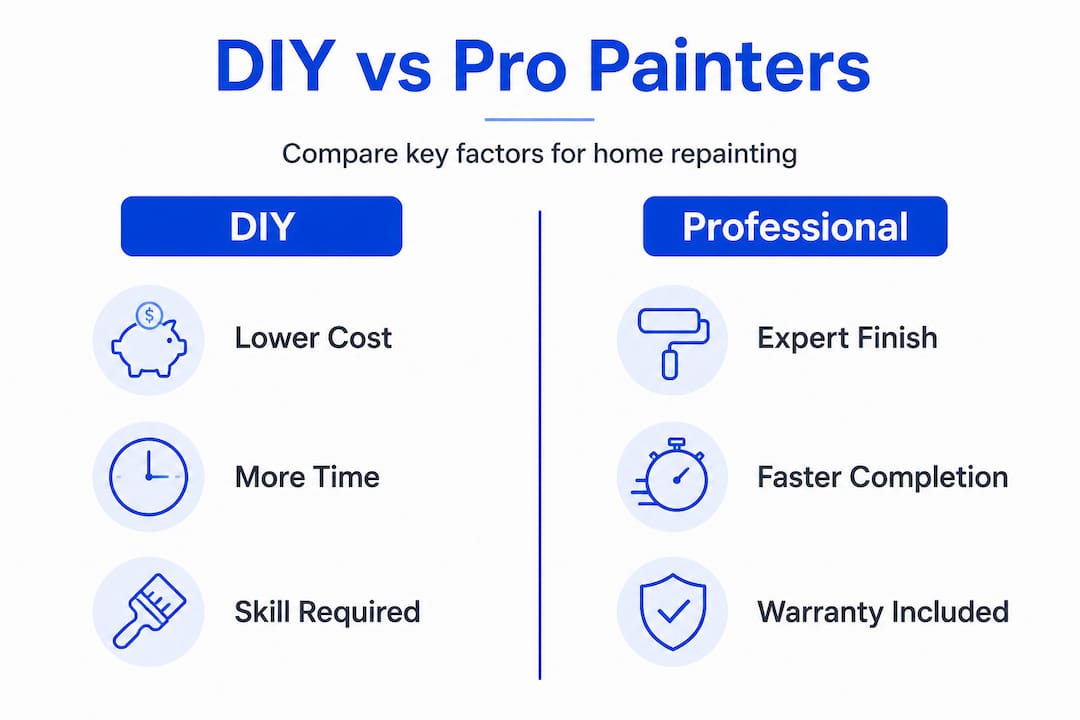
Here’s a practical side-by-side:
| Factor | DIY | Professional painters |
|---|---|---|
| Upfront cost | Lower material cost | Higher total cost |
| Time investment | Very high (weekends/weeks) | Low (days with a crew) |
| Surface prep quality | Often rushed or skipped | Thorough, systematic |
| Material knowledge | Limited without research | Experienced product selection |
| Safety risk | Real risk on multi-story homes | Insured, equipped crews |
| Warranty/guarantee | None | Often included |
| Final finish quality | Variable | Consistently higher |
| Longevity | 3 to 6 years typically | 8 to 15 years with proper prep |
DIY repainting makes the most sense for small interior rooms, single-story accent walls, or minor touch-ups where the stakes are low and access is easy. If you’re comfortable with prep work and patient with the process, a single room or small interior space is a reasonable DIY project.
However, for whole-exterior repaints, multi-story homes, or properties going to market, the calculus shifts. A paint job that fails early because of skipped prep, poor product choice, or uneven application doesn’t just look bad. It tells buyers the home hasn’t been cared for, which is the opposite of the signal you want to send. Repainting signals ongoing care to prospective buyers, but only when it’s done right.
Pro Tip: If you’re comparing contractor bids, make sure each quote specifies the number of coats, the brand and product line of paint, what surface prep is included, and whether there’s a workmanship warranty. A bid missing those details isn’t a complete bid.
Finding local experts who understand South Bay conditions specifically, coastal salt exposure, stucco quirks, and the UV intensity at this latitude, is worth prioritizing over the lowest price.
Our take: What most homeowners miss about repainting
Here’s the part conventional painting advice usually skips. Most articles tell you to repaint when paint starts peeling or when you want a new color. That’s reactive thinking, and it almost always costs more in the long run.
What we see consistently in the South Bay is homeowners waiting too long. By the time paint is visibly failing, the surface underneath has already taken on moisture, begun to crack, or developed conditions that require significantly more prep before a new coat can be applied properly. A project that would have cost $6,000 with timely maintenance can easily run $9,000 or $12,000 when you’re dealing with substrate repairs before you even pick up a brush.
The other thing most homeowners underestimate is what preparation actually means. Proper prep isn’t just washing a wall and calling it ready. It means pressure washing, allowing full drying time, scraping loose material, sanding edges, filling cracks and voids, applying primer where needed, and masking everything meticulously. That process is what separates a paint job that lasts eight to twelve years from one that looks tired in three.
Color selection is another area where people underinvest their attention. In the South Bay, exterior colors are subject to intense sunlight. Colors that look rich and saturated in a paint chip can fade noticeably within a year if the paint formula isn’t built for UV resistance. Choosing the right sheen for each surface, flat, eggshell, satin, semi-gloss, matters too. The wrong sheen on a high-traffic area shows wear fast. The wrong sheen on a south-facing exterior can amplify imperfections you didn’t know were there.
The homeowners who get the most value from a repaint are the ones who treat it as a maintenance investment rather than a cosmetic one. Check out homeowner repainting tips to stay ahead of common mistakes. When you approach repainting with that mindset, you make better decisions about timing, materials, and who you hire, and those decisions compound positively over the life of your home.
Ready to transform your home? Next steps with South Shore Painting
If you’ve been thinking about repainting your South Bay home, whether for protection, value, or a fresh look, this is a great time to take the next step. South Shore Painting specializes in high-quality residential and commercial painting, built on proper prep, premium materials, and workmanship that actually lasts.
We know what South Bay surfaces need and what buyers in this market respond to. You can browse our painting gallery to see real results from real projects in your area, or check out our customer reviews to hear from homeowners who’ve been through the process with us. If you’re ready to talk through your project, we’re here to help you make smart choices from the first coat to the final walk-through. Let’s make your home look as good as it should.
Frequently asked questions
How often should I repaint my home’s exterior in South Bay?
Most South Bay homes benefit from exterior repainting every 5 to 10 years, though coastal properties with high salt air exposure or intense sun may need attention closer to the 5-year mark.
Does repainting really improve home value before selling?
Yes, basic touch-ups can boost home value by roughly 2 to 5% while improving buyer perception of overall maintenance and move-in readiness.
What factors should I consider when choosing paint for durability?
Prioritize high-quality 100% acrylic formulas rated for UV resistance, match the sheen to the surface and its exposure level, and never skip proper surface prep before applying any product.
Is hiring a professional painter worth it compared to DIY?
For exterior projects, multi-story homes, or pre-sale preparation, professional painters deliver higher quality finishes, longer-lasting results, and workmanship warranties that make the investment clearly worthwhile.