

A licensed painting contractor in California is a professional certified by the Contractors State License Board (CSLB) to perform residential and commercial painting work in compliance with state law and quality standards. Hiring anyone without that credential puts your property, your finances, and your legal standing at risk. The CSLB governs all construction trades in the state, and painting falls under its C-33 classification. Diamond Certified rates California painting contractors an average of 4.6 stars across more than 1,800 verified reviews, which tells you that the best licensed painters in California consistently deliver results worth paying for.
What are the licensing requirements for painting contractors in California?
The CSLB C-33 classification defines the legal scope of work a licensed painting contractor can perform in California. Under this classification, C-33 covers painting and decorating including surface preparation methods such as scraping, sandblasting, and applying paint, paper, textures, and specialty coatings. This is not a general handyman license. It is a trade-specific credential that signals real expertise in surface preparation, material selection, and application techniques.
To qualify for a C-33 license, an applicant must meet several requirements set by the CSLB:
- Experience: A minimum of four years of journeyman-level experience in the painting trade is required. This experience must be verifiable and documented.
- Examinations: Applicants must pass both a trade exam specific to painting and decorating and a law and business exam covering California contractor regulations.
- Fees: The application fee is $450, and the license fee ranges from $200 to $350 depending on the license type.
- Insurance and bonding: Contractors must carry general liability insurance and a contractor's license bond. Proof of insurance and bonding is required to obtain and maintain the license.
- Renewal: Licenses must be renewed every two years. Failure to renew results in an expired license, which makes the contractor legally unable to take on new work.
Pro Tip: Always ask a contractor for their CSLB license number before signing anything. A legitimate contractor will provide it without hesitation, and you can verify it in under two minutes online.
Understanding these requirements helps you recognize what separates a credentialed professional from someone who simply owns a paint roller. The four-year experience threshold alone filters out a significant portion of unqualified operators who might otherwise underbid legitimate contractors and deliver substandard results.
How to verify a painting contractor's license and reputation in California
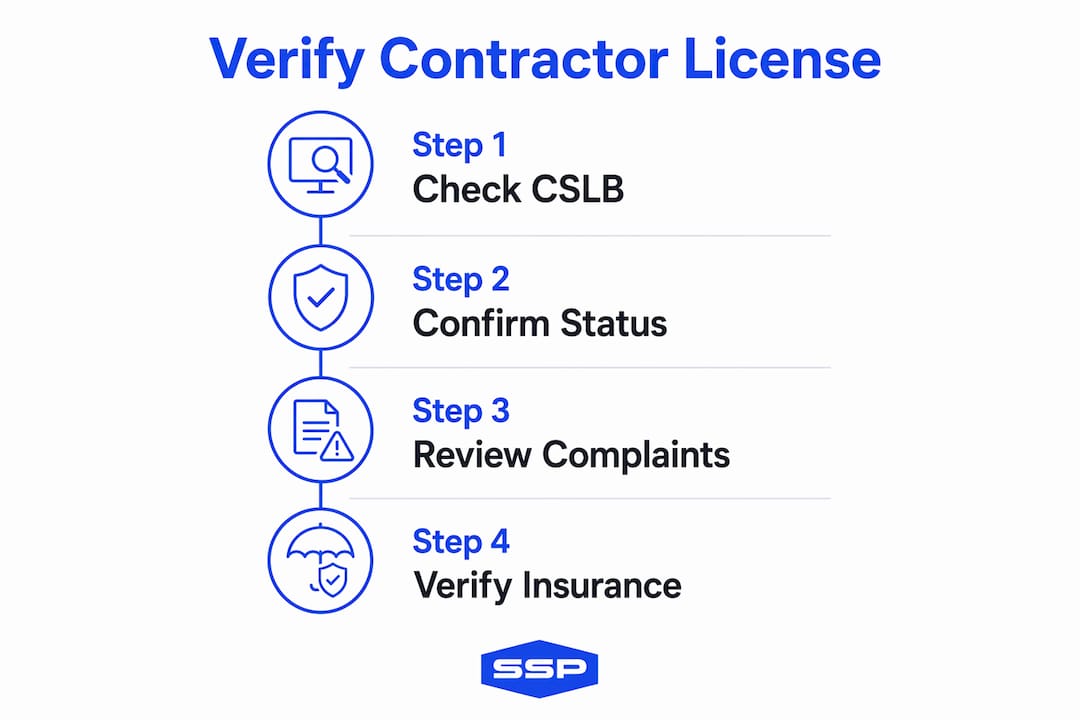
Verification is a non-negotiable step before hiring any painting contractor, regardless of how professional their website looks or how many referrals they claim to have. The CSLB provides an online license lookup tool that lets you check any contractor's current license status, classification, bonding, and insurance in real time. The process takes less than two minutes and can save you from a costly mistake.
Beyond the CSLB database, reputation verification matters just as much as legal status. Here is what to check:
- Diamond Certified ratings: This platform independently surveys California customers and publishes verified ratings. The average rating of 4.6 stars across 122 rated contractors in San Francisco County alone reflects a high baseline of customer satisfaction among certified professionals.
- Google reviews: Look for contractors with a substantial number of reviews, not just a high average score. A contractor with 200 reviews at 4.5 stars is more reliable than one with 8 reviews at 5.0 stars.
- CSLB complaint history: The license lookup tool also shows any disciplinary actions, citations, or complaints filed against a contractor. A clean record is a meaningful signal.
- Insurance certificates: Ask for a current certificate of insurance naming you as an additional insured for the duration of the project. This protects you if a worker is injured on your property.
- Bonding confirmation: A contractor's bond protects you financially if the contractor fails to complete the work or causes damage. Confirm the bond is active, not just claimed.
Red flags to watch for include contractors who ask for more than 10% or $1,000 (whichever is less) as a down payment before work begins, those who cannot produce a license number on request, and anyone who offers a verbal-only agreement. These are not minor concerns. They are patterns associated with unlicensed operators who leave homeowners with incomplete work and no legal recourse. Learning how to avoid bad painters before you sign a contract is one of the most protective steps you can take.
What services do licensed painting contractors offer for homes and commercial properties?
A licensed painting contractor in California offers far more than a coat of paint on your walls. The scope of work available under a C-33 license covers both residential painting services and commercial painting companies' needs, making it possible to handle complex, multi-surface projects under a single contract.
Common services include:
- Interior painting: Walls, ceilings, trim, doors, and built-ins for homes, apartments, offices, and retail spaces
- Exterior painting: Wood siding, stucco, concrete, and masonry surfaces, with coating schedules tailored to California's climate zones
- Cabinet refinishing: Using waterborne urethane systems for a factory-quality finish without the cost of replacement
- Drywall repair and preparation: Patching, skim coating, and priming before any paint is applied
- Deck and fence staining: Penetrating stains and sealers that protect wood from UV exposure and moisture
- Specialty coatings: Epoxy floor coatings, elastomeric exterior coatings, and texture applications for commercial properties
The material choices a licensed contractor makes reflect their expertise. Sherwin-Williams and Benjamin Moore are the two premium paint brands most commonly specified by professional California painters, particularly for their low-VOC interior lines and acrylic latex exterior formulations that hold up in coastal and inland valley conditions. Choosing the right product for the right surface is a skill that comes from trade experience, not a YouTube tutorial.
Pro Tip: If a contractor quotes you a project using a paint brand you have never heard of, ask for the product data sheet. Premium brands publish technical specifications publicly. A contractor who cannot name the product they plan to use is a contractor worth walking away from.
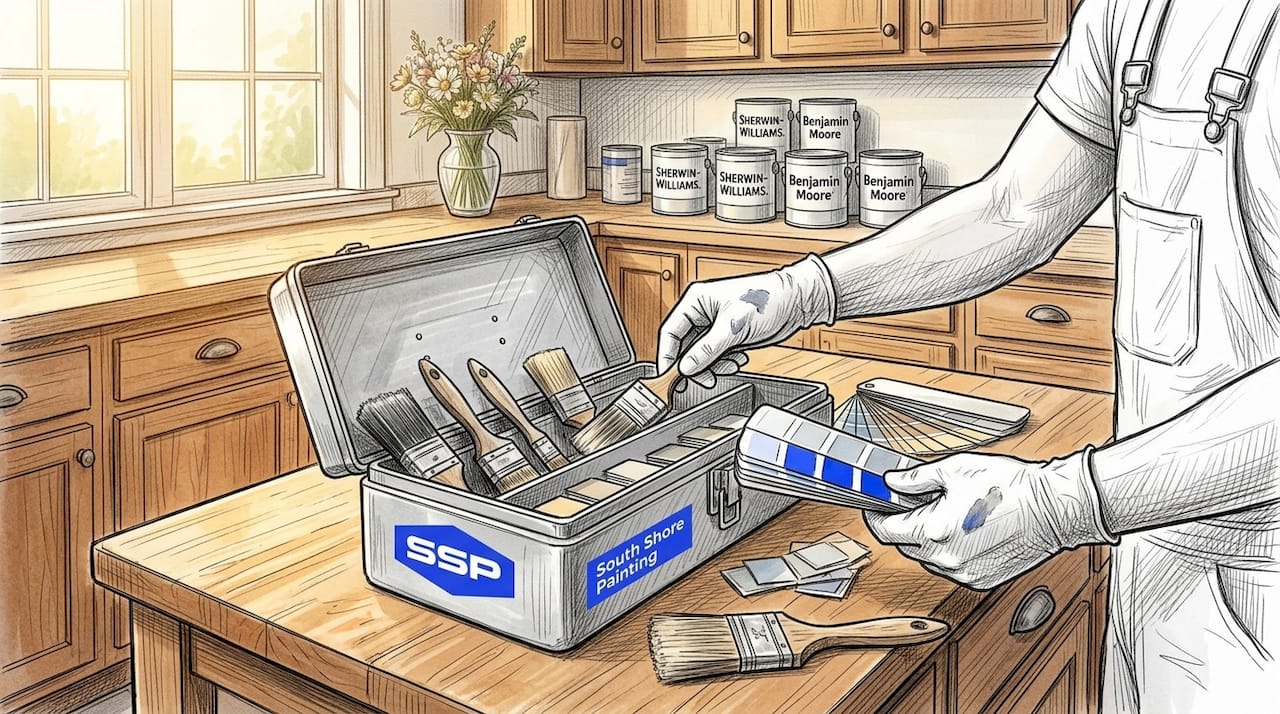
A single licensed contractor handling multiple trades improves project efficiency and reduces the coordination burden on homeowners. When your painter can also handle the drywall repair, the cabinet prep, and the deck refinishing, you avoid the scheduling conflicts and communication gaps that come with managing three separate vendors. Understanding why high-quality paint matters for long-term results is part of what separates a professional finish from one that starts peeling within two years.
How to choose the right painting contractor for your project
Selecting the best painting contractor for your specific project requires more than comparing price quotes. Experience, communication, and contract clarity are equally important factors, and the lowest bid almost never represents the best value.
Start by evaluating the contractor's experience with your project type. A contractor who specializes in residential interior work may not be the right fit for a large commercial exterior repaint, and vice versa. Ask directly: how many projects of this size and type have you completed in the past two years? Request references from those specific projects and follow up on them. A detailed painting estimate should itemize labor, materials, number of coats, surface preparation steps, and a project timeline. Any estimate that arrives as a single lump sum without breakdown is a warning sign.
The table below outlines the key factors to compare when evaluating bids from multiple contractors:
| Factor | What to look for |
|---|---|
| License status | Active C-33 license verified through the CSLB lookup tool |
| Insurance and bonding | Current certificate of insurance with you named as additional insured |
| Estimate detail | Itemized breakdown of labor, materials, prep, and timeline |
| Material specification | Named paint brands and product lines, not generic descriptions |
| Warranty terms | Written warranty covering workmanship for a minimum of two years |
| Communication | Responsive, clear answers to questions before the contract is signed |
Exterior painting in California also requires climate-specific knowledge. Qualified contractors select coatings and application schedules based on local humidity, temperature ranges, and sun exposure. Wood siding in California typically needs repainting every three to seven years, while brick surfaces can go eight to seventeen years between coats. A contractor who does not ask about your home's orientation, sun exposure, or proximity to the coast is skipping information that directly affects how long the finish will last.
Never skip the written contract. It should specify the start and completion dates, the payment schedule, the exact products being used, the scope of surface preparation, and the warranty terms. A contractor who resists putting these details in writing is not a contractor you want on your property.
Key takeaways
Hiring a licensed painting contractor in California requires verifying CSLB credentials, confirming active insurance and bonding, and evaluating both experience and written contract terms before any work begins.
| Point | Details |
|---|---|
| C-33 license is the standard | The CSLB C-33 classification is the required credential for legal painting work in California. |
| Verification is non-negotiable | Use the CSLB online lookup tool to confirm license status, bonding, and complaint history before hiring. |
| Material quality drives longevity | Contractors using Sherwin-Williams or Benjamin Moore products deliver finishes that last significantly longer. |
| Integrated services reduce hassle | A contractor who handles painting, drywall repair, and refinishing under one contract saves time and coordination effort. |
| Written contracts protect you | Every project detail, including products, prep steps, timeline, and warranty, must be documented in writing. |
What I have learned from watching homeowners hire the wrong painter
After years of working in the California painting industry, the pattern I see most often is this: homeowners spend weeks researching paint colors and almost no time researching the contractor applying them. The color choice matters far less than the surface preparation underneath it. A flawless color applied over inadequately primed or repaired surfaces will fail within a year or two, and the homeowner is left wondering why their "premium" paint job looks terrible.
The second mistake I see regularly is treating the lowest bid as the safest financial decision. Unlicensed operators can underbid legitimate contractors because they carry no insurance, pay no bond premiums, and often skip preparation steps entirely. When something goes wrong, and it frequently does, the homeowner has no legal recourse and no insurance claim to file. The cost of fixing bad work almost always exceeds what was saved on the original bid.
What actually works is treating the contractor selection process the way you would treat hiring a long-term employee. Check credentials, ask for references from comparable projects, read the contract carefully, and pay attention to how the contractor communicates before the job starts. The contractors who answer questions clearly, provide detailed written estimates, and specify their materials by brand name are the ones who deliver results worth the investment. The qualities that define top painters are consistent and recognizable once you know what to look for.
California's climate adds another layer of complexity that unlicensed operators routinely ignore. Coastal humidity, inland heat, and UV intensity vary significantly across the state, and the right coating system for a home in Torrance is not the same as the right system for a property in Sacramento. A licensed contractor with California-specific experience understands these distinctions and selects materials accordingly.
— Ryan
Get a professional painting estimate from Southshorepaint

Southshorepaint is a licensed residential and commercial painting company serving California homeowners and property managers who want results that last. Every project starts with thorough surface preparation, uses premium materials from Sherwin-Williams and Benjamin Moore, and is backed by workmanship that holds up to California's demanding climate conditions. Whether you need interior painting for a single room, a full exterior repaint, or commercial painting services for a multi-unit property, Southshorepaint delivers quality without shortcuts. Visit Southshorepaint to request a detailed, itemized estimate and see why California property owners trust us to protect and improve their most valuable assets.
FAQ
What is a C-33 license in California?
A C-33 license is the CSLB classification for painting and decorating contractors in California. It authorizes the holder to perform painting, surface preparation, and specialty coating work on residential and commercial properties.
How do I verify a painting contractor's license in California?
Use the CSLB's free online license lookup tool at cslb.ca.gov to check any contractor's license status, classification, bonding, and complaint history in real time.
How often does exterior paint need to be replaced in California?
Wood siding typically requires repainting every three to seven years, while brick surfaces can last eight to seventeen years between coats, depending on climate exposure and coating quality.
What should a painting estimate include?
A professional estimate should itemize labor costs, material brands and product lines, the number of coats, surface preparation steps, a project timeline, and warranty terms. A single lump-sum figure without breakdown is insufficient.
Is it legal to hire an unlicensed painter in California?
Hiring an unlicensed contractor for projects valued over $500 in labor and materials is illegal in California and removes your legal protections if the work is defective or the contractor causes property damage.