
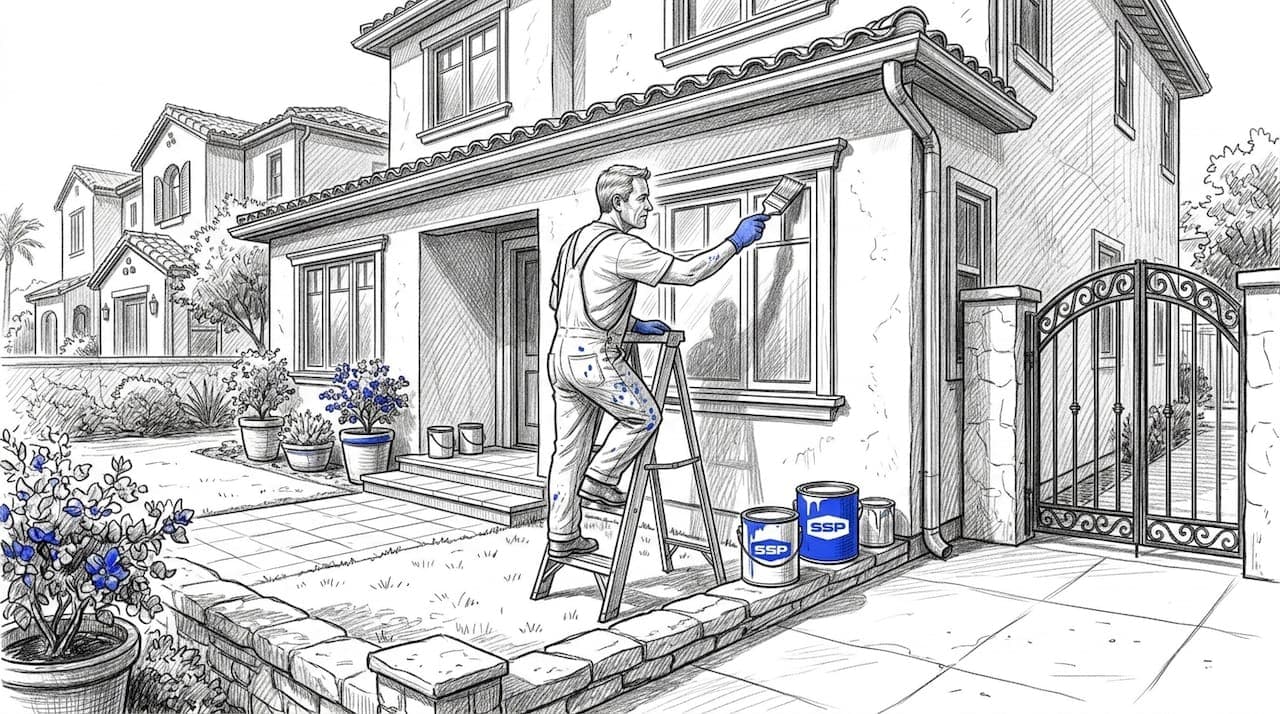
Not all painting contractors deliver the same results, and the gap between a local professional and an out-of-area crew often shows up long after the job is done. If you've ever wondered why choose local painters over a nationally dispatched team, the answer comes down to accountability, climate expertise, and the kind of communication that only proximity makes possible. This guide walks through the real advantages of hiring local painters so you can make a confident, informed decision before your next interior or exterior project.
Table of Contents
- Key takeaways
- Why choose local painters for accountability
- Climate knowledge and why it matters
- Scheduling, communication, and project flow
- How to select a reliable local painter
- My take on local vs. national painters
- Work with a local painter who stands behind the results
- FAQ
Key takeaways
| Point | Details |
|---|---|
| Community accountability drives quality | Local painters protect their reputation one project at a time, creating stronger incentives for thorough prep and follow-through. |
| Climate knowledge improves durability | Painters familiar with your regional conditions choose products and techniques that hold up longer against local weather. |
| Proximity speeds up every stage | Faster inspections, flexible scheduling, and quicker callbacks all stem from working with a crew that operates nearby. |
| Verification is easier with local firms | Checking references, viewing nearby completed projects, and confirming licenses is straightforward when a painter works in your area. |
| Written contracts protect both parties | Itemized bids and defined scopes reduce disputes and keep projects on track regardless of who you hire. |
Why choose local painters for accountability
One of the most underappreciated advantages of local painters is how much community reputation shapes their behavior on every job. A national dispatch company rotates crews through unfamiliar markets and moves on. A local painter, by contrast, built their business through word of mouth in the same neighborhoods where they still work. That distinction matters more than most homeowners realize.
Local teams build reputation one project at a time, creating direct incentives to communicate clearly, prepare surfaces thoroughly, and stand behind their results. If something goes wrong with a finish after two months, a local painter who wants referrals from your street has every reason to come back and make it right. A crew dispatched from three states away has no such incentive.
This accountability shows up in predictable ways:
- Calls and messages get returned promptly because the painter knows your neighborhood and values those connections
- Scheduling commitments are honored more reliably since the crew doesn't face long travel logistics
- Touch-ups and callbacks happen faster because the team is still working nearby
- Problems get resolved before they escalate into disputes
For property managers handling multiple units or commercial spaces, this reliability translates directly into fewer project delays and cleaner punch-list resolutions. Enforceable quality checks and rapid follow-ups are far easier to arrange when your painting crew is twenty minutes away rather than two time zones distant.
Pro Tip: Ask any painter you're considering whether they have completed jobs within a few miles of your property. If they can show you finished work in your neighborhood and provide those homeowners as references, their accountability is built into the geography itself.
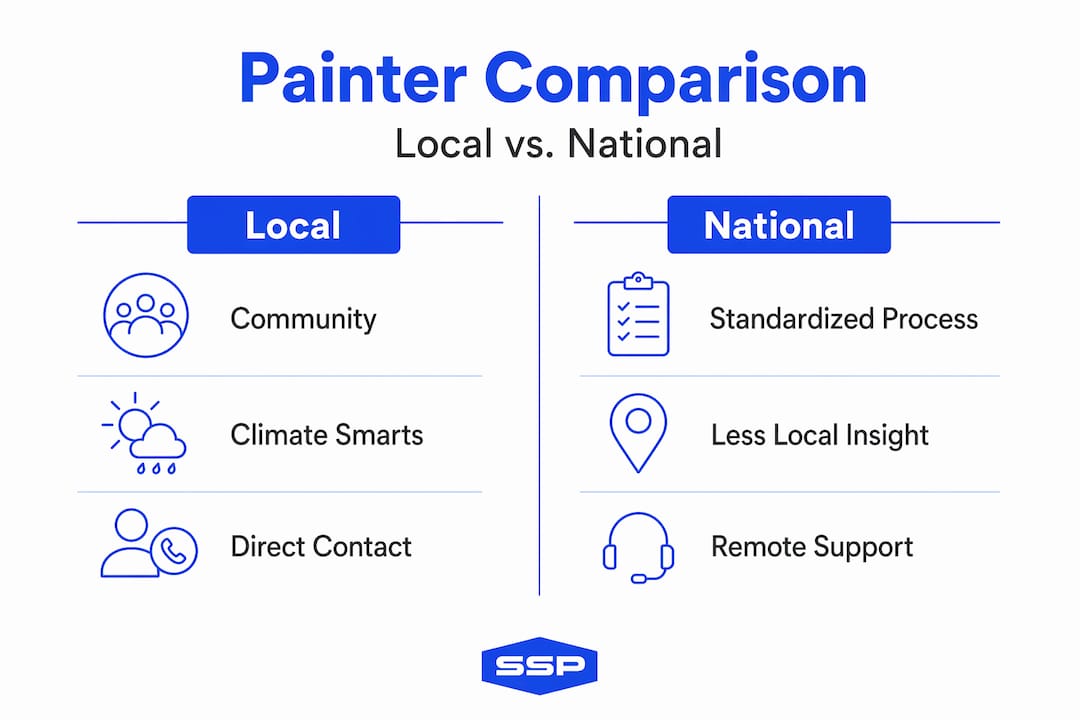
Climate knowledge and why it matters
Regional weather conditions affect paint performance more than most people expect, and this is an area where the benefits of local painters become genuinely technical. Humidity levels, UV intensity, temperature swings, salt air near coastlines, and the specific substrates common to local homes all influence which products perform best and how surfaces should be prepared.

Painters familiar with local weather and housing stock can recommend timing and products appropriate for seasonal conditions, improving durability in ways that a generalist crew simply cannot replicate. In coastal markets like Southern California, for example, salt air accelerates surface oxidation and requires primers with specific bonding properties. A painter who works those conditions daily understands this. A crew brought in from elsewhere may apply a product that looks fine on day one but begins peeling within a season.
The table below illustrates how regional conditions translate into specific material and technique choices:
| Condition | Risk if ignored | What experienced local painters do |
|---|---|---|
| High humidity | Blistering and adhesion failure | Apply moisture-resistant primers; time work around humidity levels |
| Intense UV exposure | Premature fading and chalking | Specify higher-sheen exterior paints with UV-stabilizing pigments |
| Coastal salt air | Rust and corrosion on metal substrates | Use epoxy primers and barrier coatings on exposed metal |
| Freeze-thaw cycles | Cracking and peeling on wood siding | Apply flexible latex formulas rated for temperature variance |
| Stucco and older surfaces | Excessive absorption causing uneven finish | Condition surfaces and use fill primers before topcoat application |
Beyond product selection, local painters also understand when to paint. Applying exterior coatings during the wrong season is one of the most common causes of premature failure, and a local professional who has worked through multiple annual cycles in your area knows those windows intuitively. You can learn more about high-quality paint selection to understand how material choices align with regional performance requirements.
Scheduling, communication, and project flow
The logistical advantages of working with a local painting company are easy to overlook until you've experienced the alternative. When a contractor has to factor in long travel distances or manages a large regional territory from a central dispatch hub, scheduling flexibility shrinks and response times grow. Local painters operate differently.
Here's how proximity improves the experience at every stage of a project:
-
Initial inspection and estimate. A local painter can visit your property within days rather than weeks, assess the actual scope of work in person, and deliver an accurate written estimate. Faster on-site inspections allow for shorter turnaround windows and more precise bids, which reduces surprises later.
-
Scheduling around your calendar. Smaller local firms can shift start dates and work in shorter windows because their travel overhead is minimal. If a weather delay pushes a job by a day, rescheduling is a quick conversation rather than a logistics challenge.
-
Direct communication with the crew. You deal with the actual painters, not a call center. More direct communication reduces misunderstandings about color selections, prep requirements, or finish expectations, all of which matter for a result that meets your vision.
-
Mid-project adjustments. Discovering hidden moisture damage, a substrate issue, or a color mismatch midway through a job is common. Local painters can assess and solve these problems in real time without waiting for approval from a regional manager.
-
Post-completion walkthroughs. A local painter who cares about referrals will schedule a walkthrough with you after the job is complete, document any items that need attention, and follow through on them. This is the practical meaning of accountability and responsiveness in a local service relationship.
Pro Tip: Before signing any contract, confirm that you will have direct phone contact with the lead painter or project supervisor, not just a customer service number. This single step eliminates most communication problems before they start.
How to select a reliable local painter
Knowing why hire local painters is only half the equation. The other half is verifying that the specific local painter you choose actually delivers on those advantages. Not every local contractor is a quality contractor, and a few structured steps will help you distinguish the professionals from the shortcuts.
- Verify licensing and insurance. Requirements vary by state, but at minimum your painter should carry general liability insurance and workers' compensation. Written qualification checks protect you from being liable if a worker is injured on your property.
- Request at least three written, itemized estimates. Each bid should break out labor, materials, number of coats, and the specific paint products being used. Budget ambiguity is one of the most consistent causes of project disputes, and itemized bids eliminate the most common sources of confusion.
- Check local references and nearby work. Ask for references from jobs completed within the last twelve months, ideally within a few miles of your property. Evaluating neighborhood work lets you see actual results on similar substrates and climate conditions.
- Review their prep practices. Thorough preparation including surface inspection, patching, caulking, and priming is what separates a finish that lasts a decade from one that starts failing in two years. Ask specifically what prep is included in the scope.
- Insist on a written contract. Clearly defined scopes covering preparation steps, primer requirements, number of coats, cleanup, and final walkthrough milestones prevent disagreements and give you a clear basis for follow-up if something is missed.
The table below shows what a quality estimate should include versus what a rushed or unreliable bid typically omits:
| Estimate element | What to look for | Red flag if missing |
|---|---|---|
| Surface preparation details | Patching, sanding, caulking, priming listed explicitly | Vague reference to "prep included" |
| Paint brand and product name | Specific product and sheen specified | "Quality paint" with no brand listed |
| Number of coats | Stated per surface type | Single number applied to all surfaces |
| Labor and materials separated | Line items for each | Lump sum with no breakdown |
| Cleanup and disposal | Included in scope | Not mentioned |
| Walkthrough clause | Defined in contract | Verbal assurance only |
You can also explore how to choose house painters for a deeper look at comparing bids and evaluating contractor quality specific to local markets.
My take on local vs. national painters
I've worked alongside and observed a lot of painting projects over the years, and one pattern stands out with remarkable consistency. Homeowners who chose a nationally branded or out-of-area crew based on a lower bid often ended up spending more in the long run, whether through premature paint failure, incomplete prep that caused adhesion problems, or the difficulty of getting anyone to return a call after the invoice was paid.
What I've learned is that the benefits of local painters are not abstract concepts. They show up in tangible ways. The painter who lives twenty minutes from your home and has a yard sign on your neighbor's lawn cannot afford to do poor work. Their pipeline of future business is literally your neighborhood, and that reality changes how they approach every job.
In my experience, the qualities of good local painters come down to three things: preparation honesty, material transparency, and the willingness to walk a finished job with you before calling it complete. When you find a local contractor who checks all three, you've found someone worth building a long-term relationship with. And that relationship pays off when you need a room repainted quickly, want advice on a color change, or need a fast exterior patch before putting a property on the market. When you support local painting businesses, you're also keeping money circulating in your community and strengthening local jobs and suppliers.
— Ryan
Work with a local painter who stands behind the results
When you understand the full picture, the case for choosing a local painting company becomes straightforward. The accountability, the climate expertise, the direct communication, and the verifiable track record are all practical advantages that affect the quality and longevity of your finished surfaces.
Southshorepaint is a professional residential and commercial painting company serving the South Bay area, focused on delivering high-quality, long-lasting finishes built on proper prep, premium materials, and workmanship that's made to last. If you're comparing local painters or preparing for an interior or exterior project, Southshorepaint offers detailed, itemized estimates and direct consultations with the team who will actually do the work. Visit Southshorepaint to schedule a consultation and see the difference a locally invested, prepared, and accountable painting crew makes on your property.
FAQ
Why choose local painters over national companies?
Local painters have a direct stake in community reputation, which motivates clearer communication, thorough preparation, and faster follow-through on any post-job corrections. National dispatch companies lack that community accountability.
What should I look for when hiring a local painting contractor?
Request at least three itemized written estimates, verify licensing and insurance, check recent local references, and confirm that the contract specifies preparation steps, paint products, number of coats, and a final walkthrough.
How does climate knowledge affect paint quality?
Local painters who understand your regional weather patterns select products and application timing that match those conditions, which directly improves adhesion, finish durability, and resistance to fading, peeling, or moisture damage.
Is it easier to resolve issues with a local painter?
Yes. Geographic proximity means a local painter can return to address touch-ups or corrections quickly, and their reputation within your community gives them a strong incentive to resolve any concerns before they become disputes.
Does hiring local painters help the community?
Spending on local painting services keeps money circulating within the community, supports local jobs, and strengthens neighborhood suppliers, making it a practical choice that extends beyond the quality of your finished walls.