
Painting a rental property is often dismissed as a cosmetic concern, something you do between tenants to freshen things up before the next showing. But that framing misses the real story. For property owners and landlords across the South Bay, painting is one of the most cost-effective tools available for protecting structural integrity, satisfying California's habitability requirements, and keeping quality tenants in place longer. When approached with the right materials, proper preparation, and a consistent schedule, a professional paint job does far more than improve appearances.
Table of Contents
- Painting for property protection and value
- How painting impacts tenant attraction and retention
- Legal and health obligations: California's rules
- How often should landlords paint? Practical schedules
- What most landlords overlook about painting
- Connect with South Shore Painting for expert solutions
- Frequently asked questions
Key Takeaways
| Point | Details |
|---|---|
| Painting prevents deterioration | Routine painting shields property surfaces and avoids repairs from moisture, sun, and physical wear. |
| Fresh paint attracts tenants | Well-painted units can reduce vacancy and support higher tenant satisfaction in competitive rental markets. |
| Legal compliance is critical | California law requires landlords to address paint-related health and safety hazards, especially with lead or mold. |
| Customize repainting schedules | Landlords should base repainting frequency on property condition, turnover, and local factors—not just fixed intervals. |
| Professional services simplify compliance | Expert painters help landlords meet legal obligations and maximize both property value and tenant appeal. |
Painting for property protection and value
The surface of any structure, whether wood siding, stucco, drywall, or concrete, is constantly exposed to forces that break it down over time. In the South Bay, that means marine air, UV exposure, temperature swings, and periodic heavy rain. Paint provides a barrier against all of these. Without that barrier, moisture penetrates surfaces and causes rot, warping, or mold growth. UV rays degrade and fade finishes, exposing substrate materials to accelerating wear. A coat of quality paint, applied correctly, interrupts this process before it turns into a repair bill.
Painting protects surfaces and reduces expensive repairs, which means that each dollar spent on preventive maintenance through painting can save landlords significantly more in structural remediation down the road. A cracked exterior that goes unpainted for a few seasons may eventually allow moisture intrusion that damages framing, insulation, and interior finishes, repairs that cost far more than a routine exterior repaint.
The long-term return on investment from regular painting is well documented in property management. Landlords who treat painting as a scheduled maintenance item, rather than a reactive fix, typically report fewer surprise repair costs and better property appraisal outcomes. The distinction between preventing costly repairs proactively versus managing damage after the fact is significant in dollar terms.
Key protection benefits of regular painting:
- Seals wood surfaces against moisture penetration and rot
- Reduces the likelihood of mold growth behind interior walls
- Protects metal fixtures, railings, and trim from rust and corrosion
- Limits UV degradation of exterior substrates like stucco and wood siding
- Preserves caulking and joint integrity around windows and doors
| Maintenance approach | Typical cost range | Long-term impact |
|---|---|---|
| Proactive repainting every 3 to 5 years | Moderate and predictable | Prevents structural deterioration |
| Reactive repainting after damage occurs | High and unpredictable | Often paired with costly repairs |
| Deferred maintenance beyond 7 or more years | Very high or critical | Risk of habitability violations |
Understanding local weather and paint durability in the South Bay is essential for product selection. Not all paints perform equally in coastal environments, and using the right formulation for your region affects how long that protective barrier actually lasts.
Pro Tip: When scheduling exterior repaints in the South Bay, time the work for late spring or early fall. Summer marine layer and winter rain can complicate adhesion and curing, particularly for oil-based primers on weathered wood.
How painting impacts tenant attraction and retention
When a prospective tenant walks through a unit, they are forming impressions quickly. Scuffed walls, faded colors, and visible staining communicate neglect, regardless of how functional the unit actually is. Fresh, neutral paint communicates the opposite: that the property is well managed and the landlord takes pride in maintenance. That perception directly influences how quickly a unit rents and how much a tenant is willing to pay.
Painting as a turnover strategy keeps units show-ready and reduces vacancy time. In competitive South Bay rental markets, where tenants have options, a freshly painted unit can shorten the vacancy period by days or weeks. Given the rental rates in cities like Torrance, Redondo Beach, and Manhattan Beach, even reducing vacancy by one week translates directly to recovered revenue that more than offsets the cost of a professional paint job.
Retention is equally important. When tenants feel that their home is maintained with care, they are less likely to move at lease renewal. A simple interior touch-up or full repaint between lease terms signals investment in the tenant's living experience. That signal matters.
Best practices for painting at tenant turnover:
- Inspect all interior surfaces thoroughly once the unit is vacant, noting damage beyond normal wear
- Repair all holes, cracks, and surface imperfections before any paint is applied
- Select neutral, durable colors that appeal broadly and hold up to everyday use
- Apply two coats with a quality interior paint rated for high-traffic areas
- Document the post-paint condition with photographs for your records
The question of whether to allow tenants to paint their own units comes up frequently. It can be a genuine retention tool, particularly for long-term tenants who want to personalize their space. However, letting tenants paint creates real risks, including color choices that require multiple coats to cover, missed prep work, and surface damage from improper technique. If you allow it, spell out the conditions clearly in the lease, require approval of colors in advance, and specify that the unit must be returned to a neutral finish upon move-out.
"A rental unit's presentation during showings sets the tone for every tenant relationship that follows. Landlords who invest in professional interior finishes before listing consistently report faster lease-up and higher quality tenant inquiries."
Choosing professional painters over budget operators is a decision that affects both the quality of the finish and how long that finish holds up. Thin applications and skipped prep work look fine on move-in day but degrade quickly, meaning you are back to repainting sooner than necessary. Quality interior painting starts with surface prep, proper priming, and the right number of coats.
Legal and health obligations: California's rules
In California, the conversation around painting is not purely optional when health and safety are involved. The state's implied warranty of habitability requires landlords to maintain rental units in livable condition. Paint that is peeling, cracking, or deteriorating in ways that expose tenants to underlying hazards crosses from cosmetic to legal territory quickly.
Landlords are responsible for addressing hazardous peeling paint, mold, or lead hazards, and failure to do so can constitute a habitability violation. When a tenant reports peeling paint that is exposing substrate, mold behind or beneath wall surfaces, or visible water damage that has compromised finishes, a landlord in California is legally obligated to address the condition promptly. Ignoring it is not simply a maintenance decision; it is a potential liability.
Mold deserves particular attention. The South Bay's coastal humidity creates conditions where mold can develop in poorly ventilated rooms, around windows, and in bathrooms or kitchens where moisture is frequent. When mold is present, repainting over it without proper remediation is not a compliant fix, and it will not hold. Proper remediation must come first, followed by a mold-resistant primer and appropriate topcoat.
For properties built before 1978, lead paint represents a specific legal category. Lead paint disclosure requirements in California mandate that landlords disclose the known presence of lead-based paint to tenants before occupancy. Beyond disclosure, any renovation or repainting work that disturbs lead paint surfaces must be performed by EPA-certified renovators under the Renovation, Repair, and Painting (RRP) rule. This is not a best practice suggestion; it is a federal and state requirement with significant penalties for non-compliance.
When California landlords are legally required to repaint:
- Peeling or chipping paint that creates a health hazard or exposes underlying lead
- Mold growth that cannot be addressed without disturbing and replacing painted surfaces
- Water damage that has compromised wall integrity and created unsafe conditions
- Any renovation work in pre-1978 buildings that disturbs more than 6 square feet of interior painted surface or 20 square feet of exterior painted surface
- Post-habitability complaint inspections that identify deteriorated paint as a contributing factor
Working with certified and experienced house painters who understand California's requirements is particularly important for older South Bay properties. A painter who is not familiar with RRP certification requirements or mold remediation procedures can inadvertently create liability for a property owner, even when the landlord's intent was to address the problem correctly.
How often should landlords paint? Practical schedules
There is no universal calendar for when to repaint a rental property, but there are clear industry benchmarks and practical factors that should guide each landlord's decision. Industry standard is every 3 to 5 years, but actual schedule varies with property use, turnover, and condition. That range gives landlords flexibility, but the right answer for your property depends on a combination of factors.
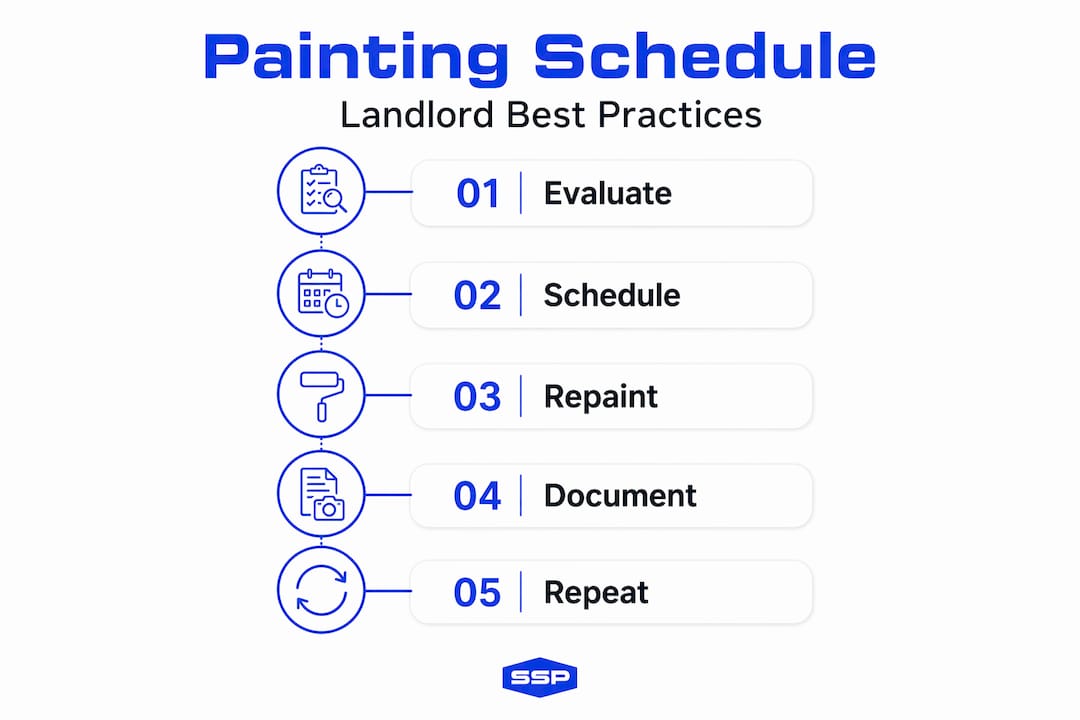
High-turnover rentals, such as furnished units, vacation properties, or properties in areas with frequent short-term leases, tend to show wear more quickly. Walls in these units absorb more scuffs, marks, and humidity exposure over a given period than long-term occupied units. An interior repaint every 3 years is often justified in these cases.
Long-term tenants in well-maintained units may extend repainting intervals to 5 or even 7 years for interiors, provided there are no habitability-level issues developing. The key is regular inspection, not a rigid calendar. Walk units at lease renewal to assess surface condition, look for early signs of moisture, and identify areas that need touch-up before they become full-repaint issues.
Factors that affect your repainting schedule:
- Tenant turnover rate: higher turnover means more frequent repaints
- Number of occupants and pets: more wear on surfaces
- Unit age and construction type: older stucco and wood exteriors need attention sooner
- Local exposure: South Bay coastal properties face elevated salt air and UV stress
- Paint quality used in the previous application: premium products last longer between repaints
- Presence of any health or habitability triggers: mold, peeling, or damage accelerates the timeline
| Property type | Recommended interior interval | Recommended exterior interval |
|---|---|---|
| High-turnover rental | Every 2 to 3 years | Every 4 to 5 years |
| Standard long-term rental | Every 4 to 5 years | Every 5 to 6 years |
| Coastal South Bay property | Every 3 to 4 years | Every 3 to 4 years |
| Older pre-1978 building | Inspect annually, repaint as triggered | Inspect annually, repaint as triggered |
Exterior repainting timelines for South Bay properties should generally skew toward the shorter end of any range. Salt-laden marine air accelerates surface oxidation and paint chalking, particularly on north and west-facing elevations. Catching this early prevents the kind of substrate exposure that turns a paint job into a full repair project.
What most landlords overlook about painting
Most landlord guides treat painting as a cost center to be minimized. The advice tends to center on finding the cheapest contractor, using builder-grade paint, and repainting only when tenants complain. We see the consequences of that approach regularly, and it is a shortsighted way to manage an asset.
The deeper insight is this: painting is one of the few maintenance categories where what you do not see often costs more than what you do. A fresh coat of paint may hide the fact that proper prep was skipped, that the underlying surface has moisture issues developing, or that the previous paint is beginning to fail at adhesion. When those problems surface, they surface as large repairs, not touch-ups.
Paint deterioration can shift from cosmetic to a legal and health obligation faster than most landlords expect. A section of exterior paint that is chalking and slightly peeling today can, within one rainy season, become a moisture intrusion point that causes interior damage and triggers a habitability complaint. The transition from "needs paint" to "habitability violation" is shorter than it appears from the outside.
For South Bay landlords specifically, the combination of legal exposure around lead paint in older properties and the elevated environmental stress on exterior surfaces means that working with qualified, experienced local painter professionals is not a luxury. It is the difference between a property that is managed well and one that generates preventable liability.
The landlords we work with who have the best long-term outcomes treat painting as a scheduled investment with documented cycles, not a reactive line item. They know what was applied, when it was applied, and what conditions warrant early repainting. That kind of disciplined approach protects property value and keeps tenants satisfied with their living environment.
Connect with South Shore Painting for expert solutions
Managing a rental property in the South Bay means balancing maintenance costs against the long-term value of your asset. Painting done right is one of the smartest investments you can make in that balance.

At South Shore Painting, we work with landlords and property owners across the South Bay to deliver professional interior and exterior painting that is built to last. From proper surface preparation and premium product selection to compliance awareness for older properties, our team brings the experience and standards your investment deserves. If you have found our work valuable, we would genuinely appreciate it if you leave a review to help other property owners find the quality services they need. Ready to discuss your next project? Reach out to us directly through our website at southshorepaint.com to get started.
Frequently asked questions
How does painting prevent expensive property repairs?
Painting protects surfaces and reduces expensive repairs by acting as a physical barrier against moisture, UV exposure, and surface wear. Without that barrier, underlying materials deteriorate and require far more costly remediation.
When is a landlord legally required to repaint in California?
Landlords are responsible for hazardous peeling paint, mold, or lead hazards under California's habitability standards, meaning repainting becomes a legal obligation when deteriorating paint creates safety or health risks.
What is the typical repainting schedule for rental properties?
Industry standard is every 3 to 5 years, but the actual schedule for your property depends on turnover rate, number of occupants, surface condition, and regional environmental exposure.
Are there special rules for lead paint in California rental properties?
Yes. Lead paint disclosure requirements mandate disclosure before occupancy in pre-1978 buildings, and any work disturbing lead paint surfaces must be performed by EPA-certified renovators under the federal RRP rule.
Should tenants be allowed to paint their own units?
Allowing customization can improve retention, but letting tenants paint also creates restoration and quality-control risks. Clear lease language, color pre-approval, and a move-out restoration requirement help manage those risks effectively.