
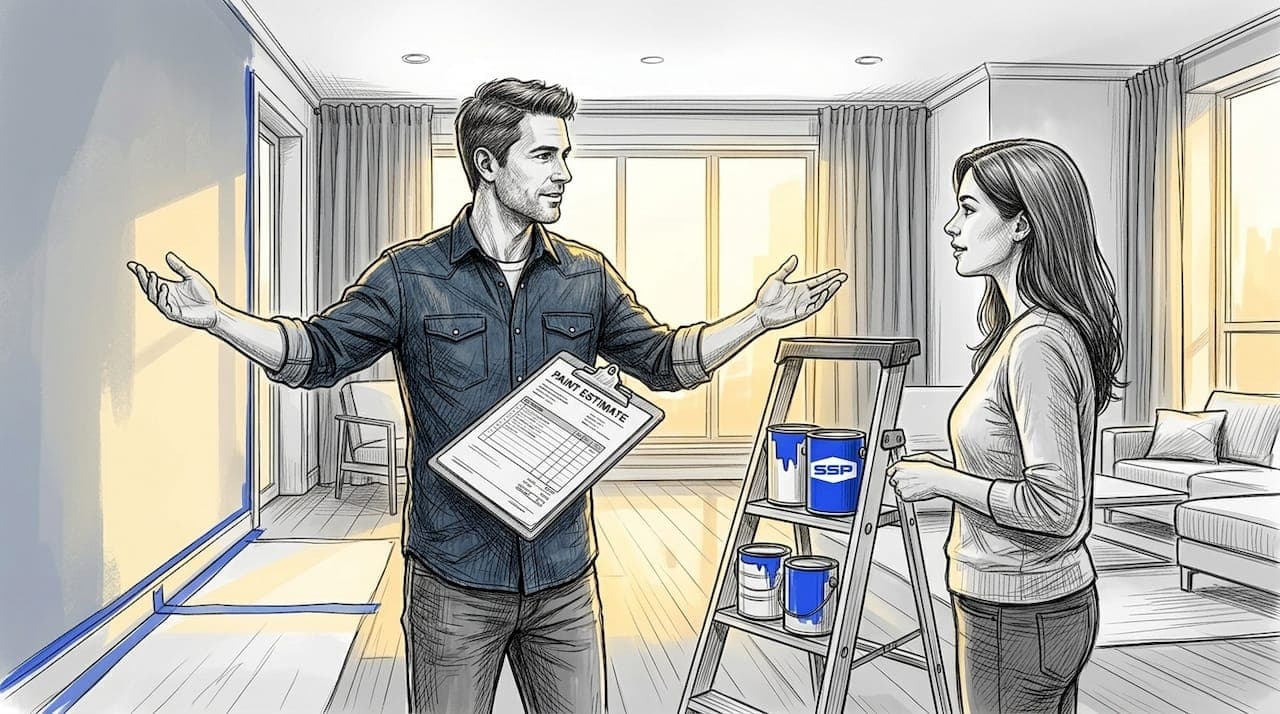
A professional paint estimate is a detailed written document that specifies exactly what will be painted, how surfaces will be prepared, which materials will be used, the project timeline, and all associated costs, functioning simultaneously as a planning tool and a binding contractual agreement once signed. Most homeowners treat a painting quote as a simple price tag, but that misses the point entirely. A well-constructed estimate protects you from scope creep, surprise charges, and inferior workmanship before a single brush touches your wall. Understanding what a professional paint estimate contains, how painters calculate costs, and what red flags to watch for gives you real leverage when comparing professional painting quotes.
What does a professional paint estimate include?
A complete painting proposal typically runs one to two pages and covers every variable that affects the final result and final price. Knowing each component helps you evaluate whether a quote is thorough or dangerously vague.
A professional estimate covers these core elements:
- Scope of work: Every surface to be painted, listed by room, including walls, ceilings, trim, doors, and any specialty surfaces. Vague language like "paint interior" is a warning sign.
- Preparation work: Specific prep tasks such as patching holes, sanding rough surfaces, caulking gaps, priming bare spots, and masking adjacent surfaces. Prep is where quality is won or lost.
- Materials: Paint brand, product line, sheen level, color selections, and the number of coats to be applied. A reputable contractor specifies whether they are using Sherwin-Williams Emerald, Benjamin Moore Aura, or a budget-tier product.
- Application method: Brush, roller, or spray application, and why that method suits the surface.
- Timeline: Confirmed start date, estimated completion date, and any conditions that could affect scheduling such as weather for exterior work.
- Payment schedule: Deposit amount, progress payments if applicable, and final payment terms.
- Warranty: What is covered, for how long, and what voids the warranty.
- Exclusions and contingencies: Items explicitly not included, such as moving furniture, major drywall repairs, or mold remediation.
Pro Tip: Ask any contractor to highlight the prep section of their estimate. If it reads as one generic line rather than a task-by-task breakdown, the prep is likely being minimized to keep the bid price low.
How do painters calculate paint and labor costs?
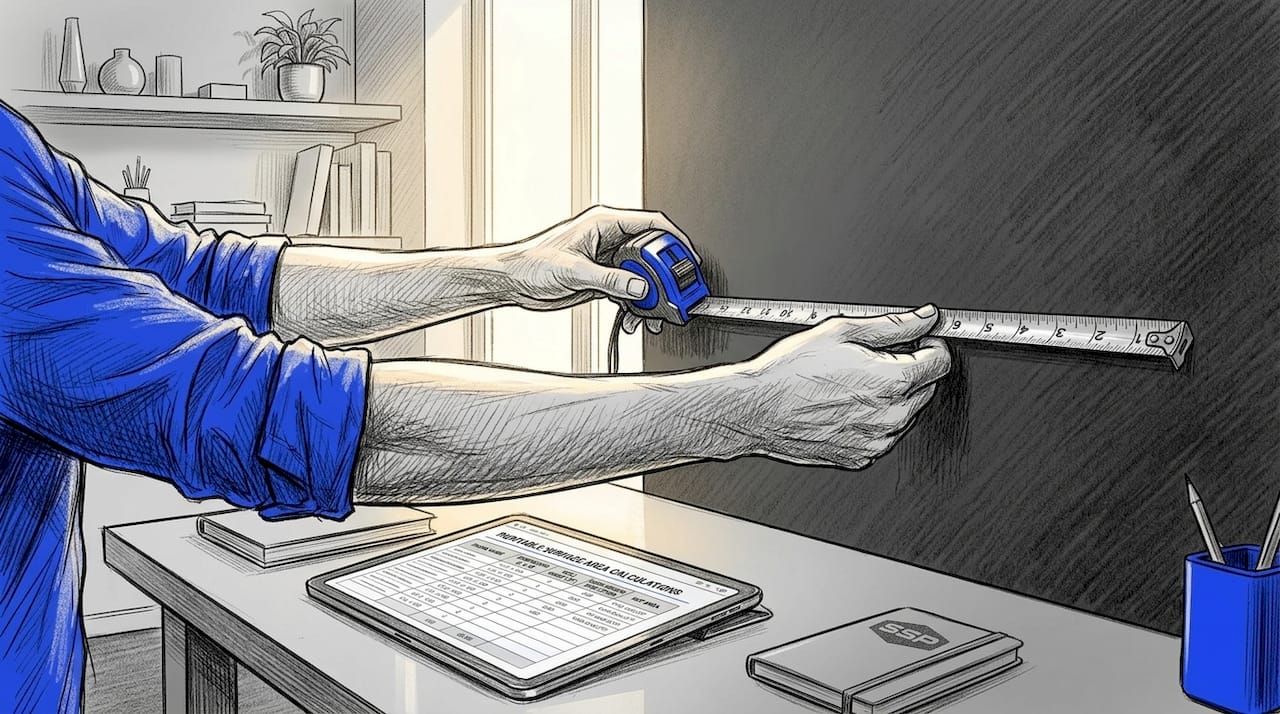
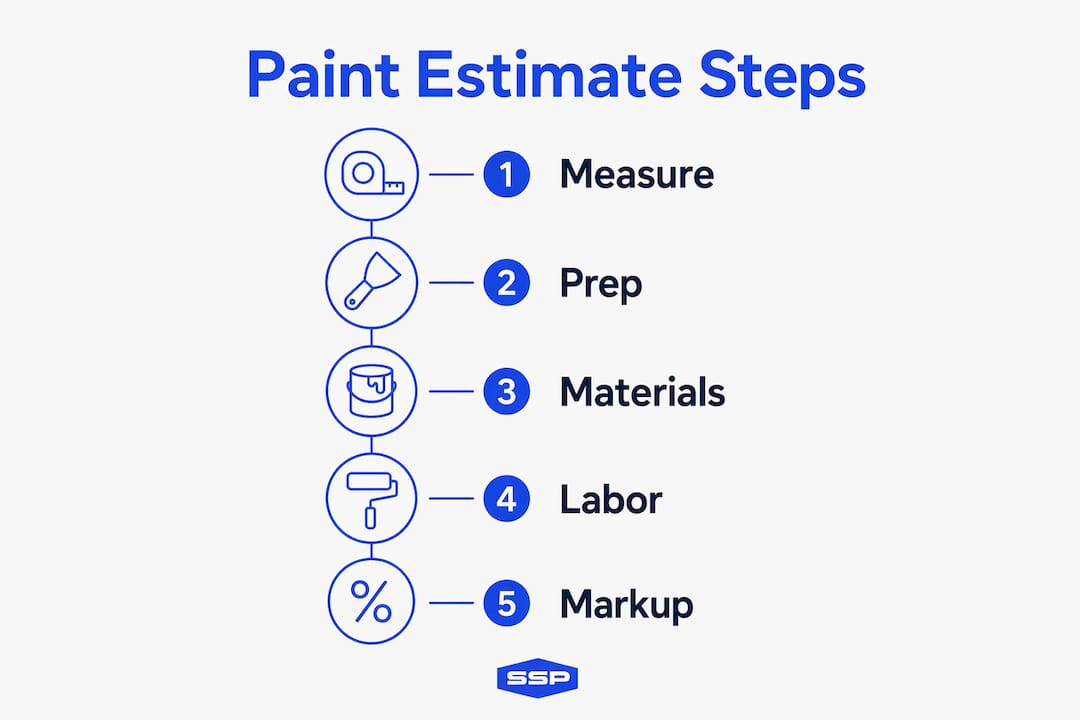
Paintable surface area is the foundation of every cost calculation. Painters measure total wall area in square feet, then subtract the unpaintable portions occupied by doors and windows to arrive at a net paintable figure. From there, two cost drivers dominate: materials and labor.
| Cost Factor | How It Is Calculated | Typical Impact |
|---|---|---|
| Paint materials | Net sq ft ÷ coverage rate × number of coats | One gallon covers roughly 350 to 400 sq ft per coat |
| Labor | Hours estimated per task × hourly rate + overhead markup | Up to 75 to 95% of total project cost |
| Prep complexity | Condition of surfaces, number of repairs, primer needs | Can double labor hours on older or damaged surfaces |
| Ceiling height | Standard is 8 ft; each additional foot increases time | Adds scaffolding or extension equipment costs |
| Paint quality | Premium products cost more per gallon but often cover better | Fewer coats needed can offset higher material cost |
Interior painting in 2026 runs approximately $2 to $6 per paintable square foot, inclusive of labor and materials. That range reflects real variation driven by ceiling height, surface condition, number of coats, paint quality, and regional labor rates. Labor is the dominant cost in any painting project, accounting for up to 75 to 95 percent of the total price. This means that a contractor cutting corners on prep is not saving you money on materials. They are reducing the hours they spend on the work that determines how long the finish lasts.
Professional painters also build markup into their estimates to cover overhead costs including insurance, licensing, equipment maintenance, and business operations. A markup of 15 to 30 percent above direct costs is standard practice and reflects a legitimate, insured business rather than a side-hustle operator.
Pro Tip: When reviewing cost factors for your project, ask the contractor to separate the labor line from the materials line. This single step reveals whether the price is driven by quality prep time or inflated material markups.
What are common pitfalls in painting estimates?
Not all painting estimates are created equal, and the difference between a professional quote and a problematic one often hides in the details. Vague scopes and missing prep descriptions are the leading causes of disputes between homeowners and painters after work begins.
Watch for these specific red flags:
- Lump-sum pricing with no breakdown: A single number with no separation of labor, materials, or prep tasks makes it impossible to compare quotes or hold a contractor accountable.
- No mention of prep work: Skipping caulking, sanding, or priming is how a low bid stays low. The finish will fail within a year.
- Missing exclusions: A professional estimate explicitly states what is not included. If the document is silent on furniture moving, minor repairs, or primer coats, assume they are not included.
- No warranty clause: Reputable painters stand behind their work. An estimate without warranty terms signals a contractor who does not expect to be called back.
- Unsigned or undated documents: An estimate without a signature line and expiration date is not a contract. It offers no legal protection.
"Detailed scope definitions listing exactly what will be painted and prepped are the primary tools to avoid disputes." — Housecall Pro Painting Contract Guide
Surface conditions discovered after work begins can generate additional costs even on well-prepared estimates. Professional contractors handle this through repair allowances or explicit contingency clauses that define how unexpected damage will be priced and approved before work continues. This protects both parties and prevents the uncomfortable mid-project conversation about surprise charges. If an estimate has no language addressing unforeseen conditions, ask the contractor directly how they handle it before signing.
How should you compare and use multiple estimates?
Comparing professional painting quotes effectively requires a structured approach rather than a quick scan of the bottom line. Requesting at least three written estimates from licensed, insured contractors gives you a meaningful data set and reveals the real market rate for your specific project.
Follow this process when evaluating estimates side by side:
- Verify credentials first. Confirm each contractor carries general liability insurance and workers' compensation. An uninsured painter working in your home creates financial exposure that no low bid justifies.
- Compare scope, not just price. Line up what each estimate includes for prep, number of coats, paint brand, and warranty. A $4,000 quote covering two coats of Sherwin-Williams Emerald with full prep is not comparable to a $2,800 quote with one coat of an unspecified product and no prep detail.
- Evaluate the estimate document itself. A contractor who produces a clear, itemized, professionally formatted estimate is demonstrating the same attention to detail they will bring to your walls. A handwritten note or a one-line email is not a professional estimate.
- Ask clarifying questions before signing. If any line item is unclear, request a written explanation. Ambiguity in a signed contract always resolves in favor of the contractor.
- Negotiate on scope, not just price. If a quote exceeds your budget, ask what prep or finish work can be phased into a future project rather than asking the contractor to simply cut the price. Price reductions without scope reductions always come from somewhere.
- Use the estimate as your project benchmark. Once signed, the estimate becomes the reference document for every conversation about changes, additions, or disputes during the project.
You can find additional guidance on evaluating painting contractors to recognize quality providers from their documentation alone.
What tools can help you estimate paint costs before getting quotes?
Online painting estimate calculators give homeowners a reliable baseline before requesting formal quotes. Paint calculators use room dimensions, number of coats, and standard coverage rates to estimate gallons needed, typically applying a coverage standard of 400 square feet per gallon for walls.
| Tool Type | Best Use | Limitation |
|---|---|---|
| Online paint calculator | Estimating gallons and rough material cost | Does not account for labor, prep, or surface condition |
| Brand coverage guides | Comparing Sherwin-Williams, Benjamin Moore, and Behr product yields | Coverage varies by sheen and surface porosity |
| Estimate worksheet templates | Understanding line items before reviewing contractor quotes | Requires accurate room measurements to be useful |
| Professional on-site estimate | Final cost and scope confirmation | Requires scheduling with a licensed contractor |
Sherwin-Williams, Benjamin Moore, and Behr each publish coverage rate data for their product lines, and these figures differ meaningfully. A premium product like Benjamin Moore Aura may cover slightly less per gallon than a standard product but requires fewer coats, which affects total material cost. Calculators are useful for setting a budget range and understanding roughly how many gallons a project requires, but they cannot replace a professional on-site assessment. Surface condition, existing paint adhesion, and the specific prep requirements of your walls are variables no calculator can measure remotely. Use a calculator to prepare informed questions for your contractor, not to validate or challenge their final number.
Key takeaways
A professional paint estimate is only as valuable as the detail it contains. Itemized labor, named materials, explicit prep tasks, and clear warranty terms are the markers that separate a reliable estimate from a risky one.
| Point | Details |
|---|---|
| Definition and function | A professional paint estimate is a written document covering scope, prep, materials, timeline, costs, and warranty terms. |
| Labor dominates cost | Labor accounts for up to 75 to 95 percent of total painting costs, making prep quality the primary cost driver. |
| Itemization protects you | Estimates without a breakdown of prep, coats, and materials create disputes and hidden costs after work begins. |
| Compare three estimates | Requesting at least three written quotes allows meaningful comparison of scope, materials, and value rather than price alone. |
| Contingency clauses matter | Professional estimates address unforeseen surface conditions through allowances or exclusion clauses to protect both parties. |
Why the estimate tells you everything about the painter
After years of seeing how painting projects go wrong, the pattern is consistent. The problems almost never start on the wall. They start in the estimate. A contractor who produces a vague, one-page lump-sum quote is telling you exactly how they plan to run the job: loosely, with room to cut corners when no one is watching.
The estimate is not just a price. It is a window into how a contractor thinks about their work. When I review an estimate and see specific prep tasks listed by surface, named paint products with sheen levels, a realistic timeline, and a warranty clause with clear terms, I know the contractor has done this job many times and respects the process. When I see "paint living room, $1,800," I know someone is going to be unhappy by the end of the project.
The lowest bid almost always omits something. It might be a coat of primer on bare drywall patches, or proper masking of trim before spraying, or the time needed to sand and caulk before any paint goes on. These are not optional steps. They are the difference between a finish that looks great for ten years and one that starts peeling in eighteen months. Southshorepaint builds every estimate with full prep documentation because we have seen what happens when that work is skipped, and we are not willing to put our name on a result that will not last.
My honest advice: treat the estimate document as your first quality test. If a contractor cannot write a clear, detailed proposal, they cannot deliver a clear, detailed paint job.
— Ryan
Get a detailed painting estimate from Southshorepaint

Southshorepaint provides written estimates that break down every element of your project, from surface preparation and primer selection to final coat specifications and warranty terms. We specialize in high-quality interior and exterior finishes built on proper prep and premium materials, and our estimates reflect that commitment with full transparency. You will know exactly what is being done, with what products, and on what timeline before any work begins. If you are ready to understand the true cost of your painting project or want to see what a professional estimate looks like in practice, request your estimate from Southshorepaint today.
FAQ
What is a professional paint estimate?
A professional paint estimate is a detailed written document specifying the scope of work, surface preparation tasks, paint products and coats, project timeline, total costs, payment terms, and warranty. Once signed by both parties, it functions as a binding contract.
How much does interior painting cost per square foot in 2026?
Interior painting costs range from approximately $2 to $6 per paintable square foot in 2026, depending on ceiling height, surface condition, number of coats, paint quality, and regional labor rates.
How many estimates should I get before hiring a painter?
You should request at least three written estimates from licensed, insured contractors. Comparing three quotes gives you a realistic market rate and reveals differences in scope, materials, and prep that a single quote cannot expose.
What makes a painting estimate unreliable?
An estimate is unreliable when it uses lump-sum pricing with no breakdown, omits prep work descriptions, excludes warranty terms, or fails to list the specific paint products to be used. These omissions create disputes and unexpected costs after work begins.
Can I use an online paint calculator instead of getting a professional estimate?
Online paint calculators accurately estimate gallons needed based on room dimensions and coverage rates, but they cannot account for surface condition, prep requirements, or labor costs. Use them to set a budget range, then confirm with a professional on-site estimate before committing to any project.