
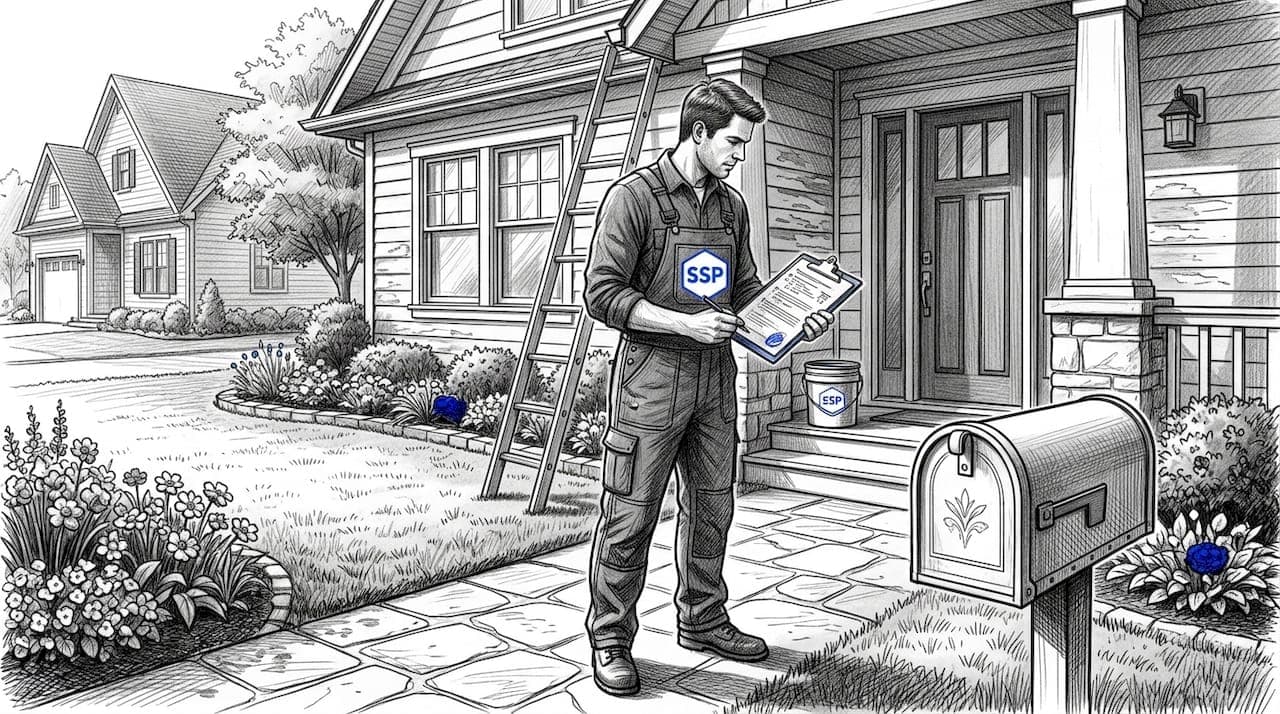
Homeowners and property managers often invest in a fresh coat of exterior paint expecting it to look great for decades, only to find themselves facing faded, chalky, or peeling surfaces far sooner than expected. The truth is that exterior paint longevity is rarely as straightforward as a product label suggests. Consumer Reports testing shows that even top-performing paints resist major wear for about nine years or more under controlled conditions, yet real-world results in California can vary dramatically based on prep quality, surface type, and local climate. This guide cuts through the marketing noise and gives you a clear, practical picture of what actually drives exterior paint longevity.
Table of Contents
- What does exterior paint longevity really mean?
- Main factors that determine exterior paint longevity
- How California's climate impacts exterior paint life
- Maximizing longevity: Preparation, product selection, and maintenance
- Expert perspective: Why "lifetime" paint claims don't match real-world results in California
- Get longer-lasting results with South Shore Painting
- Frequently asked questions
Key Takeaways
| Point | Details |
|---|---|
| No true 'lifetime' paints | Actual service life depends on prep, climate, substrate, and upkeep, not label claims. |
| California’s climate matters | Local sun, wind, and coastal factors directly impact how long your exterior paint lasts. |
| Best results require expert steps | Proper surface preparation and regular maintenance are crucial for maximum longevity. |
| Choose quality and application | Premium paints excel only when matched with the right prep and conditions. |
What does exterior paint longevity really mean?
Paint longevity is not simply about how long a can of paint sits on a shelf. In practical terms, it refers to the period of time before significant fading, cracking, chalking, or mildew growth appears on a painted exterior surface. Once any of these failure modes becomes visible, the paint is no longer doing its primary job, which is protecting your home's substrate from moisture intrusion and UV damage.
The gap between marketing language and real-world performance is wide. Many manufacturers use terms like "lifetime" or "25-year" warranties on their labels, but as paint durability research consistently shows, these are product-oriented claims, not guarantees of how long the paint will actually perform on your specific home. A "lifetime" warranty typically covers the paint product itself against defects, not the service life of the coating system as applied to your wall.
Real paint longevity is determined by the weakest link in the system: substrate condition, prep quality, coating selection, and ongoing maintenance. No single product warranty can account for all of these variables on your property.
What benchmarks like Consumer Reports paint testing actually tell us is that top paints can resist major wear for nine years or more under accelerated exposure. That is a useful baseline, but California's UV intensity, coastal salt air, and temperature swings mean real-world service life can land well above or below that number depending on your specific conditions.
Key factors that define paint longevity in practice include:
- Chalking: A powdery residue on the surface caused by UV breakdown of the binder
- Cracking and peeling: Moisture cycling or poor adhesion causing the film to separate from the substrate
- Fading: Loss of color depth, most common on south and west-facing walls
- Mildew growth: Organic staining that thrives in shaded or moisture-prone areas
Understanding weather's impact on paint lifespan and knowing what premium paint features actually deliver are both essential starting points before any exterior project.
Main factors that determine exterior paint longevity
With a definition in hand, let's dig into the real-world factors that determine how long your paint actually lasts. While brand reputation and paint quality do matter, they are only part of the equation. The variables below often have a greater influence on service life than the paint product itself.
| Factor | Impact on longevity | Notes |
|---|---|---|
| Surface prep quality | Very high | Chalky, dirty, or unprepared surfaces cut life in half |
| Primer use | High | Correct primer improves adhesion and moisture resistance |
| Substrate type | High | Stucco typically outlasts wood by several years |
| Sun exposure (orientation) | High | South and west faces age faster due to UV load |
| Coastal proximity | Medium to high | Salt and fog accelerate film breakdown |
| Paint quality (grade) | Medium | Premium paints extend life, but only with proper prep |
| Maintenance frequency | Medium | Regular caulk and edge checks prevent early failure |
The best paints in Consumer Reports testing resist cracking, fading, dirt, and mildew for nine years or more, but local sun and moisture conditions push results in either direction. A premium paint applied over chalky, poorly prepped stucco in direct Southern California sun may fail in five years, while a mid-grade product applied over properly primed, clean wood in a shaded inland location might last twelve.
Here is the sequence of prep steps that most directly influence longevity:
- Wash the surface thoroughly to remove dirt, mildew, and chalky residue before any coating is applied
- Scrape and sand any loose or peeling paint to create a clean, stable bonding surface
- Caulk all gaps and joints around windows, doors, trim, and penetrations to prevent moisture entry
- Apply a compatible primer matched to the substrate, especially on bare wood, repaired stucco, or previously chalked surfaces
- Apply two full coats of premium topcoat at the manufacturer's recommended spread rate, avoiding over-thinning
- Allow proper drying time between coats, particularly in humid or cool conditions
As longevity research confirms, practical longevity depends on correct prep and priming, a coating system matched to the facade, and ongoing edge and caulk maintenance. Skipping any of these steps, even with the most expensive paint on the market, will shorten service life considerably.
Pro Tip: After any exterior paint job, mark your calendar for an annual walk-around inspection. Look specifically at caulked joints around windows and trim, as these are the first places moisture finds its way in and the first places paint systems begin to fail.
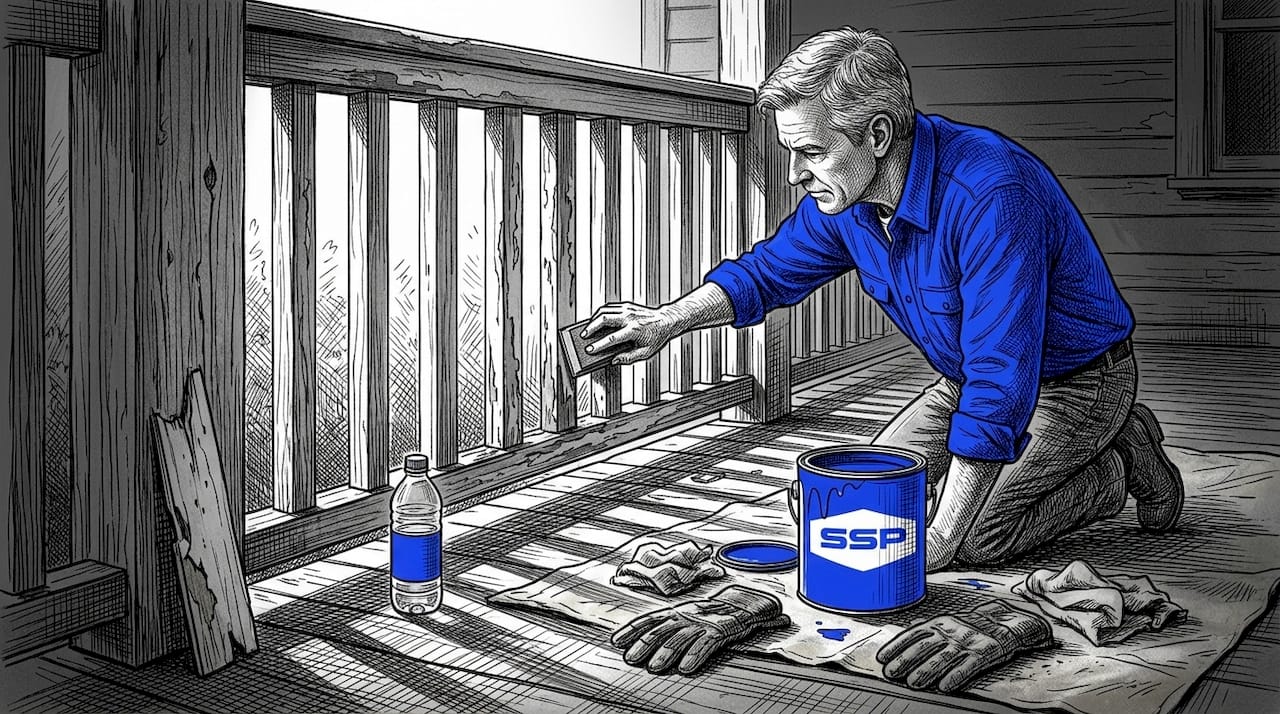
Understanding weather's role in paint wear and knowing the benefits of repainting at the right time are both directly connected to how well you manage these factors over the life of the coating.
How California's climate impacts exterior paint life
The unique climate in California adds another layer. Let's look at how local conditions shape paint longevity in ways that national product testing simply cannot capture.
California is not a single climate. A home in Torrance, exposed to marine layer fog and salt air, faces entirely different stressors than a property in Riverside, where dry heat and intense UV radiation dominate. Both environments are hard on exterior paint, but in different ways.
| California climate zone | Primary stressor | Expected paint life (stucco) | Expected paint life (wood) |
|---|---|---|---|
| Coastal (e.g., South Bay, Santa Monica) | Salt air, fog, UV | 8 to 12 years | 5 to 8 years |
| Inland valley (e.g., San Bernardino, Fresno) | Intense UV, heat cycling | 7 to 10 years | 5 to 7 years |
| Northern California (e.g., Sacramento) | Rain, temperature swings | 8 to 12 years | 6 to 9 years |
| High desert (e.g., Palmdale, Lancaster) | Extreme UV, dry heat | 6 to 9 years | 4 to 7 years |
As Consumer Reports testing data makes clear, service life on a California property will vary depending on sun intensity, surface, and maintenance. These ranges are realistic estimates based on professional experience and industry benchmarks, not guarantees.
South and west-facing walls in California take the hardest UV hit. Pigments break down faster, binders lose flexibility, and chalking begins earlier on these exposures. Homes near the coast also deal with salt particles carried by fog and wind, which can accelerate film breakdown and cause corrosion on any metal trim or fasteners embedded in the substrate.
Common signs of climate-related paint failure to watch for include:
- Chalky white residue that rubs off on your hand when you touch the wall
- Hairline cracking or alligatoring (a pattern resembling reptile skin) caused by repeated thermal expansion and contraction
- Peeling or bubbling near window frames or at the base of walls where moisture enters
- Faded or uneven color most pronounced on sun-exposed elevations
- Mildew or dark staining on shaded north-facing walls or under eaves
In coastal California, salt air is a silent accelerant. It does not cause dramatic failures overnight, but it steadily degrades the paint film's integrity, particularly at joints and edges where the coating is thinnest.
Choosing premium paints for tough climates and understanding South Bay weather factors are practical starting points for any California homeowner or property manager planning an exterior project.
Maximizing longevity: Preparation, product selection, and maintenance
Given the challenges, here is a practical guide to maximizing your paint's lifespan with each project and through ongoing care.
The single most important investment you can make in paint longevity is not the paint itself. It is the preparation. Industry research consistently shows that correct prep and matching the coating system to exposure are the biggest levers for real-world longevity. A professional-grade paint applied over a properly prepared surface will always outperform a premium paint applied over a neglected one.
Here is a practical step-by-step approach for maximizing service life:
- Start with a thorough inspection. Before washing or scraping, walk the entire perimeter and note areas of existing failure, caulk gaps, rust stains, or mildew. These are your priority areas.
- Pressure wash at appropriate pressure. Too little pressure leaves contaminants behind. Too much pressure can damage stucco or wood grain. A professional setting is typically 1,500 to 2,500 PSI for most residential exteriors.
- Treat mildew before priming. A diluted bleach solution or commercial mildewcide applied before painting prevents mildew from returning under the new coat.
- Spot prime bare areas and repairs. Any patched stucco, bare wood, or previously chalked areas need a dedicated primer coat to ensure adhesion.
- Select a topcoat matched to your substrate and exposure. Elastomeric coatings work well for stucco in high-UV zones. 100% acrylic latex is the standard for most California wood and stucco applications.
- Apply at the right temperature and humidity. Exterior paint applied in direct midday sun or in temperatures above 90°F can blister or fail to bond properly. Early morning application is ideal in California summers.
- Inspect and maintain annually. Check caulked joints, trim edges, and any areas that showed early wear during your pre-paint inspection.
Pro Tip: Property managers overseeing multiple units should schedule exterior inspections every spring, before the dry season begins. Catching a failing caulk joint early costs a fraction of what a full repaint due to moisture damage will run.
Statistic to keep in mind: Homes that receive annual maintenance checks and caulk touch-ups can realistically extend paint service life by two to four years beyond the average, according to professional painting contractors with long-term client relationships. That extension translates directly into fewer repaint cycles and lower long-term costs.
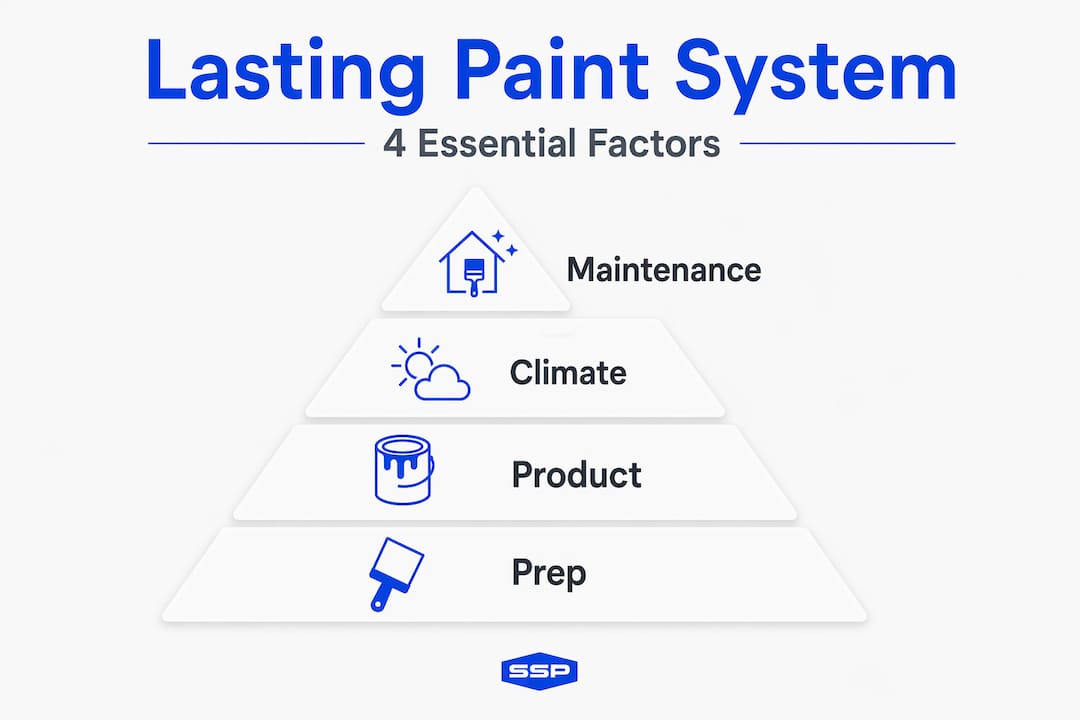
Common DIY mistakes that shorten service life, even when using expensive paint, include skipping primer on bare surfaces, applying paint in direct sun, using too little paint per coat to stretch coverage, and neglecting to caulk before painting. Each of these shortcuts creates a vulnerability that weather will exploit over time.
For painting tips for property managers and guidance on why repaint at the right time, these resources offer additional practical detail for California properties.
Expert perspective: Why "lifetime" paint claims don't match real-world results in California
Looking beyond the standard advice, here is how real professionals view exterior paint longevity.
After years of working on California homes and commercial properties, one pattern becomes impossible to ignore: the homes with the longest-lasting paint jobs are almost never the ones where the owner spent the most on paint. They are the ones where the surface was prepared with care, the right primer was selected, and someone bothered to check the caulk every year.
"Lifetime" paint warranties are written by legal teams, not painters. They cover the product against manufacturing defects, not the performance of the coating system on your specific substrate under your specific conditions. As durability research confirms, real-world durability depends on substrate movement, prep quality, and whether the coating stays intact at joints. None of those variables are controlled by the paint manufacturer once the product leaves the can.
The uncomfortable truth is that a $90-per-gallon paint applied by someone who skipped the primer and painted over chalky stucco will fail faster than a $55-per-gallon product applied correctly over a clean, primed surface. The brand on the can matters less than the system behind the brush.
We also see homeowners and property managers fall into the trap of waiting too long to repaint because they believe the "lifetime" label protects them. By the time they notice visible failure, moisture has often already found its way behind the film, and what could have been a straightforward repaint becomes a repair-and-repaint project that costs significantly more.
The right approach is to treat exterior paint as a system, not a product. That system includes prep, primer, topcoat, caulking, and annual maintenance. When all of those elements are in place, you get the best possible service life regardless of what the label says. Working with experienced professional painters who understand this system approach is the most reliable way to get real longevity from any exterior paint project.
Get longer-lasting results with South Shore Painting
If you have read this far, you understand that real exterior paint longevity comes from a system built on proper prep, the right products, and ongoing attention, not from a label or a marketing claim.

At South Shore Painting, we specialize in exactly that kind of work. Our team brings deep experience with California's coastal and inland climate conditions, and we match every coating system to the specific substrate, exposure, and maintenance needs of your property. From thorough surface prep to premium product selection and detailed finishing, every project is built to last. If you want to see what that looks like in practice, read what our clients say on our customer reviews page, or explore the full range of South Shore Painting services to find the right solution for your home or property.
Frequently asked questions
How often should exterior paint be reapplied in California?
In California, most exterior paint jobs need refreshing every 7 to 10 years, though intense UV exposure or inadequate prep can shorten that cycle. Service life varies depending on sun intensity, surface type, and how well the property is maintained.
Does premium paint last longer than standard paint?
Premium exterior paints generally resist fading and cracking longer than standard grades, but only when applied over properly prepared surfaces. Consumer Reports testing shows top paints resisting major wear for nine years or more, a result that depends heavily on prep quality.
What signs show that exterior paint needs replacing?
Look for fading, a chalky residue that rubs off on your hand, peeling or bubbling near joints, and mildew staining as clear indicators that your paint is failing and needs attention before moisture damage sets in.
Does repainting boost property value?
Yes. A fresh, well-maintained exterior paint job significantly enhances curb appeal and can increase perceived and actual property value, particularly in competitive California real estate markets where first impressions carry real weight.
Can I extend paint life through regular maintenance?
Absolutely. Annual inspections, caulk touch-ups at joints and trim edges, and surface cleaning can realistically add two to four years to your paint's service life. As industry research confirms, edge and caulk maintenance are among the most practical levers for extending longevity between full repaint cycles.