

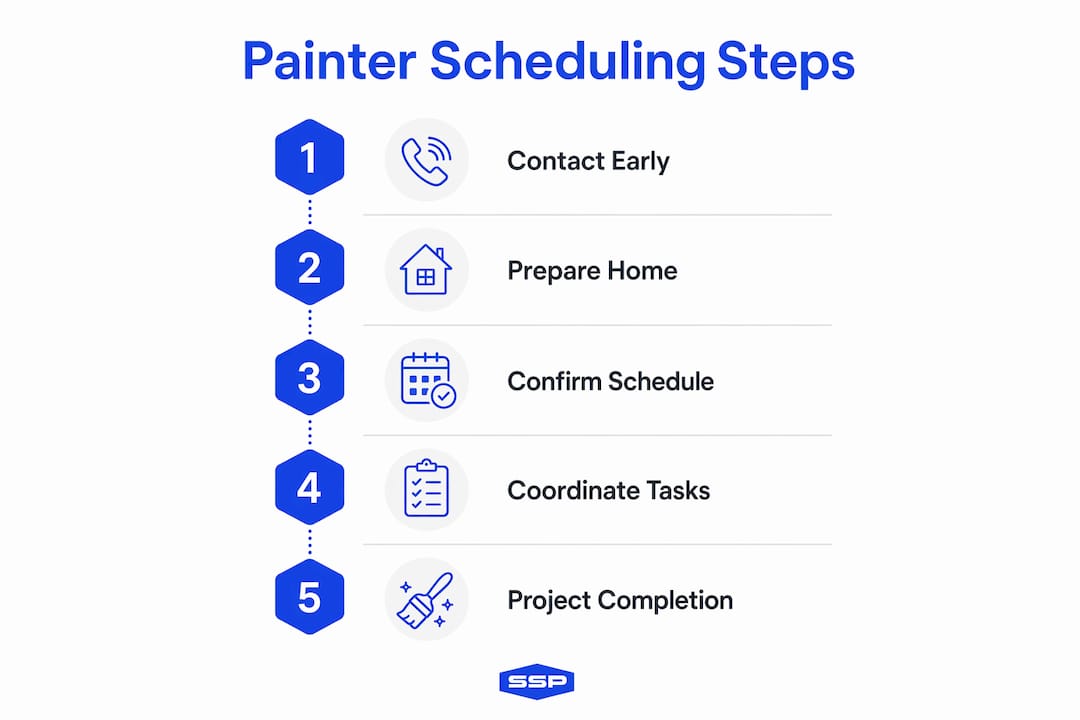
Scheduling painters the right way means booking qualified contractors several weeks in advance, preparing your space before they arrive, and confirming every detail in writing before work begins. Done correctly, the process protects your timeline, your budget, and the quality of the finished result. Here is what every homeowner and property manager should have in place before a single brush touches the wall:
- Book early. Standard lead times for painting projects run 2–6 weeks, depending on project size and season. Skilled contractors often fill their schedules quickly.
- Coordinate with other trades. Flooring, carpentry, and electrical work should be sequenced around the painting schedule to prevent conflicts.
- Clear the space. Remove wall décor, small furniture, and valuables from every work area before the crew arrives.
- Confirm the details. Review payment schedules, change-order policies, and warranty terms with your painter before the project starts.
- Understand pricing. Painters typically charge $20–$60 per hour or price by the square foot, so knowing the scope upfront prevents billing surprises.
Why scheduling quality painters early gives you better results
The best residential painters in any market stay booked. Waiting until the last minute rarely lands you a skilled contractor; it lands you whoever is available. That distinction shows up directly in the finished work.
Booking early gives you access to painters who can afford to be selective about their projects, which usually means better prep work, higher-quality materials, and finishes that hold up longer. Rush scheduling, by contrast, often means accepting whoever can start immediately, and that urgency tends to compress the prep phase, where most painting failures actually originate.
There are other practical benefits worth considering:
- Avoiding rush fees. Contractors who squeeze in last-minute jobs sometimes charge a premium for the scheduling disruption.
- Better material selection. A painter with adequate lead time can source the right primer, topcoat, and specialty finishes for your specific surfaces rather than defaulting to whatever is in stock.
- Smoother coordination. Early booking gives you time to align the painting schedule with other renovation work, furniture delivery, or tenant move-in dates.
- Realistic weather planning. For exterior projects, booking ahead lets you build in weather contingencies without pushing the whole project back by weeks.
Pro Tip: If you are planning a spring or summer exterior project, start reaching out to painters in late winter. Those seasons represent peak demand, and many contractors have their calendars locked well in advance.
The value of waiting for a reputable contractor rather than grabbing the first available one cannot be overstated. A quality paint job on properly prepped surfaces can last several years on interior walls. A rushed job on poorly prepped surfaces may require repainting much sooner.
How to prepare your home before painters arrive
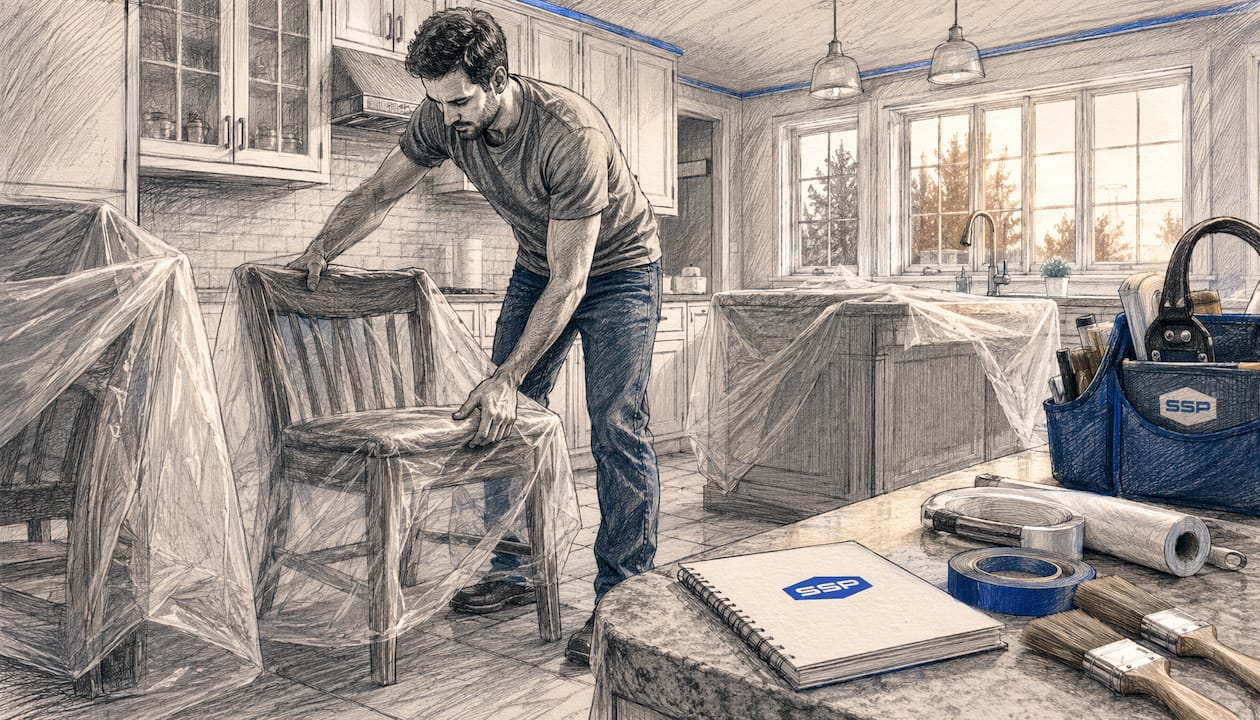
Preparation is a shared responsibility, and knowing which tasks fall to you versus the painting crew prevents misunderstandings on day one. Professional painters handle surface prep like patching, sanding, caulking, and masking. Homeowners are responsible for clearing the space and securing anything that cannot be replaced.
Before painters arrive, complete these steps:
- Remove wall décor. Take down artwork, mirrors, clocks, and shelving from every room being painted.
- Move small furniture out. Larger pieces can often be pushed to the center of the room and covered, but small tables, chairs, and lamps should leave the space entirely.
- Secure valuables. Store jewelry, electronics, and irreplaceable items in a locked room or off-site.
- Clear access paths. Painters need unobstructed routes to walls, windows, and trim. Remove rugs, floor lamps, and anything that creates a tripping hazard.
- Communicate site conditions. Let your painter know about any moisture issues, previous water damage, lead paint concerns in older homes, or surfaces that have been previously repaired.
One detail homeowners frequently overlook: if your home was built before 1978, surfaces may contain lead-based paint. Certified painters follow specific EPA protocols for lead-safe work, and that process affects both scheduling and cost. Raise this with your contractor during the estimate, not after work begins.
Clear communication about site conditions also helps painters build an accurate schedule. A room with extensive patching needs, for example, requires more prep time than a freshly drywalled space, and that difference ripples through the entire project timeline.
Understanding painter scheduling timelines and how far ahead to book
Most homeowners underestimate how far in advance they need to contact a painting contractor. The 2–6 week booking window is a general guideline, but several factors push that window wider.
Seasonal demand is the biggest variable. Spring and summer are peak painting seasons, particularly for exterior work, and reputable contractors in most U.S. markets are booked solid from april through september. If you want a quality crew for a june exterior project, reaching out in march is not early; it is on time.
Project complexity also extends lead times. A single-room interior refresh might get scheduled within two weeks. A full exterior repaint with multiple surfaces, custom colors, and trim detail work could require four to six weeks of lead time just to get on the calendar, plus additional days for the work itself.
Other timeline factors to account for:
- Drying and curing times. Most latex paints dry to the touch in 1–2 hours but need 24 hours between coats. Oil-based products take longer. A multi-room project with two or three coats per surface can span several days even with a full crew.
- Multi-trade coordination. Scheduling around other contractors requires sequencing: flooring typically goes in after painting, while rough carpentry and drywall must be complete before painters begin.
- Material delivery. Custom colors or specialty coatings sometimes require a few days' lead time from the supplier, which your painter should factor into the project start date.
- Weather windows for exterior work. Most exterior paints require temperatures above 50°F and low humidity. In many U.S. regions, that limits the viable painting season to spring through early fall.
Pro Tip: Ask your painter for a written project timeline that includes start date, expected completion, and any weather-related contingencies for exterior work. A contractor who cannot produce this is not ready to manage your project.
Property managers coordinating painting across multiple units face an additional layer of complexity. Tenant schedules, lease terms, and unit turnover windows all affect when work can realistically begin. Building that coordination into the booking conversation from day one prevents the kind of last-minute rescheduling that costs everyone time and money. For a deeper look at managing painting timelines across commercial or multi-unit properties, Southshorepaint's commercial scheduling guide covers the sequencing in detail.

Expert insights on scheduling high-quality painting projects
Booking a painter is straightforward. Booking the right painter requires a bit more diligence, and the vetting process itself is part of the scheduling conversation.
About 95% of residential painters offer free estimates, so there is no reason to commit to a contractor before reviewing a detailed written bid. A thorough estimate should break down rooms, surfaces, number of coats, paint brand and product line, prep tasks, and warranty terms. If an estimate arrives as a single lump sum with no line items, ask for a revised version before signing anything.
References are equally telling. A professional painter should readily provide contact details for recent jobs, ideally projects completed within the last six months. Reluctance to share references is a reliable indicator of quality or reliability concerns. Three recent references is a reasonable minimum; two or fewer gives you no real basis for comparison.
Common pitfalls that experienced painters actively avoid:
- Vague scope. Professionals define exactly which surfaces are included, which are excluded, and what prep work is covered. Ambiguity in the estimate almost always leads to disputes during the project.
- No written change-order policy. Scope changes happen. A contractor without a documented process for handling them creates billing uncertainty for both parties.
- Skipping the walkthrough. Any painter who provides a firm estimate without physically inspecting the space is guessing. A proper on-site walkthrough is standard practice, not optional.
- Unclear payment terms. Reviewing payment schedules and deposit requirements before work begins protects homeowners from contractors who demand full payment upfront.
Southshorepaint's approach to scheduling reflects these professional standards: detailed estimates, clear timelines, and open communication at every stage of the project. For homeowners who want to understand how preparation and scheduling decisions affect long-term results, the 2026 best painting practices guide covers the full picture.
When you are coordinating a project that involves door replacements or refinishing alongside your paint work, sequencing matters. Interior door color choices, for instance, should be finalized before painters begin so trim and door colors are confirmed in the same scheduling conversation. Resources like interior door color guidance can help you lock in those decisions early.
Ready to book your next painting project?

Southshorepaint specializes in residential and commercial painting built on proper prep, premium materials, and workmanship designed to last. Whether you are planning an interior refresh or a full exterior repaint, the team brings the scheduling discipline and professional standards your project deserves. Visit Southshorepaint to request an estimate and get your project on the calendar.
Key Takeaways
Scheduling painters successfully comes down to booking early, preparing your space thoroughly, and confirming every project detail in writing before work begins.
| Point | Details |
|---|---|
| Book 2–6 weeks ahead | Standard lead times run 2–6 weeks; peak seasons push that window further out. |
| Prepare the space first | Remove wall décor, small furniture, and valuables before the crew arrives to avoid delays. |
| Vet with references | Ask for contact details from jobs completed in the last six months; reluctance is a red flag. |
| Get a detailed estimate | About 95% of residential painters offer free estimates with line-item breakdowns of scope, materials, and terms. |
| Coordinate other trades | Sequence flooring, carpentry, and electrical work around the painting schedule to prevent conflicts. |