

Commercial paint scheduling is defined as the structured planning and coordination of painting projects across commercial properties to minimize operational disruption, protect building assets, and extend the life of applied coatings. For property managers and business owners, it is the difference between a project that runs quietly in the background and one that shuts down operations for days. Unlike residential painting, commercial projects involve facility access constraints, occupant safety, coating specifications, and procurement timelines that all must align before a single brush touches a wall.
What is commercial paint scheduling and why does it matter?
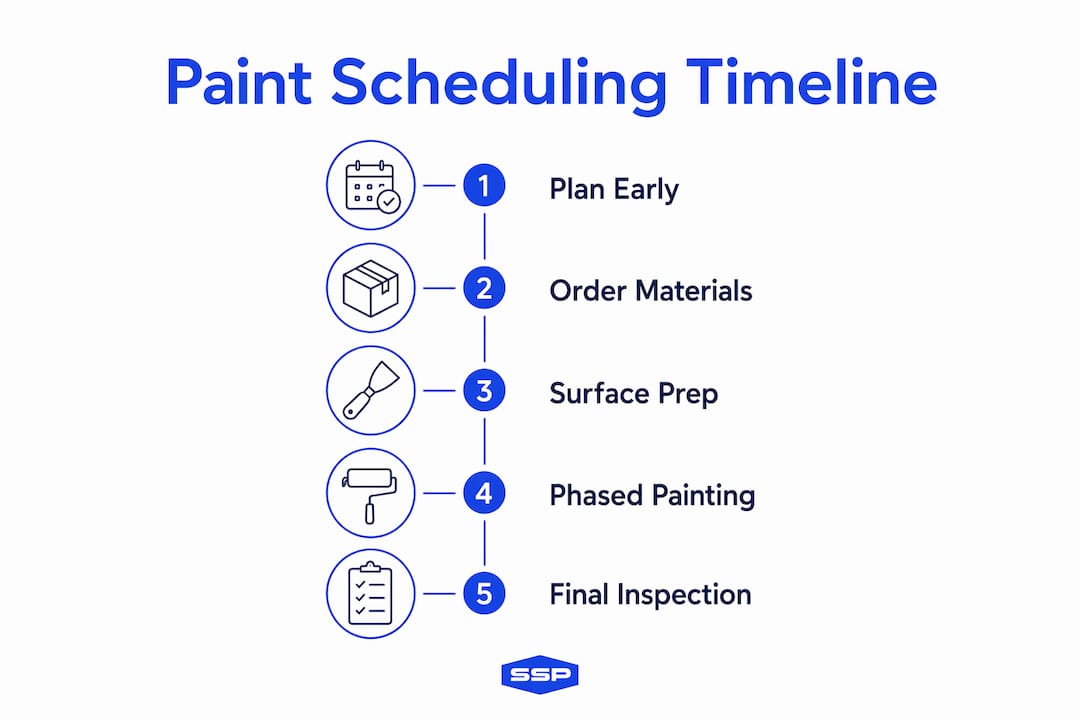
Commercial paint scheduling is the process of organizing every phase of a painting project, from scope definition and material procurement to crew deployment and final inspection, around the operational realities of a working facility. The industry term for this broader discipline is paint project management, and scheduling is its most critical component. Without it, even a well-funded project can stall, overrun its timeline, or disrupt the tenants and employees who depend on the space.
The stakes are real. Small commercial offices under 5,000 square feet typically require 1–5 days to paint, while larger warehouses or multi-floor buildings can take 1–8 weeks. That range reflects how much site conditions, weather, and access limitations shape the commercial painting timeline. A property manager who treats a 50,000-square-foot facility the same way as a small retail suite will face cost overruns and schedule failures.
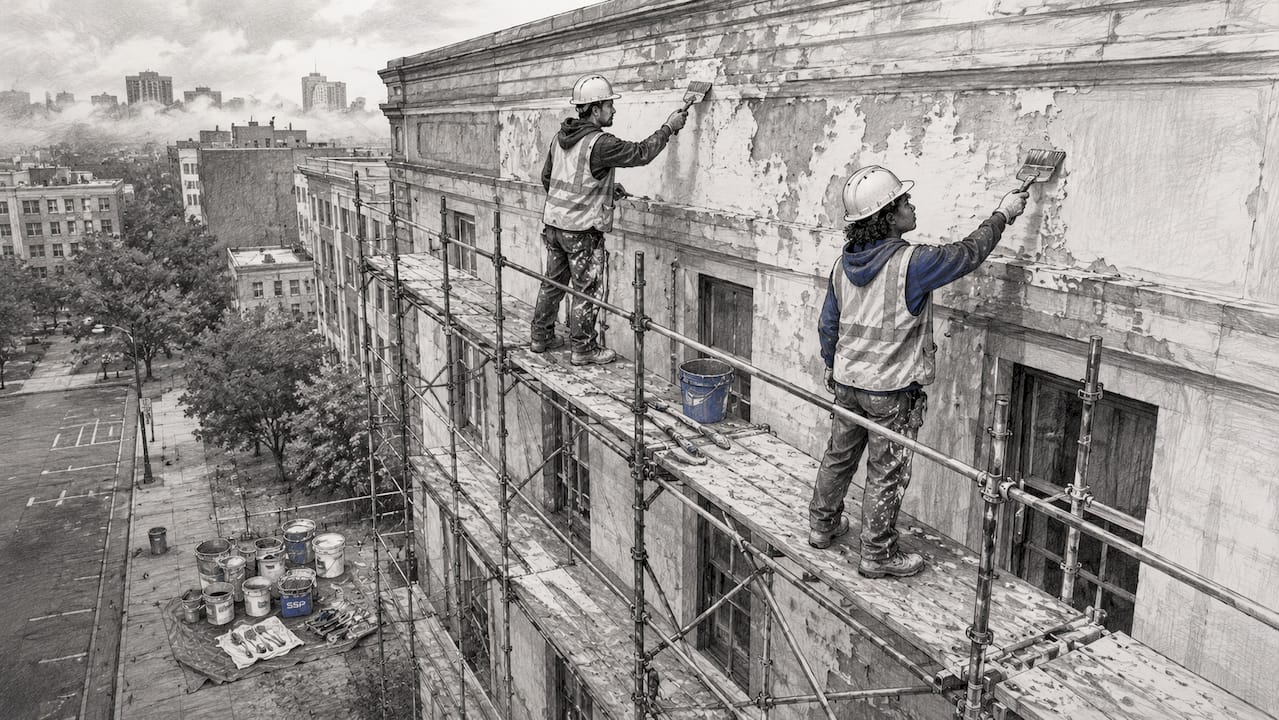
Scheduling also protects the coating investment itself. Surface preparation alone accounts for 20–40% of total project time on well-run commercial jobs. Skipping or compressing that phase to save time produces coatings that fail early, forcing premature repainting and higher long-term costs.
What factors influence the scheduling of commercial painting projects?
Several variables shape how a commercial painting timeline gets built. Understanding them upfront prevents the most common scheduling failures.
- Facility operational hours and traffic patterns. A hospital, hotel, or distribution center that runs around the clock requires a fundamentally different schedule than a standard office building. Painting must be sequenced around shift changes, delivery windows, and occupancy peaks.
- Weather and climate conditions. Exterior painting is directly constrained by temperature, humidity, and precipitation. Most exterior coatings require temperatures above 50°F and relative humidity below 85% to cure properly. Scheduling exterior work in fall or winter in northern climates requires careful weather monitoring and contingency windows.
- Project size and access limitations. Multi-story buildings require lifts, scaffolding, or swing stages that must be scheduled, permitted, and coordinated with building operations. Confined spaces, active loading docks, and occupied tenant floors all add complexity to the access plan.
- Specialty coating procurement. Specialized high-performance coatings carry procurement lead times of 2–4 weeks. Failing to order materials before the project start date is one of the most common and avoidable causes of delay.
Pro Tip: Lock in your coating specifications and place material orders at least three weeks before the scheduled project start. This single step eliminates the most frequent cause of commercial project delays.
The cost factors tied to building size, site conditions, and coating type all feed directly into how the schedule gets structured. Addressing them during the planning phase, not after work begins, keeps the project on track.
How do phased scheduling and work window strategies minimize disruption?
Phased scheduling is the most effective method for painting commercial facilities without halting operations. It divides the project into defined zones, sequences work through those zones in a controlled order, and releases each area back to operations only after inspection and cure. Phased segmentation, shift-based work, and inspection holds allow 24/7 facilities to maintain production without compromising coating quality.
A well-structured phased schedule follows this sequence:
- Define work zones. Divide the facility into logical segments based on function, traffic, and adjacency. A warehouse might be split by bay; an office building by floor or wing.
- Assign work windows. Schedule each zone during its lowest-traffic period. After-hours, weekends, and phased execution by floor or department are the most common approaches.
- Implement inspection holds. After painting each zone, hold it closed until the coating reaches full cure and the area passes a cleanup inspection. No area is released back to operations until cure time and cleanup are confirmed complete.
- Sequence the next zone. Move crews to the next defined zone only after the previous one clears inspection. This prevents cross-contamination and protects fresh coatings from foot traffic or equipment.
- Document and communicate progress. Update facility stakeholders after each zone completes so they can plan occupancy and operations accordingly.
"Phased painting schedules allow for coating quality and operational continuity in 24/7 facilities through careful zone segmentation and inspection holds."
This approach works because it treats the painting project as an operational event, not a maintenance interruption. Facilities that adopt phased scheduling report far fewer complaints from tenants and employees compared to those that attempt to paint entire floors or buildings in a single push.
What are the best practices and common pitfalls in commercial paint project planning?
Effective commercial paint project planning separates projects that finish on time and on budget from those that drag on for weeks past their deadline. The following practices define the difference.
- Conduct a detailed scope walkthrough before scheduling begins. Walk every surface to be painted with the contractor before signing a contract. This produces an accurate scope document that prevents change orders and schedule revisions mid-project.
- Lock in colors, coatings, and contract terms before the start date. Late color decisions or coating substitutions force procurement delays and can push the entire commercial painting timeline back by weeks.
- Empower a single on-site liaison. Delays result from decisions moving up committee chains. Designating one person with authority to approve minor field decisions keeps the schedule moving without requiring executive sign-off on every small issue.
- Build contingency time into the schedule. Weather delays, surface repairs discovered during prep, and material delivery issues are common. A schedule with no buffer has no resilience.
- Establish communication protocols from day one. Daily progress updates, milestone tracking, and immediate escalation of delays keep all parties aligned and prevent small issues from becoming major schedule disruptions.
The most damaging pitfall is treating the painting project as a commodity purchase. Property managers who select contractors based on the lowest bid often end up with crews that skip surface prep, use off-spec coatings, or lack the project management experience to execute a phased schedule. Reviewing a contractor's track record with complex projects before signing is a non-negotiable step.
Pro Tip: Ask your contractor to provide a written phase-by-phase schedule with specific zone completion dates before work begins. If they cannot produce one, that tells you everything about how the project will be managed.
How does a commercial painting timeline support long-term asset protection?
Commercial painting is an asset-protection program, not a cosmetic upgrade. Quality surface preparation and timely repainting extend coating life 3–7 years, reducing the total cost of ownership for the building envelope and interior surfaces. Property managers who schedule painting reactively, only when surfaces look visibly deteriorated, consistently pay more over time than those who follow a proactive maintenance cycle.
The table below shows typical project duration ranges by facility type, which directly informs how far in advance scheduling must begin.
| Facility type | Typical project duration | Recommended planning lead time |
|---|---|---|
| Small office (under 5,000 sq ft) | 1–5 days | 3–4 weeks |
| Mid-size office or retail | 1–2 weeks | 6–8 weeks |
| Large warehouse or industrial | 2–8 weeks | 10–14 weeks |
| Multi-floor occupied building | 4–10 weeks | 12–16 weeks |
These ranges reflect real-world conditions including prep time, cure windows, and phased access. A property manager who waits until two weeks before a desired start date to engage a contractor for a large warehouse project will face either a delayed start or a compressed schedule that sacrifices quality.
Regular inspection cycles are the foundation of a sound maintenance schedule. Walking surfaces annually and documenting coating condition allows property managers to plan repainting before failure occurs rather than after. This approach also supports budget forecasting, since a known 5-year coating cycle is far easier to fund than an emergency repainting triggered by surface failure.
Pro Tip: Schedule a formal surface inspection every 12 months and photograph the same reference points each time. Comparing photos year over year gives you objective data for deciding when to repaint, rather than relying on subjective impressions.
For South Bay property managers, the coastal climate adds an additional variable. Salt air accelerates coating degradation on exterior surfaces, which often shortens the effective maintenance cycle compared to inland properties.
Key Takeaways
Effective commercial paint scheduling requires phased execution, early procurement, and empowered on-site decision-making to protect both operations and the coating investment.
| Point | Details |
|---|---|
| Schedule early and plan procurement | Order specialty coatings 3+ weeks ahead to avoid the most common project delay. |
| Use phased zone scheduling | Segment the facility into work zones and release each only after inspection and cure. |
| Prep time is non-negotiable | Surface preparation takes 20–40% of project time and directly determines coating lifespan. |
| Empower an on-site liaison | One authorized contact prevents committee bottlenecks that derail commercial schedules. |
| Treat painting as asset protection | A proactive 3–7 year maintenance cycle costs less over time than reactive repainting. |
What I've learned from watching commercial paint projects go sideways
After working on commercial painting projects across a range of property types, the pattern that causes the most schedule failures is almost always the same. The property manager treats the project as a procurement event rather than an operational one. They get bids, pick a number, sign a contract, and then expect the contractor to handle everything. When the first complication appears, there is no communication structure, no empowered decision-maker on site, and no contingency time in the schedule. The project stalls.
The property managers who run the smoothest projects do the opposite. They invest time upfront in a thorough scope walkthrough, they designate a single point of contact with real authority, and they build a written phase-by-phase schedule before work begins. They also understand that the cheapest bid rarely accounts for proper prep time, and that cutting prep is where coating failures begin.
The other thing I consistently observe is that facilities with a documented painting maintenance cycle spend less money over a 10-year period than those that paint reactively. A coating that gets refreshed on schedule, before it fails, protects the substrate underneath. A coating that is left until it peels or cracks has often allowed moisture intrusion that requires expensive surface repair before repainting can even begin.
The mindset shift that matters most is this: commercial painting is not a line item to minimize. It is a maintenance investment with a measurable return in building longevity and reduced repair costs. Schedule it accordingly.
— Ryan
How Southshorepaint supports your commercial painting schedule
Southshorepaint works with commercial property managers and business owners who need more than a crew with brushes. We bring structured project planning, phased scheduling, and clear communication protocols to every commercial job we take on.

From the initial scope walkthrough to final zone inspection, Southshorepaint coordinates around your facility's operational hours, access constraints, and coating requirements. Our crews are trained to execute phased schedules without cutting corners on prep or cure time, because we know that is where the long-term value of the project lives. If you are planning a commercial painting project and want a contractor who treats scheduling as seriously as the painting itself, contact Southshorepaint to discuss your project timeline and get a detailed plan built around your facility.
FAQ
What is commercial paint scheduling?
Commercial paint scheduling is the structured planning and coordination of painting projects in commercial facilities to minimize disruption, align with operational constraints, and protect coating quality. It covers everything from scope definition and material procurement to phased execution and final inspection.
How long does a commercial painting project typically take?
Small offices under 5,000 square feet typically take 1–5 days, while large warehouses or multi-floor buildings can require 2–8 weeks. Project duration depends on facility size, surface condition, coating type, and access limitations.
How do you schedule commercial painting without disrupting operations?
After-hours work, weekend scheduling, and phased execution by zone or floor are the most effective methods. Each zone is held closed until coating cure and inspection are complete before reopening to occupants.
Why does surface preparation affect the painting schedule?
Surface prep accounts for 20–40% of total project time on properly executed commercial jobs. Compressing or skipping this phase shortens coating lifespan and forces earlier repainting, which costs more over time.
How far in advance should I plan a commercial painting project?
For small offices, 3–4 weeks of lead time is typically sufficient. Larger or more complex facilities require 10–16 weeks of planning time to account for scope definition, specialty coating procurement, and phased scheduling coordination.