

Hire a licensed, insured professional who delivers a written, itemized estimate listing surface prep, paint brand and product line, number of coats, and a workmanship warranty before a single brush touches your wall. That one document separates qualified interior house painters from contractors who will cut corners on prep, issue surprise change orders, and disappear when the finish starts peeling.
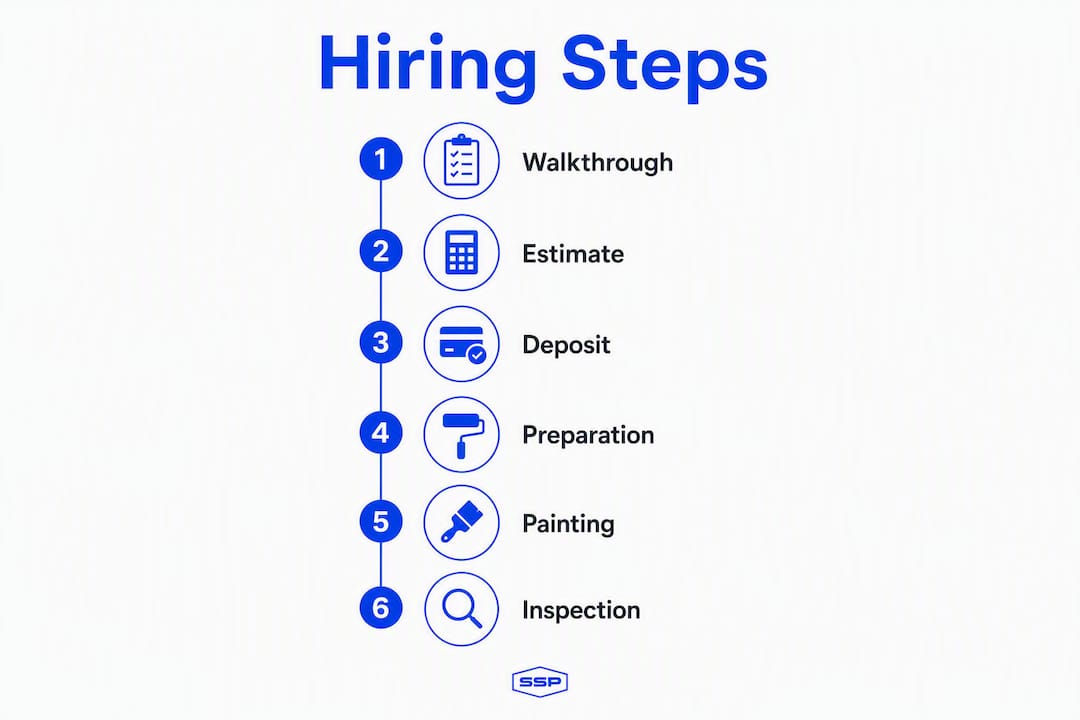
Two trust signals to verify before any conversation goes further: a valid state contractor's license and certificates showing both general liability and workers' compensation insurance. Consumer Reports recommends that reputable pros provide this documentation without hesitation. Any contractor who hedges on either is a contractor to pass on.
Use this checklist the moment you call a contractor:
- Ask for the license number and verify it through your state's contractor registry.
- Request an itemized written estimate covering prep scope, paint brand and product line, coat counts, and timeline.
- Ask for at least two recent references and before/after photos from comparable jobs.
- Confirm the crew size and whether the contractor uses employees or subcontractors.
- Clarify the deposit and payment schedule before the walkthrough.
Pro Tip: A deposit of a modest percentage to secure your start date is standard industry practice. If a contractor asks for half or more upfront, treat it as a serious warning sign and move on.
Table of Contents
- What does a professional interior painting job actually include?
- How much does interior painting cost in 2026?
- How do you vet and compare interior painting contractors?
- Which paints, primers, and sheens actually matter?
- What should your written contract include?
- Why prep and the initial walkthrough predict the final result
- Key Takeaways
- What pros wish homeowners knew before the first call
- South Shore Painting delivers prep-first interior repaints in the South Bay
- Authoritative sources and further reading
What does a professional interior painting job actually include?
Professional interior painting is a multi-phase process, and the phases that happen before any paint is applied are the ones that determine whether the finish lasts three years or ten.
The standard project sequence:
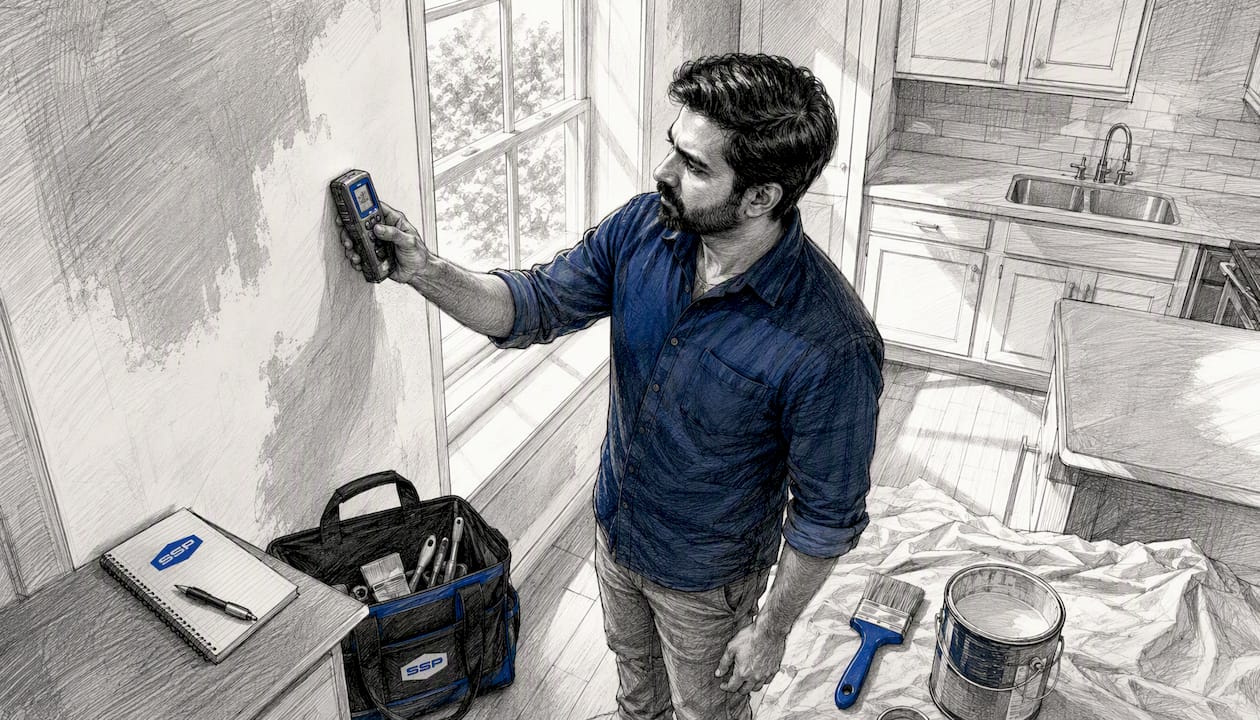
- Initial walkthrough and scoping. The contractor inspects every room, checks wall conditions, notes moisture, identifies repairs, and documents all findings on the estimate. A thorough contractor uses a moisture meter on suspect areas and flags hidden damage before pricing.
- Surface preparation. Patching holes and cracks, sanding rough surfaces, caulking gaps at trim and corners, cleaning grease or staining, and applying primer where needed. For pre-1978 homes, EPA Renovation, Repair, and Painting (RRP) rules require containment and HEPA cleanup by a certified renovator. Those costs belong on the estimate, not absorbed later.
- Painting. Cutting in edges by brush, rolling walls, and painting trim and doors separately. Quality crews work in a defined sequence to avoid lap marks and missed coverage.
- Cleanup. Removing drop cloths, tape, and masking; replacing outlet covers and hardware; and disposing of materials properly.
- Final walkthrough and warranty sign-off. The contractor walks every room with you, addresses any touch-ups on the spot, and provides the written warranty.
Typical time estimates by surface type:
| Surface | Small Room (12×12) | Average Room | Notes |
|---|---|---|---|
| Walls (2 coats) | 3–5 hours | 5–8 hours | Faster with open layout |
| Ceilings (2 coats) | 2–4 hours | 3–5 hours | Slowest surface per sq ft |
| Trim and doors | 2–4 hours | 3–6 hours | Most labor-intensive per linear ft |
| Full room (all surfaces) | 1–2 days | 2–3 days | Includes prep and dry time |
A whole-house repaint of a 1,500–2,000 sq ft home with standard prep typically runs 5–10 working days, depending on ceiling height, the amount of trim, and whether any drywall repair is needed.
Pro Tip: During the walkthrough, watch whether the contractor actually probes suspect walls with a moisture meter and writes specific repairs onto the estimate. Contractors who skip this step are the ones who issue change orders after work begins.
How much does interior painting cost in 2026?
Labor is the dominant cost line in any professional painting quote. DIY materials for a 1,500 sq ft job run roughly $400–$700, while a professional quote for the same home lands between $4,500 and $7,500 for walls only with premium paint, and $9,000–$18,000 for a full premium job including trim and detailed prep. The gap is burdened labor: wages, taxes, insurance, and equipment. Paint brand is a relatively small variable compared to prep hours and crew time.
Per-square-foot and per-room ranges (2026):
| Scope | Typical Range |
|---|---|
| Per sq ft (walls only) | $3.75–$6.75 |
| 12×12 bedroom (walls + ceiling) | $400–$850 |
| Full 1,500 sq ft home (walls only, premium paint) | $4,500–$7,500 |
| Full 1,500 sq ft home (walls + trim + detailed prep) | $9,000–$18,000 |
| Full 2,000 sq ft interior | $3,800–$7,600 |
Sources: PaintPricing 2026 cost guide and Renology whole-home repaint guide.
Factors that push a quote higher:
- Ceilings above 9 feet (more setup, slower rolling)
- Dramatic color changes requiring additional coats or tinted primer
- Significant patching, skim coating, or stain blocking
- Lead-safe practices on pre-1978 homes
- Cabinet or detailed trim work, which is priced by linear foot, not square foot
Ways to reduce total cost without sacrificing quality:
- Bundle multiple rooms or floors into a single project; mobilization costs are shared.
- Schedule during slower seasons (typically late fall or winter in most U.S. markets) when contractors may offer better availability and pricing.
- Phase the work: complete high-traffic areas first, then secondary rooms in a follow-up project.
A second coat of paint adds roughly 20–30% to material costs but often makes the difference between a finish that holds for five years and one that shows wear in two. Ask specifically whether the quote includes one or two coats on walls, ceilings, and trim separately.
How do you vet and compare interior painting contractors?
The 13 questions framework used by professional estimators gives homeowners a structured way to screen contractors before inviting anyone on-site. Start with a phone screen, then conduct a more detailed walkthrough conversation.
Phone screen: what to ask before the walkthrough
- "What is your state contractor license number?" (Verify it independently.)
- "Can you provide certificates of general liability and workers' comp insurance?"
- "Do you do in-person walkthroughs before providing an estimate, or do you quote by square footage alone?"
- "What is your standard deposit and payment schedule?"
- "How long have you worked in this area, and can you provide two or three recent local references?"
On-site walkthrough checklist:
- Does the contractor inspect wall conditions room by room, or give a quick visual sweep?
- Do they use a moisture meter on areas near windows, bathrooms, or exterior walls?
- Do they document specific repairs (patching, caulking, sanding) on the estimate rather than using vague language like "standard prep"?
- Do they name the specific paint brand, product line, and sheen for walls, ceilings, and trim?
- Do they state exact coat counts for each surface?
- Do they explain the timeline and crew size?
Red flags that disqualify a contractor immediately:
- Refuses to provide a license number or insurance certificates
- Offers a price without visiting the property
- Demands 50% or more upfront
- Uses vague language on prep ("we'll take care of it") without specifics
- Cannot name the paint brand or product line they plan to use
How to compare three bids correctly: Consumer Reports advises comparing line items, not totals. A bid that looks $800 cheaper may simply omit primer, list one coat instead of two, or skip caulking. Ask each contractor to match the same scope, then compare prep hours, paint brand and gallons, coat counts, and trim labor separately. For more guidance on reading bids, the homeowner's estimate workflow guide from Southshorepaint walks through each line item in detail.
For reference and portfolio checks, request the addresses of two recent comparable jobs, ask for before/after photos, and call at least one phone reference. Ask the reference specifically whether the contractor completed prep as promised and honored the warranty.

Which paints, primers, and sheens actually matter?
Paint brand matters less than most homeowners expect. What matters more is the grade within a brand, the correct primer for the substrate, and the right sheen for the room's use.
Paint grade and value: Mid-grade and premium paints from established manufacturers offer meaningfully better hide, color retention, and washability than entry-level lines. Premium paint often reduces the number of coats needed for a full color change, which saves labor time and can offset the higher material cost. A contractor who recommends the cheapest available product to win a bid is likely cutting elsewhere too.
When primer is required: New drywall always needs a full coat of primer before paint. Stain blocking (water stains, smoke, tannin bleed from wood) requires a shellac-based or oil-based primer, not a latex paint-and-primer product. A significant color change, especially from a dark to a light color, benefits from a tinted primer to reduce coat counts. The surface prep and priming guide from Southshorepaint covers these scenarios in practical detail.
Sheen selection by room:
- Flat/matte: Ceilings and low-traffic adult bedrooms; hides imperfections well but does not clean easily.
- Eggshell: Living rooms and dining rooms; the most popular interior sheen for good reason.
- Satin: Hallways, kids' rooms, and any surface that sees regular contact; washable and durable.
- Semi-gloss: Kitchens, bathrooms, and all trim and doors; resists moisture and cleans without damage.
Surface prep essentials: Patching, sanding, caulking, and degreasing are not optional steps that can be skipped to lower a bid. They are the reason a finish adheres properly and looks uniform after two coats. When lead paint is possible (homes built before 1978), proper containment and HEPA cleanup are legally required under EPA RRP rules. Those costs should appear as a line item on the estimate. For a deeper look at why surface condition drives finish quality, the why paint surface matters article explains the mechanics clearly.
Pro Tip: Ask the contractor to name the specific product line for walls, trim, and ceilings, and confirm the coat count for each. A vague answer like "a good quality paint" is not an acceptable response from a professional.
When it comes to doors specifically, the sheen and paint type matter as much as the wall color. If you are weighing whether to repaint interior doors or replace them entirely, One Day Doors & Closets offers practical guidance on color choices and when painting makes more sense than replacement.
What should your written contract include?
A signed contract is the only document that protects you if the work is incomplete, the finish fails prematurely, or a worker is injured on your property. Verbal agreements are unenforceable in most states.
Contract checklist: insist on every item below
- Contractor's full legal name, business address, license number, and insurance certificate numbers.
- Scope of work: every room and surface to be painted, listed individually.
- Line-item prep: exactly what will be patched, sanded, caulked, and primed.
- Paint brand, product line, and sheen for walls, ceilings, and trim.
- Coat counts for each surface.
- Project start date, estimated completion date, and crew size.
- Payment schedule: deposit amount (10–30%), any milestone payments, and final payment due after satisfactory walkthrough.
- Change-order process: any additional work requires written approval and a revised estimate before it proceeds.
- Warranty terms: duration, what is covered (peeling, adhesion failure, visible lap marks), and how to request service.
Sample warranty language to request: "Contractor warrants all labor and workmanship against peeling, blistering, and adhesion failure for [X] years from the date of project completion, provided surfaces are maintained under normal conditions."
Payment norms and red flags:
- Standard deposit: 10–30% to secure the start date, with the remainder due at completion.
- Final payment should occur only after you have walked every room and approved the work.
- Never pay the full balance before the walkthrough. A contractor who pressures you to pay in full before completion has no remaining incentive to address deficiencies.
For change orders, the rule is simple: nothing proceeds without a written, signed amendment to the original contract. Verbal approvals for additional work are how disputes start.
Why prep and the initial walkthrough predict the final result
The single most common homeowner misconception about interior painting is that paint brand determines the outcome. Industry experts are clear: prep work, not paint quality, drives labor time and final quality. A premium paint applied over poorly patched, uncaulked, or unprimed surfaces will fail faster than a mid-grade product applied correctly over properly prepared walls.
Professional estimators build quotes by calculating labor hours per surface type: walls roll faster than ceilings, and ceilings roll faster than trim. A contractor who skips the walkthrough cannot accurately account for hidden moisture, existing repairs, or the actual linear footage of trim. The result is an underpriced bid followed by change orders once the crew discovers what the walkthrough would have revealed.
The contractor who itemizes prep is the one who actually plans to do it. Vague prep language on an estimate ("walls will be prepared as needed") is not a plan. It is a placeholder that protects the contractor, not the homeowner. Specific language ("patch 12 nail holes, sand and feather three drywall repairs, caulk all window and door trim, apply one coat of stain-blocking primer to ceiling water stain") is what a thorough professional writes.
Pro Tip: During the walkthrough, ask the contractor to walk you through the specific repairs they plan to make and write each one on the estimate. If they cannot name the repairs, they have not looked closely enough.
Key Takeaways
Hiring qualified interior house painters comes down to three non-negotiables: a written itemized estimate, verified license and insurance, and a workmanship warranty before work begins.
| Point | Details |
|---|---|
| Demand an itemized estimate | The estimate must list prep scope, paint brand and product line, coat counts, and timeline. |
| Verify license and insurance | Confirm the state contractor license number and request insurance certificates before signing anything. |
| Compare line items, not totals | Large bid differences almost always come from omitted prep or fewer coats, not lower labor rates. |
| Expect a 10–30% deposit | Standard U.S. practice; any demand for 50% or more upfront is a red flag. |
| Southshorepaint for South Bay homeowners | Southshorepaint provides in-person walkthroughs, itemized written estimates, and premium-prep interior repaints in the South Bay, CA. |
What pros wish homeowners knew before the first call
Most disputes between homeowners and painting contractors trace back to a single source: an estimate that was never specific enough to hold anyone accountable. When the scope is vague, the contractor has room to interpret it in their favor, and the homeowner has no written standard to point to when the finish does not meet expectations.
At Southshorepaint, the approach starts with a detailed walkthrough because that is where the real project is defined. Moisture issues, existing repairs, primer requirements, and coat counts are not assumptions. They are documented items on the estimate, and they stay there through project completion. The crew that does the walkthrough is the crew that does the work, which means the person who made the prep commitments is accountable for delivering them.
Deposits and scheduling are straightforward: a standard deposit secures the start date, milestone payments align with project phases, and the final payment happens after you have walked every room and approved the result. No pressure, no ambiguity.
The homeowners who get the best outcomes are the ones who ask the most specific questions before signing. Ask about the primer. Ask about the coat count on the trim. Ask what happens if a repair is discovered mid-project. A contractor who answers those questions clearly and in writing is a contractor worth hiring.
South Shore Painting delivers prep-first interior repaints in the South Bay
For South Bay homeowners who want a finish that holds, Southshorepaint offers something straightforward: a professional interior repaint built on thorough prep, premium materials, and a workmanship warranty that means something.

What Southshorepaint provides:
- In-person walkthrough with moisture inspection and documented repair scope
- Itemized written estimate covering prep, paint brand and product line, coat counts, and timeline
- Interior repaints, drywall repair, trim and cabinet refinishing, and premium paint application
- Licensed and insured crews with general liability and workers' compensation coverage
- Written workmanship warranty on all labor
When you request an estimate from Southshorepaint, the process starts with a scheduled walkthrough, not a phone quote. You receive a written estimate that lists every line item, and the project does not begin until you have reviewed and approved it. References from recent local jobs are available on request.
To schedule your walkthrough and get a written estimate, visit Southshorepaint or contact the team directly. Deposit and payment terms are explained at the estimate stage, with no surprises at final billing.
Authoritative sources and further reading
For homeowners who want to go deeper on any of the topics covered here, the following resources are worth bookmarking:
- How to Hire a Painter (Consumer Reports) — Practical vetting checklist and red-flag guidance from a trusted independent source.
- Verify your state contractor license — California-specific licensing verification steps and what to look for in a contractor's credentials.
- Southshorepaint blog — How-to articles on hiring painters, reading estimates, surface prep, and color selection written for South Bay homeowners.
- What Is a Professional Paint Estimate? (Southshorepaint) — Detailed breakdown of every line item a professional estimate should contain.