
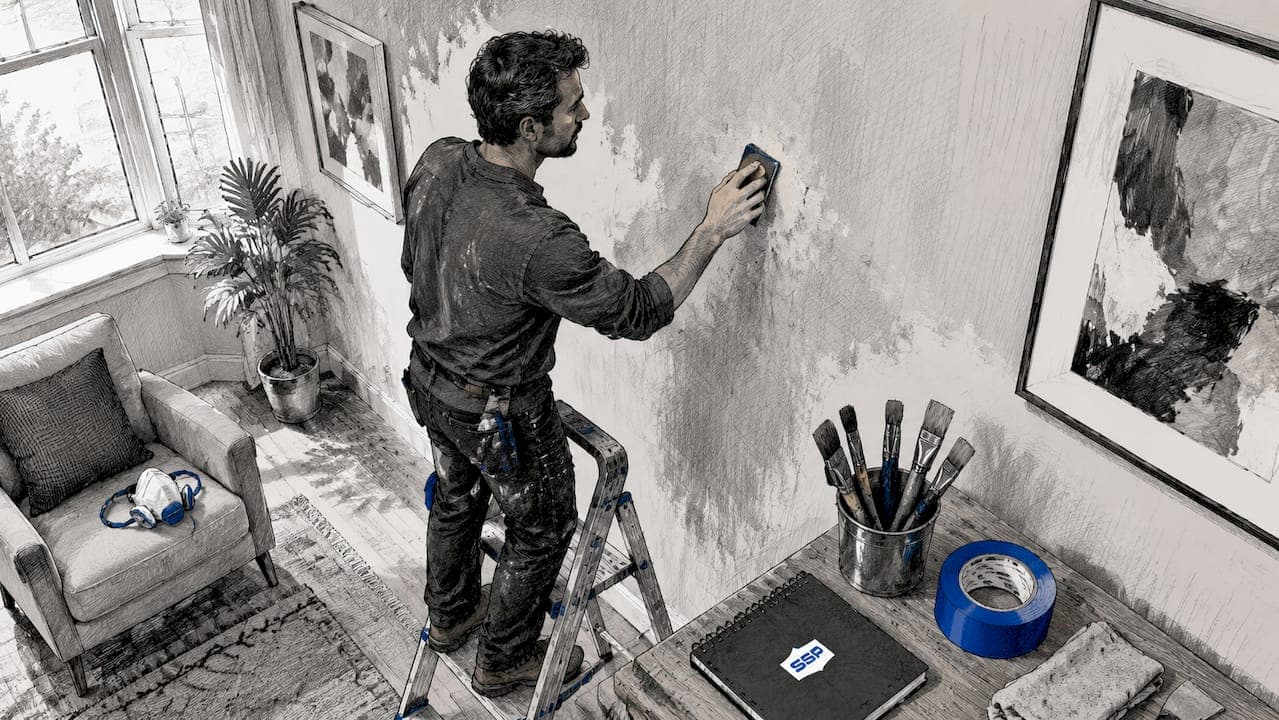
Surface preparation is the single most important factor in any residential or commercial paint project. 70–80% of paint failures trace back to inadequate prep work, not the paint itself. That statistic reframes the entire conversation around why paint surface matters. Before a single drop of paint touches your walls, the condition of that surface determines whether your investment lasts one year or ten. Southshorepaint builds every project on this principle, because a beautiful finish that fails in two years is not a finish worth having.
Why paint surface matters for adhesion and durability
Paint adhesion is a physical and chemical process, and both mechanisms depend entirely on the surface beneath the coating. Mechanical bonding works by giving paint microscopic anchor points to grip. A well-prepared surface creates thousands of these anchor points through sanding and profiling, producing a bond stronger than chemical adhesion alone. Without that texture, paint sits on top of the surface rather than bonding to it.
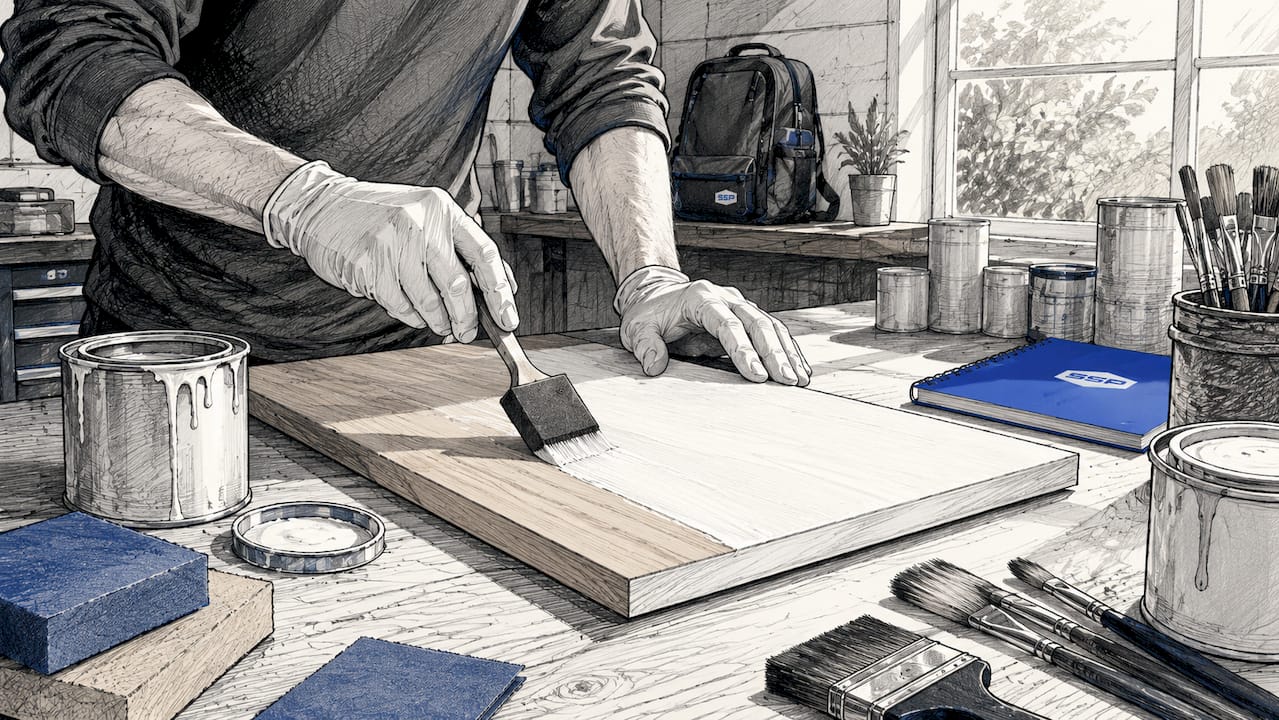
Chemical adhesion requires a substrate that is clean and free of contaminants. Types of contaminants that prevent proper bonding include oil, grease, dust, moisture, and incompatible old coatings. Each of these acts as a barrier between the paint film and the wall. The paint may look fine at first, but the bond is compromised from day one.
The consequences of poor adhesion show up fast. Common failure modes include:
- Peeling: Paint lifts from the surface in sheets, typically starting at edges or seams
- Blistering: Moisture trapped beneath the film creates bubbles that rupture over time
- Chalking: The paint film breaks down into a powdery residue, accelerating under UV exposure
- Premature wear: High-traffic areas show scuffing and loss of sheen within months
Pro Tip: Run your hand across a wall before painting. If you feel a chalky residue, the surface needs cleaning and light sanding before any primer or paint goes on.
The importance of paint surface preparation is not a matter of preference. It is the mechanical reality of how coatings bond to substrates.
What are the key surface preparation steps for durable results?
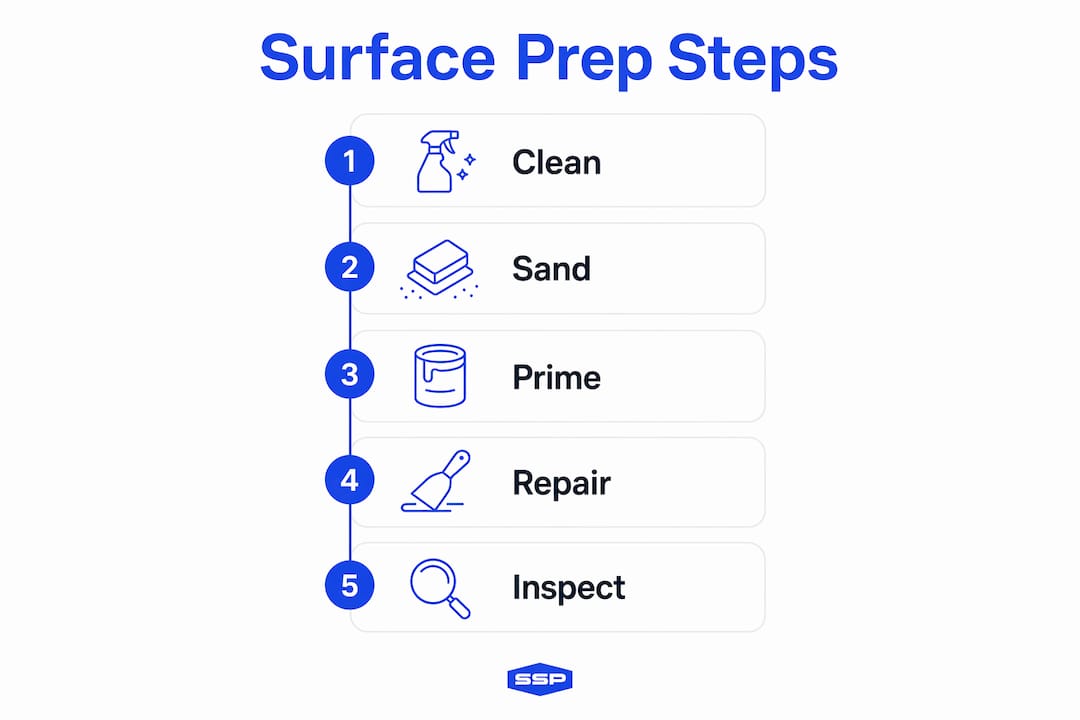
Surface preparation is a system, not a single task. Glossy or slick surfaces act as barriers, and failing to address them causes peeling regardless of paint quality. Homeowners who skip steps often repaint within two to three years. Following a structured process protects that investment.
-
Clean the surface thoroughly. Wash walls with a degreaser or TSP (trisodium phosphate) substitute to remove dirt, grease, and chalking. Pay close attention to kitchens, bathrooms, and exterior surfaces near driveways or garages where oil contamination is common.
-
Repair all damage before sanding. Fill cracks, holes, and dents with spackling compound or patching plaster. Allow repairs to cure completely before moving to the next step.
-
Sand to create a surface profile. A paint film is approximately 0.003 inches thick and cannot hide surface irregularities. Sanding levels repairs and creates micro-roughness that gives paint something to grip. Use 120-grit sandpaper for most interior walls and 80-grit for heavily textured or damaged areas.
-
Apply a compatible primer. Primer compatibility is critical. Applying paint without a compatible primer on bare drywall, raw wood, or old glossy coatings frequently results in peeling. Oil-based primers seal stains and tannins on wood. Drywall primer seals the porous paper face so topcoat paint does not absorb unevenly.
-
Allow full curing time before topcoating. Primer and patching compounds need adequate dry time. Painting over a surface that has not fully cured traps moisture and creates adhesion problems. Check the manufacturer's recommended recoat window and respect it.
-
Inspect before painting. Run a light across the wall at a low angle to catch any remaining imperfections. This technique, called raking light inspection, reveals bumps and depressions invisible under normal lighting.
Pro Tip: Never paint over a glossy surface without sanding first. Gloss acts like a release agent. A quick scuff with 150-grit sandpaper gives the new coat the grip it needs.
The benefits of proper surface preparation extend well beyond aesthetics. Properly prepared surfaces can last 10 years or more. Skipping prep can cut that lifespan in half, particularly in high-humidity or high-traffic environments.
How does paint quality interact with surface preparation?
Surface preparation and paint quality are not competing priorities. They are two parts of the same system, and weakness in either one undermines the other. The table below shows how preparation level and paint grade interact to affect real-world outcomes.
| Scenario | Prep Level | Paint Grade | Expected Outcome |
|---|---|---|---|
| Best case | Thorough | Professional grade | 10+ years, minimal maintenance |
| Common mistake | Thorough | Budget grade | 5–7 years, early chalking or fading |
| Costly mistake | Minimal | Professional grade | 2–4 years, peeling despite premium paint |
| Worst case | Minimal | Budget grade | Under 2 years, full repaint required |
Professional-grade paints carry a higher Pigment Volume Concentration (PVC), typically 35–45% PVC compared to budget formulations that often fall below 30%. Higher PVC means better coverage, richer color, and greater resistance to scrubbing and wear. Budget paints may show cracking or peeling as early as 3 years under normal wear conditions.
The critical insight is that premium paint cannot compensate for poor prep. A high-quality coating applied to a contaminated or unprimed surface will still peel. Conversely, thorough prep extends the life of even mid-grade paints by giving them the best possible foundation. The impact of paint quality shows up in ASTM scrub resistance and block resistance tests, where premium formulations consistently outperform budget options. That performance advantage only materializes when the surface beneath is properly prepared.
Paint prices have increased 25–30% since 2020. That cost pressure makes it tempting to cut corners on either prep or paint grade. Cutting corners on prep is the more expensive mistake. A coating that fails in three years costs more over time than proper prep that delivers ten years of service.
How do environmental factors and substrate type affect paint surface quality?
The environment a painted surface lives in determines how aggressively it needs to be prepared and protected. UV exposure, humidity, and salt air all accelerate coating failures when surface prep is inadequate. Coastal properties face the most demanding conditions, where salt particles penetrate micro-cracks in the paint film and accelerate corrosion on metal substrates and wood rot beneath exterior coatings.
Different substrates require tailored preparation approaches. Treating all surfaces the same is one of the most common mistakes homeowners make.
- Wood: Highly porous and prone to tannin bleed. Requires an oil-based or shellac primer to seal knots and prevent staining through the topcoat. Exterior wood also needs to be checked for moisture content before painting. Painting over wet wood traps moisture and causes blistering within one season.
- Drywall: The paper face is fragile and absorbs paint unevenly if not primed. New drywall always requires a drywall-specific primer. Skipping this step produces a finish with visible "flashing," where sheen varies across the wall surface.
- Metal: Rust and mill scale must be removed mechanically before any coating is applied. Bare metal requires a rust-inhibiting primer. Without it, corrosion continues beneath the paint film and causes lifting within months.
- Previously painted surfaces: Compatibility between old and new coatings matters. Oil-based paint over latex without proper prep causes adhesion failure. A bonding primer resolves most compatibility issues.
Environmental stress compounds every prep shortcut. A surface that might last five years in a dry inland climate may fail in two years near the coast without additional protection. Paint on poorly prepared surfaces shows failure signs within six months under significant environmental stress. Homeowners in humid climates, coastal regions, or areas with intense sun exposure should treat prep as non-negotiable, not optional.
Key Takeaways
Proper surface preparation determines paint longevity more than any other factor, making it the most cost-effective investment in any painting project.
| Point | Details |
|---|---|
| Prep drives paint failure rates | 70–80% of paint failures result from inadequate prep, not paint quality. |
| Adhesion requires clean, profiled surfaces | Contaminants like oil, dust, and moisture prevent mechanical and chemical bonding. |
| Prep and paint quality work together | Premium paint applied to poor prep still fails; thorough prep extends any paint's life. |
| Substrate type changes prep requirements | Wood, drywall, and metal each need specific primers and cleaning methods. |
| Skipping prep costs more long-term | A coating failing in 3 years costs more over time than prep that delivers 10 years of service. |
What most homeowners get wrong about surface prep
Ryan here. After years of working on residential and commercial projects, the pattern I see most often is this: homeowners focus almost entirely on paint color and brand, then wonder why the finish looks rough or starts peeling within a year. The paint is rarely the problem.
The uncomfortable truth is that prep work is unglamorous. It takes time, it creates dust, and the results are invisible once the topcoat goes on. That invisibility is exactly why homeowners underestimate it. You do not see the sanding, the priming, or the careful cleaning. You only see the color on the wall. But the surface beneath that color is doing all the structural work.
I have seen projects where a homeowner spent top dollar on premium paint products and still had peeling within 18 months because the old glossy surface was never sanded. I have also seen mid-grade paint hold up beautifully for eight years on a surface that was properly cleaned, primed, and profiled. The prep made the difference, not the label on the can.
My advice is to budget your time and money with prep as the priority. If you are working with a limited budget, spend more on preparation and less on the most expensive paint tier. A well-prepped surface with a solid mid-grade paint will outlast a poorly prepped surface with the best paint on the market. Every time.
— Ryan
Professional prep and paint quality from Southshorepaint
Southshorepaint approaches every project the way it should be done: surface preparation first, premium materials second, and finish quality as the result of both.
Whether you are repainting interior rooms or refreshing your home's exterior, the Southshorepaint team handles the full preparation process, from cleaning and sanding to priming and compatibility checks. Every project uses professional-grade coatings selected for the specific substrate and environment. Homeowners who want results that hold up for years, not months, can get in touch with Southshorepaint to schedule a consultation. Proper prep is not an add-on. It is the foundation of everything Southshorepaint delivers.
FAQ
What percentage of paint failures come from poor surface prep?
70–80% of paint and coating failures result from inadequate surface preparation, not paint quality. This makes prep the most critical factor in any painting project.
How long does paint last on a properly prepared surface?
Properly prepared surfaces can support paint finishes that last 10 years or more. Skipping preparation can cut that lifespan in half, especially in harsh or high-humidity environments.
Do I need primer if I am using a paint-and-primer product?
Paint-and-primer products work well on previously painted surfaces in good condition. Bare drywall, raw wood, and metal substrates still require a dedicated primer for proper adhesion and sealing.
Does expensive paint make up for skipping surface prep?
No. Premium paint formulations outperform budget options in durability and coverage, but no paint compensates for a contaminated or unprimed surface. Poor prep causes failure regardless of paint grade.
How does surface type change the preparation process?
Wood, drywall, and metal each require different primers and cleaning methods. Applying the wrong primer or skipping substrate-specific prep steps leads to adhesion failure, staining, or corrosion beneath the paint film.