
Budgeting for a painting project means accurately estimating every cost component, from labor and materials to prep work and contingency reserves, before a single brush touches your wall. Interior painting costs $2 to $6 per square foot, while exterior work runs $1.50 to $5 per square foot, meaning a full repaint of a 2,000 square foot home can range from $6,000 to over $12,000. Knowing how to budget for painting protects you from sticker shock, prevents scope creep, and gives you the leverage to compare contractor bids with confidence. Southshorepaint works with homeowners and property managers every day who underestimate these costs, and the gap between expectation and reality is almost always tied to one thing: incomplete planning.
What does it actually cost to budget for painting?
Labor is the dominant cost in any painting project. Labor and prep consume 70–85% of the total painting budget, not the paint itself. That means on a $10,000 interior project, you are spending roughly $7,000 to $8,500 on skilled work before a single gallon is purchased.
Several factors drive the final number up or down:
- Surface area and scope. Interior walls average $3.75 per square foot for walls only, rising to $6.75 per square foot when ceilings, trim, and doors are included.
- Ceiling height and accessibility. Rooms with ceilings above 9 feet or hard-to-reach surfaces add 10–30% extra labor cost due to scaffolding and extended application time.
- Paint quality. Premium paints cover better per gallon, often reducing the number of coats required and balancing a higher upfront price with long-term savings. Mid-tier paints offer a practical middle ground for most residential jobs.
- Prep work. Patching, sanding, caulking, and masking are not optional extras. Skipping or rushing prep is the leading cause of early paint failure, and quality prep can prevent costly rework within two to three years.
- Seasonal timing. Booking during shoulder seasons such as january through march or september through november can save 10–15% off peak pricing. Contractors have more availability and are more willing to negotiate.
- Specialty surfaces and compliance. Homes built before 1978 may contain lead paint. Following EPA Renovation, Repair, and Painting (RRP) rules for lead paint increases project cost by 15–30% due to mandatory containment, certified renovators, and HEPA vacuuming requirements.
Pro Tip: Ask your contractor to separate prep labor from application labor in the written quote. This single step reveals whether they plan to do the job right or cut corners on the most critical phase.
How do you get and compare accurate painting quotes?
Getting three quotes is standard advice. Getting three comparable quotes is what actually protects your budget. Pricing differences between bids arise mostly from prep scope and coat count variations, not just contractor pricing differences. A bid that looks $1,500 cheaper may simply exclude two coats of primer and full surface patching.
Follow these steps when soliciting and reviewing quotes:
- Define the scope in writing before you call anyone. List every room, surface type, ceiling height, and any known damage. Send the same document to every contractor so bids reflect identical work.
- Request line-item breakdowns. A professional quote separates labor, materials, prep, and any specialty work. Total-price-only bids are a red flag.
- Verify licensing and insurance. Require proof of a valid contractor's license and general liability insurance with a minimum of $1 million in coverage. This protects you if a worker is injured on your property.
- Check warranty terms. The industry standard workmanship warranty runs two to three years. Any contractor unwilling to put this in writing is signaling low confidence in their own work.
- Limit upfront payments. Best practice is to pay no more than 10% upfront. Larger deposits before work begins are a common warning sign.
AI mockup and color visualization tools help reduce change orders by letting you finalize color decisions before work starts. A change order mid-project can add hundreds of dollars in labor and material costs.
Pro Tip: Use a painting estimate guide to understand every line item before you sign. Contractors respect informed homeowners, and you will negotiate better terms.
How to estimate painting costs step by step
A reliable painting budget follows a clear sequence. Skipping steps leads to underestimates that blow up once work begins.
Step 1: Measure paintable surface area
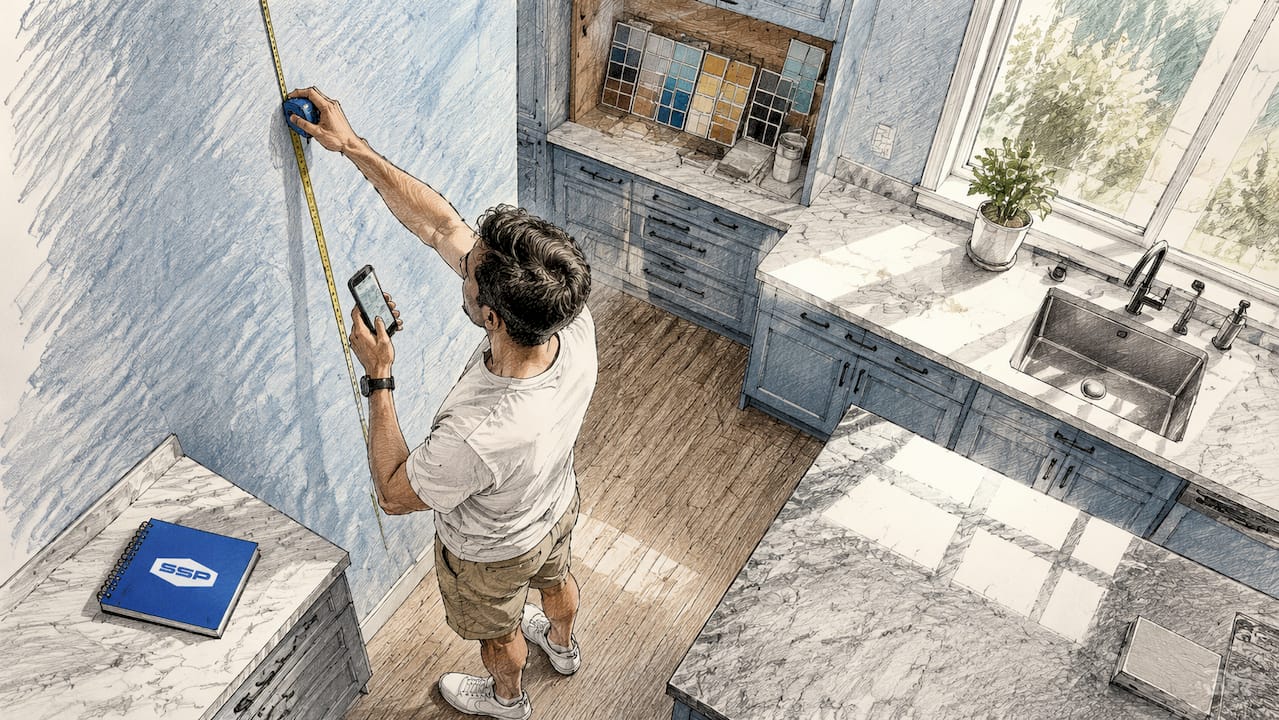
Measure walls, ceilings, and trim separately. For walls, multiply room perimeter by ceiling height, then subtract door and window areas. Trim and ceilings are priced differently and should never be lumped into a single square footage figure.
Step 2: Calculate paint quantities
One gallon of standard paint covers roughly 350–400 square feet per coat. Premium paints often cover 400–450 square feet. For two coats on 1,500 square feet of wall space, you need approximately 7–9 gallons. Always round up to account for touch-ups and waste.
Step 3: Estimate labor hours
Interior rooms with standard 8-foot ceilings and minimal prep average 1–2 hours of labor per 100 square feet. Rooms with damage, textured walls, or high ceilings take longer. Exterior work varies widely based on siding type and condition.
Step 4: Add materials beyond paint
Primer, caulk, painter's tape, drop cloths, and roller covers add up. Budget $150–$300 for a standard interior project in materials beyond paint. Exterior projects with wood siding may require additional wood filler and bonding primer.
Step 5: Build in a contingency reserve
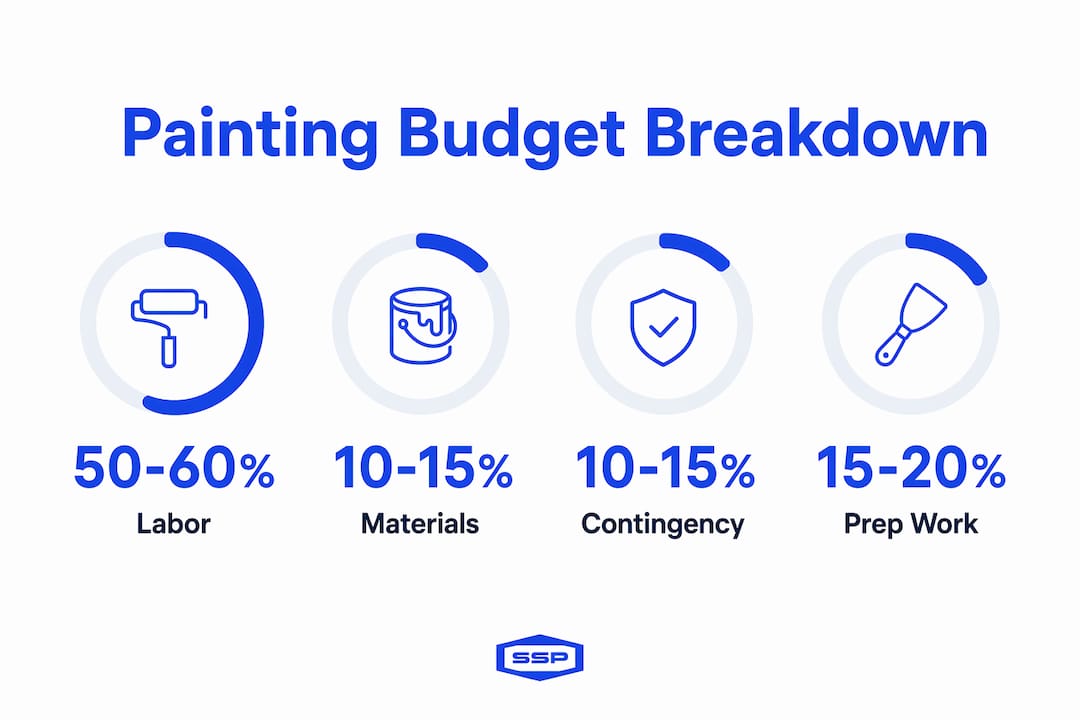
Contingency funds of 10–15% are standard practice. Unexpected issues like water damage behind trim, nicotine staining, or substrate deterioration can double prep labor time. A contingency reserve prevents these discoveries from stopping the project.
| Budget component | Typical share of total cost |
|---|---|
| Labor (application) | 50–60% |
| Prep work (patching, sanding, masking) | 20–30% |
| Paint and primer | 10–15% |
| Accessories and materials | 3–5% |
| Contingency reserve | 10–15% |
Flat project pricing has replaced hourly billing for most painting jobs, which improves cost predictability. Hourly billing is now reserved for small, high-uncertainty tasks like touch-up work or minor repairs.
What budgeting mistakes do homeowners most often make?
Most painting budget failures trace back to a handful of avoidable errors. Recognizing them before you start saves real money.
- Ignoring prep costs. Prep is not a line item to negotiate away. Skimping on prep is the most common cause of paint failure within two to three years, turning a one-time cost into a recurring expense.
- Accepting one-coat quotes. A single coat rarely provides adequate coverage or durability on repainted surfaces. If a quote does not specify coat count, ask directly and get the answer in writing.
- Overlooking lead paint compliance. Any home built before 1978 requires EPA RRP compliance. Failing to budget for certified containment and disposal exposes you to legal penalties and health risks.
- Comparing total prices instead of scope. Two quotes at $8,000 and $11,000 may describe completely different projects. Line-item scope comparison is the only reliable way to evaluate bids fairly.
- Skipping the contingency fund. Substrate damage, hidden moisture, and stain bleed-through are common discoveries once prep begins. A 10–15% reserve is not pessimism. It is standard practice.
Pro Tip: If a bid comes in significantly lower than the others, ask the contractor to walk you through their prep process in detail. The answer will tell you everything about where they cut costs.
Practical painting budget tips to maximize value
Controlling painting expenses does not require sacrificing quality. A few well-timed decisions make a measurable difference.
- Book during shoulder seasons. January through march and september through november offer 10–15% savings compared to peak summer pricing. Contractors have more scheduling flexibility and are more competitive on price.
- Choose mid-tier paints for most surfaces. Premium paints make sense for high-traffic areas and exterior surfaces. For low-traffic interior rooms, a quality mid-tier product delivers solid coverage without the premium markup.
- Bundle interior and exterior work. Bundling both jobs with the same contractor can yield 10–15% savings due to shared setup costs, crew mobilization, and equipment.
- Handle light prep yourself. Moving furniture, removing outlet covers, and cleaning walls before the crew arrives reduces billable labor hours. Leave patching, sanding, and caulking to the professionals.
- Finalize colors before work starts. Every color change mid-project triggers a change order. Use digital visualization tools or paint samples on the actual wall at least one week before the start date.
Key Takeaways
Accurate painting cost estimation requires separating labor, prep, materials, and contingency into distinct budget lines before soliciting any quotes.
| Point | Details |
|---|---|
| Labor dominates the budget | Labor and prep account for 70–85% of total painting costs, not the paint itself. |
| Get three line-item quotes | Compare bids by scope details like prep, coat count, and materials, not total price alone. |
| Build a contingency reserve | Set aside 10–15% for unforeseen issues like substrate damage or extra prep requirements. |
| Time projects for savings | Booking in shoulder seasons saves 10–15% and improves contractor availability. |
| Verify credentials before signing | Require proof of licensing, $1M liability insurance, and a two to three year workmanship warranty. |
Why I think most homeowners budget for paint wrong
Most homeowners I talk to build their painting budget around the paint. They research gallon prices, compare sheen levels, and agonize over brand choices. Then they get a contractor quote and the number is three times what they expected.
The paint is almost never the problem. The labor, the prep, and the scope definition are where budgets fall apart. A contractor who charges $2,000 less than the next bid is almost always doing it by cutting prep time, reducing coat count, or using lower-grade materials. That savings evaporates when the paint starts peeling in year two.
The other mistake I see constantly is treating the first quote as a reference point. Homeowners get one number, decide it sounds reasonable, and sign. They have no idea whether that number reflects two coats or one, whether trim is included, or whether the contractor plans to patch the water stain above the window. Getting three detailed, line-item quotes is not about finding the cheapest option. It is about understanding what you are actually buying.
My honest advice: spend more time on scope definition than on paint selection. Write down every surface, every room, every known repair before you call a single contractor. That document becomes your budget anchor, and it forces every bidder to price the same job. The contractor who wins on that basis is the one worth hiring.
— Ryan
Planning a painting project with Southshorepaint
Southshorepaint works with homeowners and property managers who want accurate estimates, not ballpark guesses. Whether you are planning a single room refresh or a full exterior repaint, getting the budget right from the start determines whether the project stays on track.

Southshorepaint provides detailed, line-item quotes that separate labor, prep, materials, and contingency so you know exactly what you are paying for and why. The team uses licensed contractors with verified insurance and workmanship warranties, so there are no surprises after the check clears. If you are ready to plan your next project with full cost transparency, visit Southshorepaint to request a professional estimate and start with a clear, complete budget.
FAQ
How much should I budget for painting a room?
A standard interior room costs $3.75 per square foot for walls only, rising to $6.75 per square foot when ceilings, trim, and doors are included. For a 1,500 square foot home, total paint and labor typically runs $3,500 to $11,000 depending on scope and region.
What percentage of a painting budget goes to labor?
Labor and prep account for 70–85% of the total painting budget. Paint and materials typically represent only 10–15% of the final cost.
How do I avoid getting a bad painting quote?
Request at least three written quotes with identical scope definitions, then compare line-item details rather than total price. Bids that omit prep steps, coat counts, or material specifications are the most common source of budget overruns.
Do I need a contingency fund for a painting project?
Yes. A contingency reserve of 10–15% is standard practice. Unexpected issues like water damage, nicotine staining, or substrate deterioration can significantly increase prep labor once work begins.
Does lead paint affect my painting budget?
Homes built before 1978 may require EPA RRP compliance, which adds 15–30% to project costs due to mandatory containment, certified renovators, and HEPA vacuum requirements. Budget for this before soliciting quotes if your home falls in that age range.