
Strategic painting is one of the highest-return maintenance decisions a landlord or property manager can make. Research published in the Journal of Real Estate Finance and Economics found that a single point increase in tenant satisfaction on a five-point scale corresponds to a significantly greater likelihood of lease renewal and a substantially lower probability of moving out. Paint is not the only driver of satisfaction, but it is among the most visible, fastest to deploy, and most cost-effective to control. The role of painting in tenant retention is not decorative — it is operational.
When painting moves the needle:
- Aging units with scuffed, yellowed, or dated walls where fresh color signals active maintenance
- Units being repositioned for a higher rent tier where aesthetics must match the price point
- High-vacancy properties where listing photos and first impressions are underperforming
- Move-out make-ready situations where a fast, clean repaint shortens days on market
When painting alone will not help:
- Units with unresolved structural or mechanical issues that tenants notice before they notice walls
- Minor cosmetic blemishes that a targeted touch-up handles more efficiently than a full repaint
- Properties where tenant dissatisfaction is driven by management responsiveness, not aesthetics
Table of Contents
- Who is responsible for painting, and what do U.S. habitability rules require?
- Should you let tenants paint? Benefits, risks, and how to manage it
- How painting changes tenant behavior and where you get the biggest return
- How often should you repaint, and what triggers the decision?
- What paint colors and finishes hold up best in rental units?
- What should your lease say about painting?
- What does repainting actually cost, and how should you budget for it?
- Why professional painters deliver better results for tenant retention goals
- Key Takeaways
- Southshorepaint keeps your units leased and your tenants satisfied
Who is responsible for painting, and what do U.S. habitability rules require?
In most U.S. jurisdictions, landlords bear responsibility for painting tied to normal wear and tear. Scuffed walls, faded color, and minor surface aging after a standard tenancy are the landlord's cost at move-out. Tenants, by contrast, are typically responsible for damage beyond normal wear, including large holes, unauthorized paint colors, or finish damage caused by negligence.
Lead paint adds a firm legal layer for properties built before 1978. Federal law under the EPA's Renovation, Repair and Painting (RRP) Rule requires certified contractors for work that disturbs lead-based paint surfaces above defined thresholds, and landlords must provide tenants with the EPA lead paint disclosure before signing a lease. Habitability standards in most states require that walls and ceilings be maintained in a condition that does not create health or safety hazards, which means peeling paint in a pre-1978 unit is not just cosmetic — it is a code issue.
State and local rules vary considerably. Some jurisdictions specify repaint intervals; others leave it entirely to lease language. Never assume a universal rule applies to your portfolio.
- Landlords: responsible for wear-and-tear repainting, lead-paint compliance, and habitability maintenance
- Tenants: responsible for damage-related repainting and unauthorized alterations
- Pre-1978 properties: require EPA-certified contractors for qualifying disturbance work and mandatory disclosure
Pro Tip: *Add a paint clause to every lease that defines normal wear and tear, specifies the return-to-neutral color requirement, and references your inspection schedule.
A single clear paragraph prevents the majority of move-out disputes.*
Should you let tenants paint? Benefits, risks, and how to manage it
Allowing tenants to paint is not a binary yes or no. Done with a clear policy, it can meaningfully increase emotional attachment and renewal likelihood. Done without guardrails, it creates inconsistent finishes, reduced marketability, and costly remediation at move-out.
The case for allowing it: Tenants who personalize their space tend to stay longer. Perceived control over the living environment increases satisfaction, and a well-structured tenant-paint program with pre-approved colors and contractor requirements keeps quality consistent while giving tenants a sense of ownership.

The risks are real: A tenant who selects a deep burgundy accent wall or applies paint unevenly with a roller and no primer creates a remediation job that costs more than a standard turnover repaint. DIY paint quality issues — poor adhesion, missed edges, wrong sheen — compound over time and can damage drywall if not caught early.
A practical approval workflow:
- Tenant submits a written request with the proposed color (from your pre-approved palette) and the room(s) to be painted.
- Manager reviews and approves in writing, attaching the approved color swatch and finish specification.
- Tenant provides proof of a licensed contractor or, if self-painting is permitted, agrees in writing to professional-grade prep and finish standards.
- Pre-paint inspection documents existing wall condition with photos.
- Post-paint inspection confirms coverage, adhesion, trim quality, and edge work before approval is finalized.
- Lease addendum specifies that walls must be returned to the approved neutral at move-out, or a documented deduction applies.
A property manager who runs a structured program typically finds that tenants who go through the approval process renew at higher rates — the investment of effort signals commitment to the unit. The failure cases almost always involve skipping the inspection steps or allowing colors outside a controlled palette.
How painting changes tenant behavior and where you get the biggest return
The mechanism connecting fresh paint to lease renewals runs through satisfaction. Aesthetic upgrades including paint measurably increase tenants' willingness to pay higher rents and remain in place longer. The satisfaction research is clear: the largest retention gains come from moving a unit from unsatisfied to satisfied, not from incremental improvements in already high-performing properties. That means aging, lower-rated units in your portfolio deserve painting priority over your best-performing ones.
Photography is a second, often underestimated channel. Fresh, neutral paint dramatically improves listing photos and shortens days on market. A unit with clean, well-lit walls in a warm white or light gray photographs significantly better than one with scuffed beige from five years ago, and that difference shows up in inquiry volume before a prospective tenant ever walks through the door.
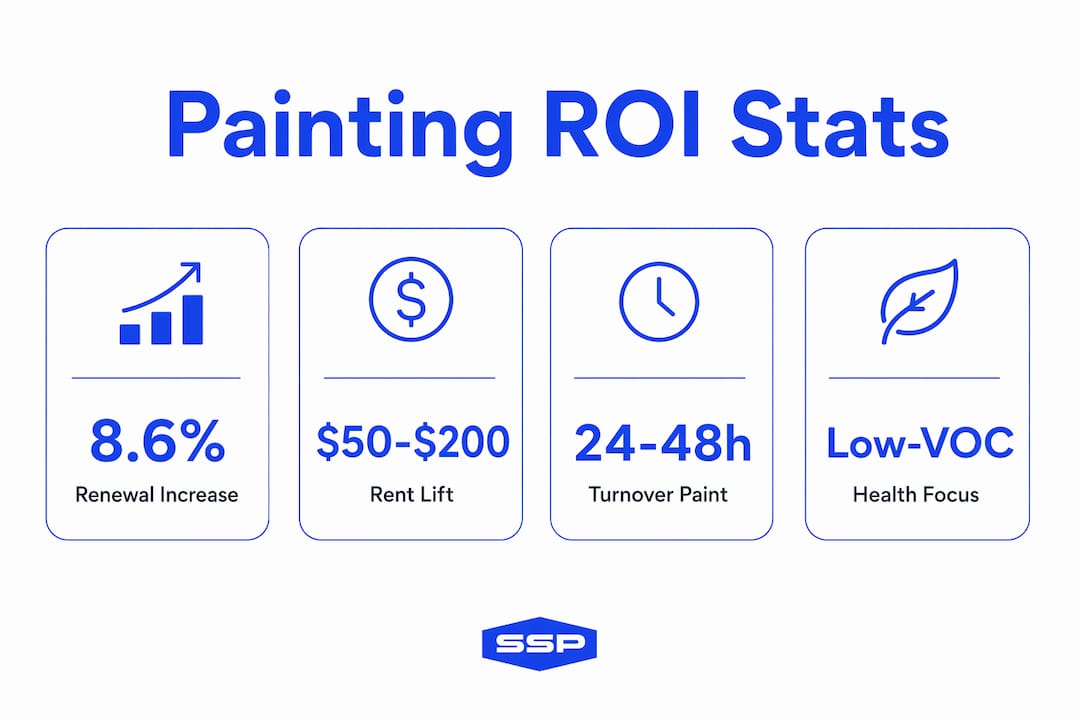
A typical interior repaint can justify a rent increase of $50–$200 per month, with the investment often paying back in under 2.5 years for standard work. For a two-bedroom unit where a full repaint costs $1,800, the increased rent can recoup the cost within one to two years — before accounting for any vacancy days avoided by retaining the existing tenant.
| Scenario | Repaint Cost | Monthly Rent Lift | Payback Period | Vacancy Days Avoided |
|---|---|---|---|---|
| Studio, touch-up + accent wall | — | $50–$200 | 10–24 months | 7 days |
| 1-bed, full turnover repaint | — | $50–$200 | under 2.5 years | 14 days |
| 2-bed, full repaint + trim | $1,800 | $50–$200 | 1–2 years | 30 days |
Pro Tip: Batch turnover repaints with targeted capital refreshes — for example, repainting common hallways at the same mobilization as three unit turnovers. Shared mobilization costs cut per-unit expense by 15–25% and keep the building's overall aesthetic consistent.
How often should you repaint, and what triggers the decision?
Repaint intervals depend on tenant profile, finish quality, and surface exposure. General guidance for U.S. rental properties:
- Interior walls: 3–5 years for high-turnover or family units; 5–7 years for stable, long-term tenants with low-traffic lifestyles
- Kitchens and bathrooms: 3–4 years due to moisture, grease, and cleaning frequency
- Exterior surfaces: 5–7 years for wood siding; 7–10 years for stucco or fiber cement with quality primer
Operational triggers matter more than calendar intervals for most portfolios. The clearest triggers:
- Move-out make-ready: assess walls at every move-out; repaint if coverage is below 85% or if color is visibly faded or damaged.
- Tenant complaint about wall condition: treat as a maintenance request and schedule within 30 days.
- Visible substrate damage: bubbling, cracking, or peeling paint signals a moisture or adhesion issue that requires repair before repainting.
- Rent repositioning: if you are raising rent by more than 10%, the unit's condition must visually support the new price point.
- Portfolio audit: schedule a paint maintenance audit annually to catch units approaching the end of their repaint cycle before they generate tenant complaints.
For standard turnover make-ready work where repairs are minimal, professional turnover painting completed within 24–48 hours post-move-out prevents the multi-week vacancy losses that accumulate when work is scheduled casually. A unit sitting vacant for three weeks at $1,800/month loses $1,350 in rent — more than the cost of the repaint itself.
What paint colors and finishes hold up best in rental units?
Neutral palettes are not a compromise — they are a deliberate strategy. Warm whites, soft greiges, and light grays photograph well, read as clean and modern, and appeal to the broadest tenant demographic. Standardizing 2–4 neutral options across a portfolio cuts ordering complexity, reduces storage costs, and speeds repaint turnaround because crews already know the spec.
Color guidance:
- Walls: warm white (e.g., Benjamin Moore White Dove OC-17 or similar) or light gray for broad appeal
- Accent opportunities: a single feature wall in a muted, pre-approved tone can increase perceived value without creating a remediation problem
- Avoid: saturated colors, dark tones, and anything that requires more than two coats to cover at move-out
Finish guidance:
- Eggshell or satin for living areas and bedrooms: washable without being reflective
- Semi-gloss for trim, doors, and window casings: durable and easy to wipe clean
- Semi-gloss or satin for kitchens and bathrooms: moisture-resistant and scrubbable
Health and material considerations: Low-VOC formulations are worth specifying for occupied turnovers and units with sensitive tenants. Many low-VOC paint options from major manufacturers now match the durability of conventional formulas, making the tradeoff essentially zero for rental applications.
Pro Tip: Standardize your palette to two wall colors and one trim color across the entire portfolio. Crews work faster, touch-ups match perfectly, and you eliminate the cost of color-matching at every turnover.
What should your lease say about painting?
A paint clause does not need to be long to be effective. It needs to cover five things clearly: who may paint, what colors and finishes are permitted, what contractor standards apply, who pays, and what the return-to-neutral requirement is at move-out.
Elements of a clear paint clause:
- Authorization: "Tenant may not paint any surface without prior written approval from the landlord or property manager."
- Approved palette: reference a specific color list or palette document attached to the lease.
- Contractor standard: specify licensed and insured contractor, or define minimum prep and finish standards if self-painting is permitted.
- Cost responsibility: tenant bears all costs for approved painting; tenant bears remediation costs for unauthorized painting.
- Return-to-neutral: walls must be returned to the approved base color at move-out, or a documented deduction from the security deposit applies.
Approval workflow summary:
- Tenant submits written request with color and room specification.
- Manager approves in writing with attached color swatch.
- Tenant provides contractor proof or self-painting agreement.
- Pre-paint and post-paint inspections with photos are documented.
Inspection checklist for painting-related move-out:
- Adhesion: no peeling, bubbling, or flaking
- Coverage: uniform color with no visible roller lines or missed patches
- Edges: clean lines at ceiling, trim, and corners
- Trim quality: no paint bleed onto trim or flooring
- Surface damage: no gouges, holes, or texture damage beneath paint
- Color compliance: walls match the approved neutral on file
Security deposit deductions for painting must be documented with pre- and post-tenancy photos and itemized repair estimates. Most states require this documentation to withstand a dispute.
What does repainting actually cost, and how should you budget for it?
Cost ranges for professional interior repaints in the U.S. vary by unit size, scope, and market. Rough benchmarks for standard turnover work:
| Unit Type | Touch-Up / Patch | Turnover Repaint | Full Capital Repaint |
|---|---|---|---|
| 2-bedroom | — | $1,800 | — |
Turnover repainting is typically classified as an operating expense (Opex) because it restores the unit to its prior condition rather than extending its useful life. A full capital repaint done as part of a repositioning project — new color scheme, upgraded finishes, combined with other improvements — may qualify as a capital improvement (Capex) and be depreciated accordingly. Confirm classification with your accountant, since the distinction affects both your tax treatment and how you communicate costs to property owners.
Cost-saving tactics that work:
- Standardize colors so crews skip color-matching time and touch-ups are exact.
- Batch jobs: schedule multiple unit turnovers in the same building during the same contractor mobilization.
- Prioritize high-traffic surfaces (hallways, entry walls, kitchen) for touch-ups between full repaints to extend intervals.
- Pair painting with door and fixture refreshes during turnover to maximize the visual impact of a single mobilization visit.
Why professional painters deliver better results for tenant retention goals
Speed and surface preparation are the two areas where professional painters most clearly outperform DIY or handyman-level work in a rental context. A professional crew with the right equipment can complete a standard one-bedroom turnover repaint in a single day, including proper masking, priming of repaired surfaces, and two-coat application. That speed directly translates to fewer vacancy days.
What a professional contractor brings to rental work:
- Correct surface prep: sanding, priming, and skim-coating where needed, so the finish lasts 5–7 years rather than 2–3
- Consistent palette execution: the same color reads the same across 20 units when one crew applies it with calibrated technique
- Proof of insurance and warranty: protects the property owner if a finish fails prematurely
- Scheduling flexibility: professional contractors can mobilize within 24–48 hours of move-out when a standing relationship is in place
Process checklist for working with a professional painter on rental work:
- Confirm scope in writing: rooms, surfaces, colors, finish specifications, and any repair work included
- Schedule around the leasing calendar, not around the contractor's convenience
- Require proof of general liability insurance and, for pre-1978 properties, EPA RRP certification
- Conduct a final walkthrough with the crew before signing off
- Document the completed work with photos for the unit file
A property manager who standardizes their palette, maintains a standing contract with a qualified painter, and schedules turnover work within 24 hours of move-out can realistically reduce average vacancy duration by two to three weeks per unit per turn — a measurable improvement in annual net operating income.
Southshorepaint works with property managers in the South Bay, CA on exactly this kind of multi-family painting program: standardized palettes, fast mobilization, and finishes built to last through multiple tenancy cycles.
Key Takeaways
Strategic painting, executed with the right timing, materials, and lease policy, is one of the most cost-effective tools a landlord has for improving tenant satisfaction and reducing vacancy.
| Point | Details |
|---|---|
| Satisfaction drives renewals | A 1-point satisfaction increase links to 8.6% higher renewal likelihood and 23.1% lower move-out probability. |
| Repaint aging units first | Retention gains are largest when moving units from unsatisfied to satisfied — prioritize lower-performing properties. |
| Turnover speed matters | Professional repaints completed within 24–48 hours post-move-out prevent multi-week vacancy losses. |
| Standardize your palette | Two wall colors and one trim color across a portfolio cuts ordering time, speeds touch-ups, and lowers per-unit cost. |
| Southshorepaint for rental work | Southshorepaint provides fast-mobilization, low-VOC turnover painting for South Bay property managers with finishes built to last. |
A note from Ryan on what actually works in the field
Most landlords think about painting reactively — they repaint when a tenant complains or when a unit looks obviously bad. The property managers who get the best retention outcomes treat painting as a scheduled program, the same way they treat HVAC maintenance. They know their repaint intervals, they have a standing relationship with a contractor, and they move within 48 hours of a move-out. One situation that comes up repeatedly: a manager calls after a unit has been sitting vacant for three weeks because they were waiting to "get a few quotes." The painting itself takes one day. The delay cost them more than the repaint. Aligning your painting schedule with your leasing calendar — not the other way around — is the single operational shift that pays off fastest. Communicate the timeline to incoming tenants too; a unit that smells fresh and looks clean on move-in day sets the tone for the entire tenancy.
Southshorepaint keeps your units leased and your tenants satisfied
For South Bay property managers who need turnover painting done right and done fast, Southshorepaint delivers the kind of results that protect your asset and your leasing calendar. The work is built on proper surface preparation, premium low-VOC materials, and finishes that hold up through multiple tenancy cycles — not a quick roll-and-go that needs redoing in 18 months.
Services relevant to property managers include interior turnover repaints, color standardization across multi-unit portfolios, drywall repair and surface prep, cabinet refinishing, and exterior maintenance painting. Every job includes a final walkthrough and documented color records so touch-ups match perfectly at the next turn. If you manage properties in the South Bay and want a contractor who understands leasing timelines, request an estimate and ask about standing portfolio programs.
Authoritative U.S. sources and further reading
- Journal of Real Estate Finance and Economics — Tenant Satisfaction and Building Performance: Peer-reviewed research quantifying the link between tenant satisfaction scores and lease renewal rates. U.S.-focused commercial building data.
- EPA / NJ DCA — Lead-Based Paint Guide for Rental Dwellings: Primary regulatory guidance on lead paint disclosure and remediation requirements for pre-1978 rental properties. Consult your state's housing authority for jurisdiction-specific rules.
- Landlord Studio — Capital Improvements vs. Repairs: Explains the Opex vs. Capex distinction for painting and maintenance work; useful for budgeting and owner reporting.
- Management One — Tenant Move-Out Responsibilities: Practical breakdown of what tenants owe at move-out, including painting for damage vs. normal wear and tear.
- Rental Real Estate — ROI of Aesthetic Appeal: Industry analysis of how aesthetic upgrades, including paint, affect tenant willingness to pay and vacancy rates.
- Moorhouse Coating — Property Manager's Painting Guide: Operational guidance on portfolio-level painting programs, color standardization, and Opex/Capex classification.
- Consumer Reports — How to Hire a Painter: Independent guidance on vetting painting contractors, including insurance, warranty, and scope documentation.
This article provides general educational information for property managers and landlords. It is not legal, tax, or financial advice. Consult local statutes, a qualified attorney, and your accountant for obligations specific to your jurisdiction and portfolio.