
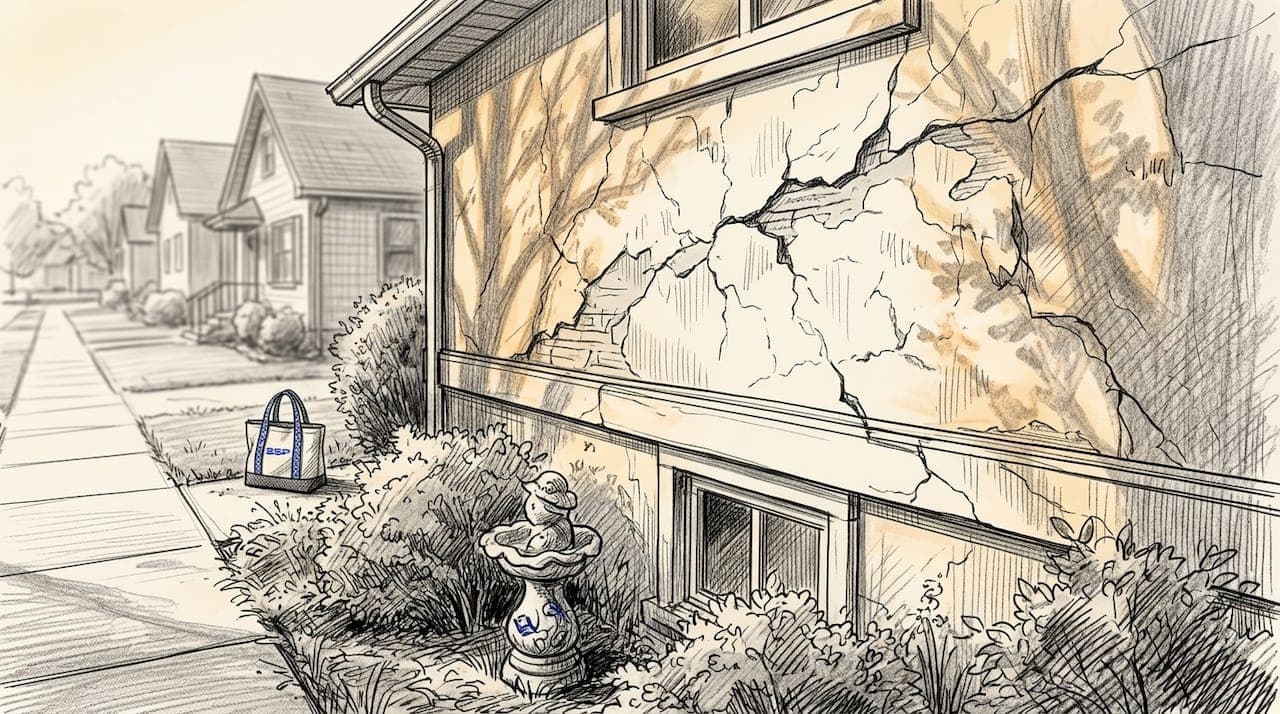
Paint cracking is defined as the splitting or fracturing of a dry paint film, producing visible fissures, lines, or lifted sections across a painted surface. It is one of the most common paint failures homeowners encounter, and it almost always signals an underlying problem rather than a simple cosmetic flaw. Paint cracks because of substrate movement, moisture intrusion, poor surface preparation, or incompatible materials. The industry recognizes three primary crack patterns: alligatoring, mud cracking, and hairline cracks. Each pattern points to a different root cause, which means accurate diagnosis is the first step toward a lasting repair. Southshorepaint works with homeowners every day who mistake cracking for a minor touch-up issue, only to find the same cracks return within months because the real problem was never addressed.
What causes paint cracking on walls and surfaces?
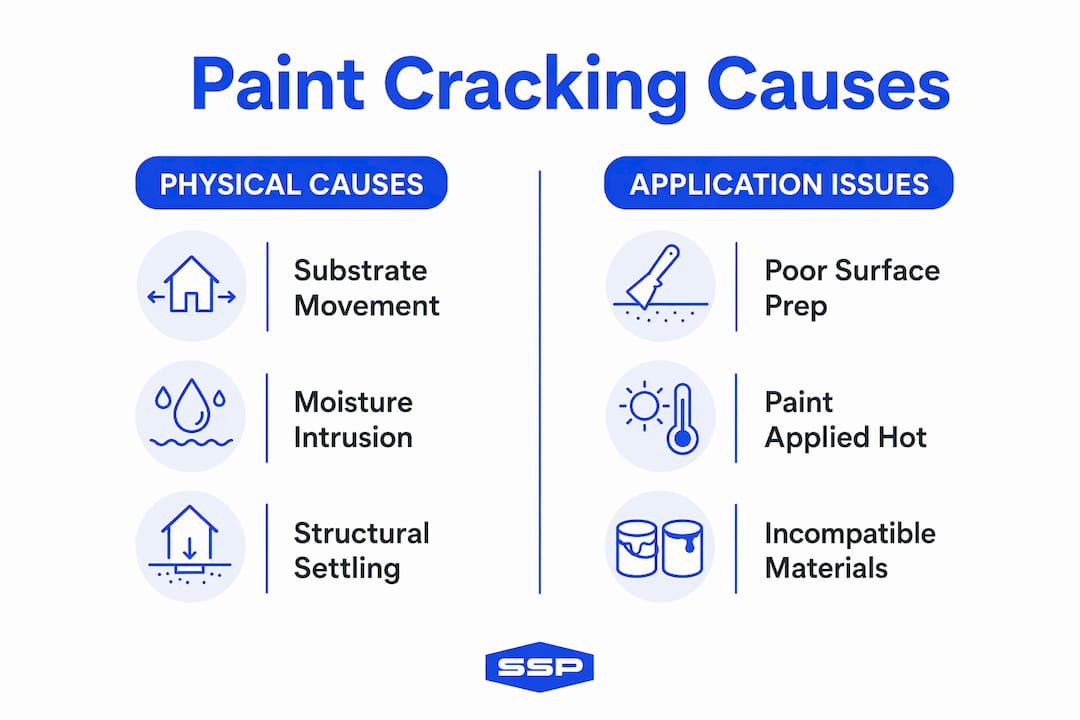
Paint cracking results from several distinct causes, and most failures involve more than one factor working together. Understanding each cause helps you target the right fix instead of repainting over a problem that will resurface.
Substrate movement and structural settling are among the most common physical triggers. Buildings expand and contract with temperature and humidity shifts. Rigid paint films over flexible substrates crack under these thermal cycles because the paint cannot stretch with the surface beneath it. Flexible acrylic resins are now the preferred solution for accommodating this movement and reducing long-term cracking.
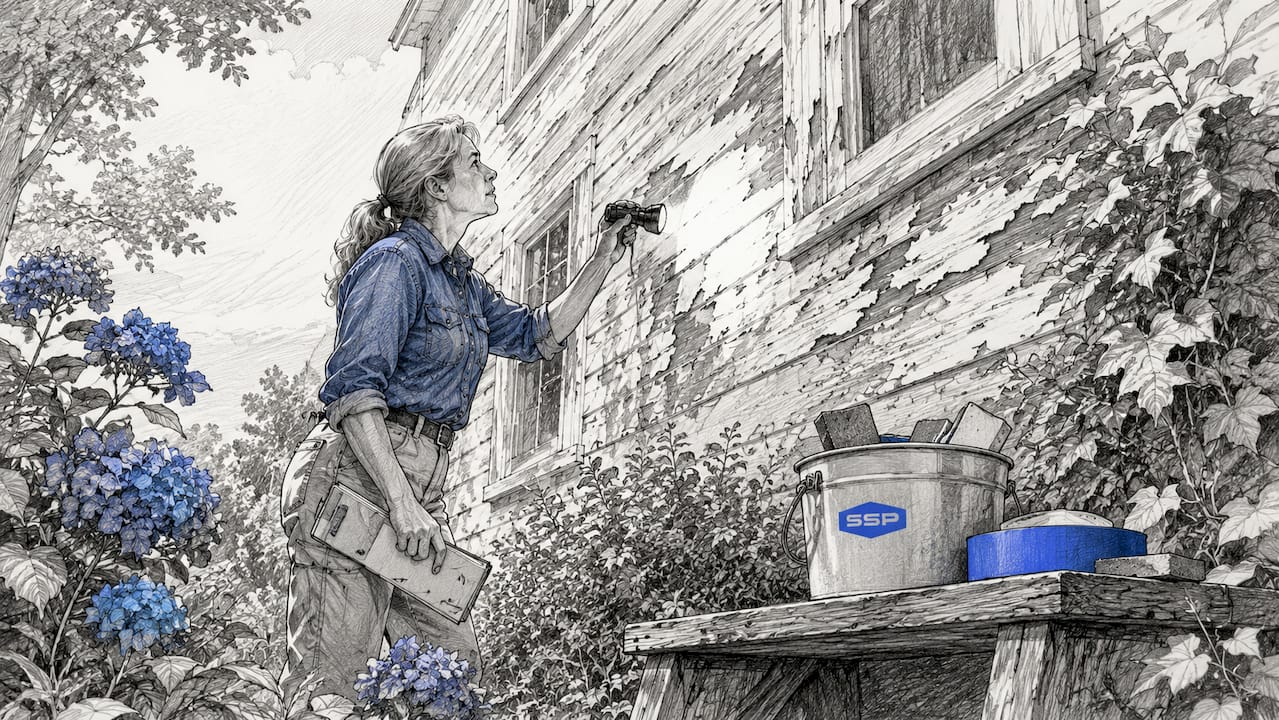
Moisture intrusion is the leading cause of exterior paint failure. Moisture causes roughly 80% of exterior paint peeling cases, making it the primary factor to rule out before any repair begins. Water that enters through gaps in caulk, failed gutters, or poor ventilation swells the substrate, breaks the paint bond, and eventually forces the film to crack and lift.
Improper surface preparation is the most preventable cause. Paint only bonds to the surface it directly contacts. Microscopic chalk, mildew, or grease prevents strong bonding, causing premature cracking even when the paint itself is high quality. Skipping a thorough clean before painting is one of the most common and costly mistakes homeowners make.
Application errors also drive cracking. Applying paint above 85°F causes the surface to dry too fast, stressing the film and producing mud cracking or peeling. Applying paint in a single thick coat rather than multiple thin layers creates the same problem. Excessively thick single-pass applications crack as the outer layer dries faster than the paint beneath it.
The table below summarizes the main causes and their typical visual signs.
| Cause | Crack pattern | Visual sign |
|---|---|---|
| Substrate movement | Alligatoring | Reptile-skin pattern across large areas |
| Moisture intrusion | Flaking or bubbling | Lifted edges, blistering, damp spots |
| Thick paint application | Mud cracking | Deep crosshatched fissures |
| High temperature drying | Mud cracking | Fine network cracks, rapid drying marks |
| Poor surface prep | Flaking | Small pieces lifting from substrate |
| Incompatible layers | Alligatoring | Broad craze pattern, especially on older surfaces |
How do you identify signs and patterns of paint cracking?
Accurate diagnosis starts with reading the crack pattern, not just noting that cracks exist. The shape, size, and location of cracks tell you what went wrong and where to focus your repair effort.
- Alligatoring looks like reptile skin and covers broad surface areas. It typically results from applying a hard topcoat over a softer primer, or from painting over an oil-based layer with latex without proper preparation. The pattern signals film incompatibility or extreme age-related brittleness.
- Mud cracking produces deep, crosshatched fissures that resemble dried mud. This pattern points directly to a paint film that was applied too thick or dried too fast in high heat.
- Hairline cracks are fine, shallow lines that often appear first at corners, window trim, or door frames. They usually indicate minor substrate movement or a paint film that has aged past its flexibility limit.
- Flaking and lifting occur when the bond between the paint and the surface fails entirely. This is the end stage of a moisture or prep problem.
The tape test is a reliable adhesion check. Press a strip of painter's tape firmly onto the surface, then pull it back sharply. Paint that lifts with the tape has a bond failure, not just surface aging. A moisture meter takes diagnosis further by detecting hidden dampness behind the paint film, which is critical before any repair on exterior walls or bathrooms.
Location also provides clues. Cracks concentrated around windows and doors suggest caulk failure and joint movement. Cracks on exterior south-facing walls often point to UV degradation and thermal stress. Interior cracks near ceilings may indicate roof moisture or HVAC-driven humidity swings.
Pro Tip: Before diagnosing any crack, note the substrate type, the age of the existing paint, and any recent weather events. A crack that appeared after a wet winter is almost certainly moisture-driven, not a product failure.
The difference between paint cracking and peeling is worth clarifying. Cracking is a fracture within the paint film itself. Peeling is the separation of the film from the substrate beneath it. Both can occur together, but cracking without peeling often means the bond is still partially intact, while peeling signals a complete adhesion failure.
How to fix paint cracking the right way
Repairing cracked paint correctly requires addressing the root cause first. Painting over cracks without fixing what caused them produces the same failure within one to two seasons.
- Identify and fix the root cause. Conduct a moisture inventory before repainting, checking gutters, caulk lines, and ventilation. If moisture is present, resolve it before touching the paint.
- Remove all loose and cracked paint. Scrape away any paint that is lifting, flaking, or no longer bonded. Sand the edges of remaining paint to create a smooth, feathered transition. Do not paint over loose material.
- Clean the surface thoroughly. Wash the area to remove chalk, mildew, grease, and dust. Power washing before painting removes contaminants that would otherwise prevent the new coat from bonding.
- Apply the correct primer. Use a bonding primer for surfaces with adhesion issues, or a substrate-specific primer for bare wood or masonry. Skipping primer on a repaired area is one of the most common reasons cracks return.
- Replace failed caulk with a high-performance sealant. Elastomeric or urethane sealants outlast standard painter's acrylic caulk and accommodate building movement far better. This is especially critical at window frames, door trim, and expansion joints.
- Apply paint in thin, multiple coats. A well-prepared paint job lasts 5–10 years on wood and 7–15 years on masonry. Rushing with thick coats cuts that lifespan significantly.
- Paint within the correct temperature window. Apply paint between 50°F and 85°F with moderate humidity. Painting outside this range risks mud cracking, poor adhesion, and uneven drying.
Pro Tip: For alligatoring, full removal of the old paint layer down to bare substrate is usually required. Skim-coating over alligatored paint without stripping it will reproduce the same pattern within a few years.
For alligatoring specifically, the repair process is more involved than for hairline cracks. The entire incompatible layer must come off before new primer and paint can bond properly. For mud cracks caused by thick application, sanding the area smooth and recoating with thin layers is usually sufficient once the surface is clean and primed.
Preventing paint cracking: best practices for long-lasting results
Prevention is significantly less expensive than repair. The practices below address every major cause of paint cracking before it starts.
- Prepare the surface thoroughly. Proper surface prep and priming is the single most important factor in paint longevity. Clean, prime, and repair the substrate before any paint goes on.
- Choose compatible, flexible paint products. Select a paint system where primer and topcoat are chemically compatible. For exterior surfaces, flexible acrylic formulations resist thermal movement better than rigid film products.
- Apply thin coats and allow proper drying time. Each coat must cure before the next goes on. Rushing this step traps solvents and creates internal stress in the film.
- Control environmental conditions. Paint only when temperatures are between 50°F and 85°F and humidity is moderate. Avoid painting in direct sun on hot days.
- Maintain moisture control around the home. Keep gutters clear, reseal caulk lines annually, and check attic and crawl space ventilation. Moisture that reaches the substrate will eventually compromise even a well-applied paint job.
- Use elastomeric caulk at all joints and transitions. Standard painter's caulk shrinks and cracks over time. High-performance elastomeric sealants flex with the building and maintain a watertight seal for years longer.
- Inspect painted surfaces annually. Catching hairline cracks early, before moisture enters and expands them, saves significant repair work. A quick annual walk-around of your home's exterior takes less than 30 minutes.
Pro Tip: Check the paint surface condition before every repaint, not just when problems appear. Surfaces that look fine visually can still have adhesion or moisture issues that a simple tape test will reveal.
Key Takeaways
Paint cracking is a symptom of underlying failure. Fixing the root cause, whether moisture, poor prep, or incompatible materials, is the only way to achieve a repair that lasts.
| Point | Details |
|---|---|
| Cracking signals a root cause | Cracks in paint always indicate substrate, moisture, or application problems beneath the surface. |
| Moisture is the top exterior cause | Moisture drives the majority of exterior paint failures; inspect gutters, caulk, and venting before repainting. |
| Crack pattern guides diagnosis | Alligatoring, mud cracking, and flaking each point to a different cause and require different repair approaches. |
| Prep determines longevity | A properly prepared and applied paint job lasts 5–10 years on wood and 7–15 years on masonry. |
| Flexible acrylics reduce cracking | Flexible acrylic paints accommodate building movement and outperform rigid film products on exterior surfaces. |
Why cracking is never just a cosmetic problem
Every cracked paint job I have seen that came back within a season had one thing in common: the homeowner fixed the surface without fixing the cause. It is an understandable mistake. Cracks look like a paint problem, so the instinct is to apply more paint. But cracking is a symptom. The paint is telling you something is wrong underneath.
The most common pitfall I see is skipping the moisture check. A homeowner scrapes, primes, and repaints a beautiful exterior wall, and by the following spring the same cracks are back, sometimes worse. A 30-minute moisture inventory before the job starts, checking gutters, caulk lines, and any signs of water intrusion, would have prevented the entire second round of work.
The shift toward flexible acrylic paints is one of the most meaningful changes in residential painting over the past decade. Buildings move. They always have. A paint film that cannot flex with that movement will crack, regardless of how well it was applied. Choosing a flexible acrylic system is not a premium upgrade. It is the baseline for any exterior job that is expected to last.
My honest advice to any homeowner tackling paint cracking: spend twice as long on diagnosis and prep as you think you need to. The painting itself is the easy part. Getting the surface right, understanding why it cracked, and choosing compatible materials is where the real work happens. When you do that correctly, the result is genuinely satisfying and it lasts.
— Ryan
Southshorepaint: quality paint work built to last
Cracked paint is a problem Southshorepaint solves every day, for homeowners who want a finish that holds up rather than one that looks good for a season.

Southshorepaint specializes in high-quality interior and exterior finishes built on proper prep, premium materials, and workmanship designed for the long term. Whether you are dealing with alligatoring on an older exterior or hairline cracks inside a recently painted room, the team brings the diagnostic experience to identify the root cause and the skill to fix it correctly the first time. Visit Southshorepaint to learn more about professional painting services and prep-focused workflows for residential and commercial properties.
FAQ
What is paint cracking, exactly?
Paint cracking is the splitting or fracturing of a dry paint film, producing visible lines, fissures, or lifted sections. It signals an underlying issue with moisture, substrate movement, surface preparation, or paint compatibility.
What is the difference between paint peeling and cracking?
Cracking is a fracture within the paint film itself, while peeling is the separation of the film from the substrate beneath it. Both can occur together, but peeling indicates a complete adhesion failure, whereas cracking may still have partial bond intact.
Can I paint over cracked paint without removing it?
Painting over cracked paint without removing loose material and addressing the root cause produces the same failure within one to two seasons. Scrape, sand, prime, and fix the underlying problem before applying new paint.
Why does paint crack shortly after application?
Paint that cracks soon after application typically results from painting in temperatures above 85°F, applying coats that are too thick, or painting over a surface that was not properly cleaned or primed. These conditions stress the film before it fully cures.
How long should a properly applied paint job last?
A well-prepared and properly applied paint job lasts 5–10 years on wood surfaces and 7–15 years on masonry. Peeling or cracking within the first two years almost always points to a prep or moisture issue rather than a product defect.