
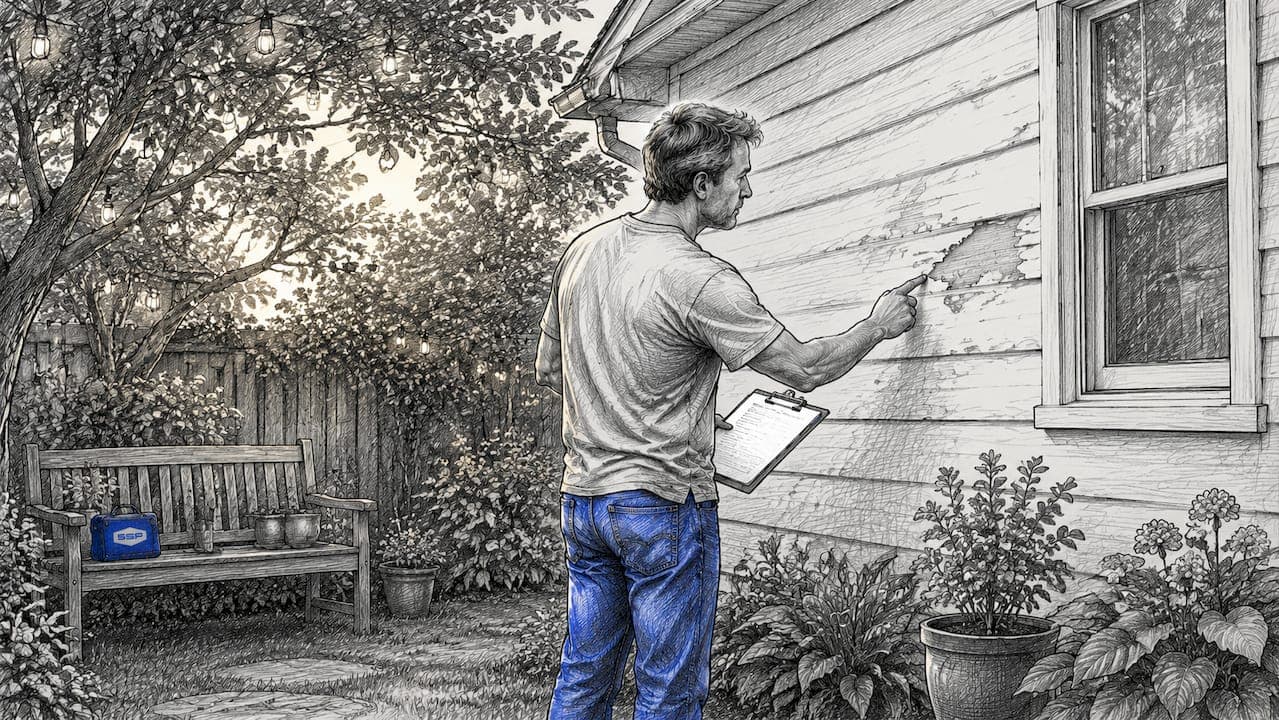
Regular paint maintenance is the primary barrier between your property's surfaces and the environmental forces that cause structural damage. Homeowners and property managers who treat paint upkeep as a scheduled investment, rather than a cosmetic afterthought, consistently avoid the most expensive repair bills. Industry standards recommend exterior repainting cycles of 5–10 years, with certain exposures requiring attention sooner. Understanding why paint regular maintenance matters starts with recognizing that a failing paint film does not just look bad. It opens the door to moisture, rot, and structural decay that no fresh coat of paint can reverse on its own.
Why does regular paint maintenance matter for property protection?
Paint is a building's first line of defense against moisture infiltration, UV radiation, and airborne contaminants. Once that barrier weakens, water finds its way into wood, concrete, and metal substrates, and the damage accelerates faster than most homeowners expect. The importance of paint upkeep becomes clear when you understand that repainting a surface is far simpler than replacing the material beneath it.
Moisture is the most destructive force paint holds back. When a paint film cracks or peels, water enters the substrate and begins breaking down wood fibers, corroding metal fasteners, and promoting mold growth inside wall cavities. By the time visible rot appears on the surface, the structural damage has often already spread well beyond what the eye can see.
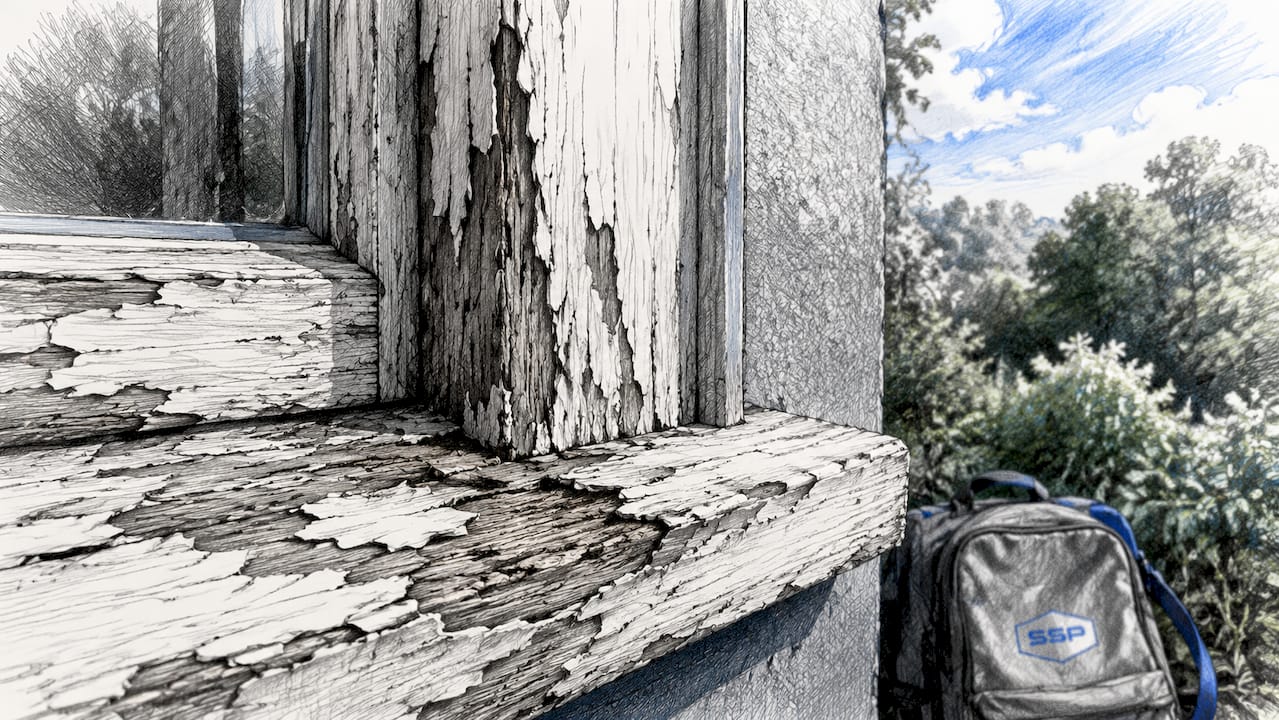
UV radiation compounds the problem. Prolonged sun exposure degrades the binder in paint films, causing chalking, a powdery residue on the surface that signals the protective layer has broken down. South-facing walls and surfaces with direct western exposure typically show UV degradation faster than shaded areas. This is why maintenance schedules cannot be one-size-fits-all.
The benefits of painting maintenance extend beyond moisture and UV protection. A sound paint film also resists mildew growth, blocks salt air corrosion in coastal climates, and reduces the rate at which substrates expand and contract with temperature changes. Each of these functions depends on the paint film remaining intact and adhered properly to the surface.
- Moisture barrier: Intact paint prevents water from reaching wood, concrete, and metal substrates.
- UV protection: A sound film slows the UV degradation that causes chalking and substrate breakdown.
- Mildew resistance: Maintained paint limits the surface conditions that allow mold and mildew to establish.
- Thermal stability: Proper adhesion reduces substrate cracking caused by seasonal expansion and contraction.
Pro Tip: Inspect south-facing and west-facing walls every spring. These surfaces absorb the most UV and heat, and they show failure signs months before other elevations do.
What are the financial benefits of maintaining paint regularly?
The financial case for regular paint upkeep is direct and well-documented. Maintained exterior paint can increase a home's market value by 2% to 5%. That gain comes primarily from improved curb appeal, which shapes buyer perception before they ever step inside the property.
The cost avoidance argument is even more compelling. Remediation of damaged substrates after paint failure costs 3 to 5 times more than timely maintenance. Replacing rotted siding, treating mold in wall cavities, or repairing corroded structural members are all expenses that a consistent maintenance program prevents. Skipping a $500 touch-up today can produce a $2,500 repair bill within two or three seasons.
For property managers, how paint maintenance saves money goes beyond repair avoidance. A proactive maintenance schedule allows projecting costs 1–5 years ahead, replacing emergency fixes with planned expenditures. That predictability improves capital planning and eliminates the budget disruption that emergency repairs create. Tenants and clients also respond to well-maintained properties. Consistent professional painting builds client trust and improves tenant satisfaction, which directly supports occupancy rates and lease renewals.
- Market value: Maintained paint adds 2%–5% to a property's appraised value.
- Repair cost avoidance: Proactive upkeep prevents substrate repairs that cost 3–5 times more than maintenance.
- Budget predictability: Planned maintenance replaces unpredictable emergency repair costs.
- Tenant and client retention: A well-maintained appearance supports occupancy and professional reputation.
How often should you schedule paint maintenance?
Maintenance frequency depends on surface exposure, climate, substrate material, and the quality of the previous paint job. The general industry benchmark for exterior repainting is every 5–10 years, but that range is wide for a reason. A wood-sided home in a humid coastal climate may need attention every 5–6 years. A stucco exterior in a dry inland climate may hold well for 8–10 years.
Certain conditions accelerate the timeline. South-facing walls receive more direct UV exposure and often show chalking and peeling before other elevations. Trim, window frames, and areas near gutters are the first places water collects and paint fails. These spots warrant inspection at least once a year, even when a full repaint is not yet due.
| Surface or condition | Typical maintenance interval |
|---|---|
| Wood siding, humid or coastal climate | 5–6 years |
| Wood siding, dry inland climate | 7–8 years |
| Stucco or masonry | 8–10 years |
| Trim, windows, and door frames | Inspect annually; touch up as needed |
| South-facing or high-UV walls | Inspect every 12 months |
Signs that maintenance is overdue include chalking (a powdery residue when you rub the surface), visible cracking or peeling, fading beyond normal weathering, and any area where paint has separated from the substrate. Catching these signs early is the difference between a minor touch-up and a full-scale repaint.
Pro Tip: Set a calendar reminder each spring to walk the full perimeter of your property and photograph any areas showing wear. Year-over-year photos reveal deterioration patterns that a single inspection can miss.
What are the best practices for effective paint maintenance?
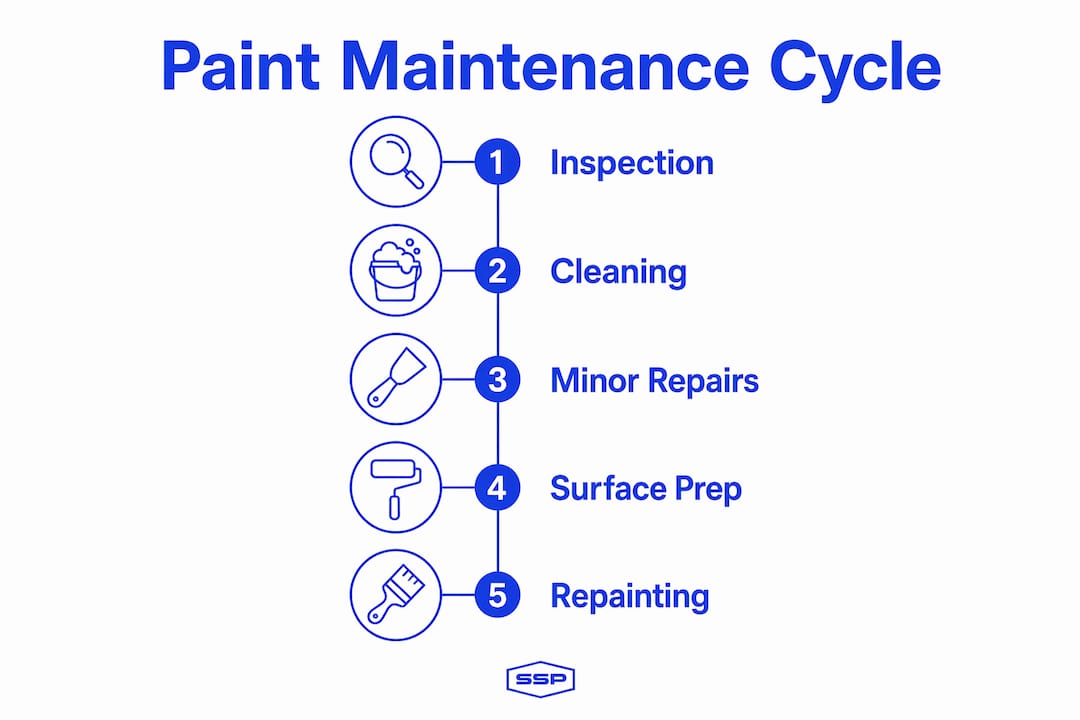
Effective paint maintenance follows a consistent cycle of cleaning, inspection, minor repair, and professional repainting when the surface condition warrants it. Routine inspection and cleaning extend paint life by 30%–50%, delaying expensive repainting cycles. That figure reflects how much damage accumulates from dirt, mildew, and minor surface failures that go unaddressed.
Cleaning
Wash exterior surfaces annually using a low-pressure rinse or a soft-bristle brush with a mild detergent solution. High-pressure washing can force water behind siding and damage paint adhesion, so reserve pressure washing for masonry and concrete surfaces where the substrate can handle it. Remove mildew with a diluted bleach solution before it spreads and stains the substrate.
Inspection and minor repairs
After cleaning, inspect all surfaces systematically. Pay close attention to trim, window and door frames, roofline edges, and any area where two materials meet, since these joints are where caulk fails first. Recaulk any gaps before water finds them. Sand and spot-prime any areas where paint has cracked or peeled, then apply a color-matched topcoat to seal the repair.
Surface preparation before touch-ups
Applying paint over failing surfaces without proper preparation traps moisture and causes rot from the inside out. Every touch-up, no matter how small, requires removing loose paint, cleaning the substrate, and priming bare areas before applying finish coats. Skipping preparation is the single most common reason touch-ups fail within one season. The quality of surface prep determines how long any paint job lasts, whether it is a minor repair or a full repaint.
When to call a professional
Call a professional painter when you find peeling that covers more than a small isolated area, when wood feels soft or spongy beneath the paint, or when mold appears on multiple surfaces. These conditions require more than touch-up work. A professional assessment determines whether the substrate needs repair before any new paint is applied.
Pro Tip: Keep a small quantity of your current exterior paint stored in a cool, dry location. Properly sealed latex paint stays usable for up to two years, making spot repairs faster and color-matched without ordering a full new batch.
Key Takeaways
Regular paint maintenance protects property value, prevents structural damage, and costs far less than the substrate repairs that paint failure causes.
| Point | Details |
|---|---|
| Paint as a protective barrier | Intact paint blocks moisture, UV damage, and mildew that degrade substrates and cause structural decay. |
| Financial return | Maintained paint adds 2%–5% to market value and avoids substrate repairs costing 3–5 times more than upkeep. |
| Maintenance frequency | Inspect annually and repaint every 5–10 years based on climate, surface material, and UV exposure. |
| Preparation is non-negotiable | Every touch-up requires removing loose paint, cleaning, and priming before applying finish coats. |
| Proactive planning saves money | A scheduled maintenance program replaces emergency repairs with predictable, budgeted expenditures. |
What I have learned from years of watching paint maintenance get skipped
Most property owners do not skip paint maintenance because they do not care. They skip it because the consequences are invisible until they are expensive. A small area of peeling paint on the north side of a house does not feel urgent in october. By the following spring, moisture has worked its way behind the siding, and what started as a $200 touch-up has become a $1,500 siding repair.
The reactive approach to property maintenance is the most expensive one available. I have seen property managers run tight budgets by deferring every non-emergency cost, only to face three or four simultaneous substrate failures that consume an entire year's maintenance reserve in a single season. A structured annual plan, with inspections, cleaning, and minor repairs built in, spreads cost predictably and eliminates those compounding failures.
The other pattern worth naming is the quick fix without preparation. Painting over peeling or chalking surfaces feels like a solution, but it seals moisture into the substrate and accelerates the decay it was meant to stop. The paint looks fresh for one season, then fails faster than the original coat did. Proper prep takes more time upfront, but it is the only approach that actually extends the life of the coating.
My honest advice to any homeowner or property manager is to treat paint maintenance as a line item in your annual budget, not a discretionary expense. The properties that hold their value and avoid major repair bills are almost always the ones with a consistent maintenance record, not the ones that received the most expensive paint job at the start.
— Ryan
How Southshorepaint supports your paint maintenance program
Southshorepaint works with homeowners and property managers who want paint jobs built to last, not just look good on day one.

Every project Southshorepaint takes on starts with proper surface preparation, because that is where long-term performance is won or lost. Whether you need a full exterior repaint or a targeted maintenance assessment to catch problems before they escalate, Southshorepaint brings the materials, technique, and workmanship to make the result last. Homeowners and property managers can visit southshorepaint.com to learn more about available services and get expert guidance on the right maintenance plan for their property.
FAQ
Why does regular paint maintenance matter for home value?
Maintained exterior paint increases a home's market value by 2%–5%, primarily through improved curb appeal. Buyers form strong first impressions based on exterior condition, and a well-maintained paint job signals a well-cared-for property.
How often should exterior paint be inspected?
Inspect exterior paint at least once a year, with particular attention to trim, window frames, and south-facing walls. High-UV and high-moisture areas show failure signs earlier than other surfaces and benefit from more frequent checks.
What happens if paint maintenance is ignored?
Neglecting paint upkeep allows moisture to penetrate substrates, causing wood rot, mold growth, and structural damage. Substrate repairs after paint failure cost 3–5 times more than the maintenance that would have prevented them.
Can I do paint touch-ups myself?
Minor touch-ups are manageable for most homeowners, provided the surface is properly cleaned, loose paint is removed, and bare areas are primed before the finish coat is applied. Skipping preparation causes touch-ups to fail within a single season.
What are the early signs that paint maintenance is needed?
Chalking, cracking, peeling, and significant fading are the primary signs that a paint film has begun to fail. Catching these early warning signs allows for minor repairs rather than a full repaint.