
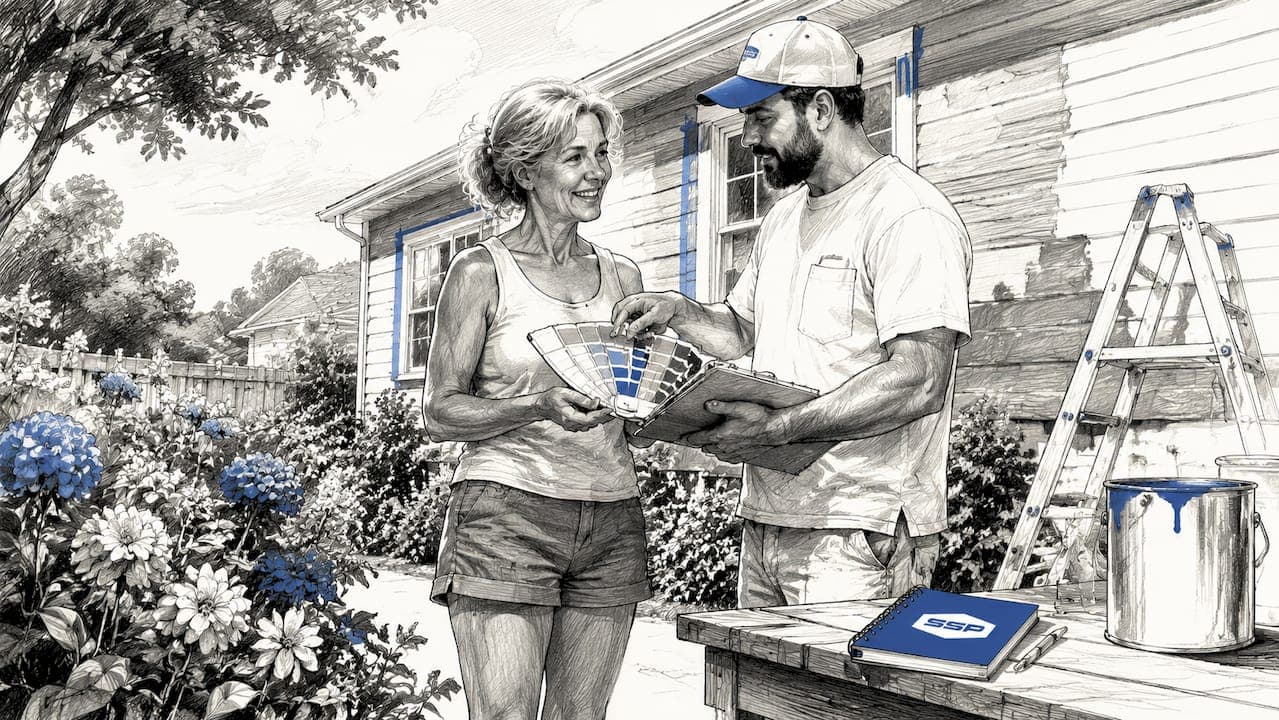
Painting in the South Bay climate means choosing UV-stable acrylic coatings built to resist intense afternoon sun, not coastal salt air or wildfire exposure. The primary stressor here is long, dry summers with strong solar radiation that fades darker colors and degrades paint film faster than most homeowners expect. Substrate preparation, whether your home has stucco or wood siding, determines how long any paint job actually lasts. Understanding why paint in south bay climate conditions demands a specific approach helps you avoid costly repaints and protects your property's value year after year.
Why South Bay climate factors shape paint performance
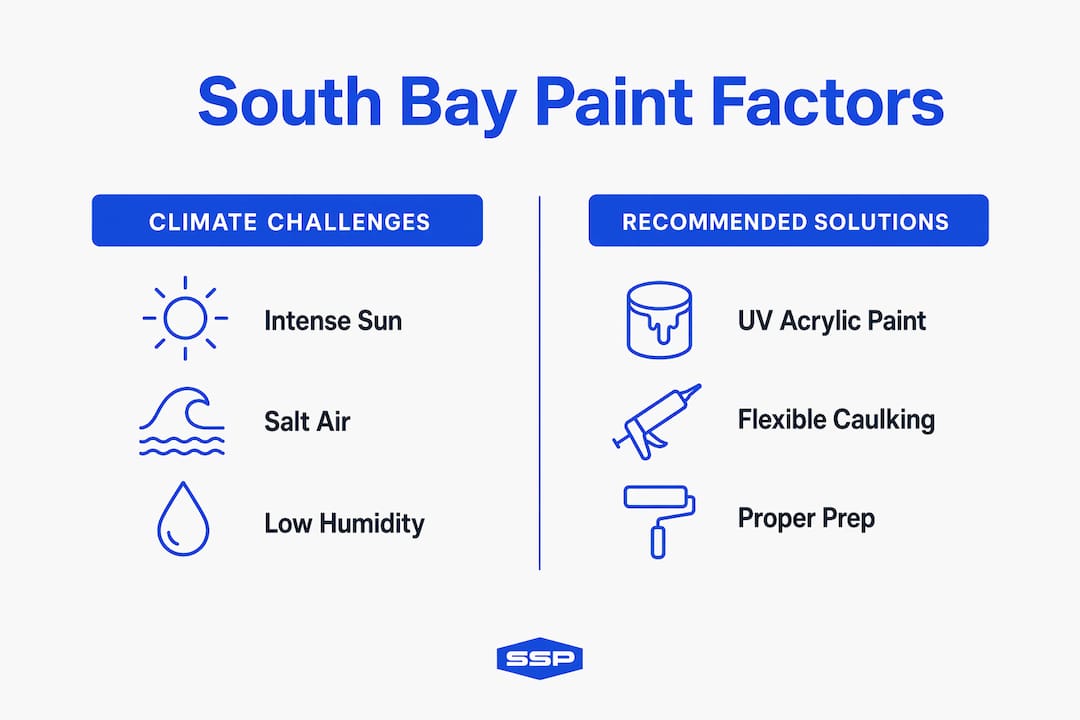
South Bay's mild climate removes some of the harshest paint stressors found elsewhere in California. Salt air corrosion is not a significant factor inland, and freeze-thaw cycles that crack paint films in colder regions simply do not occur here. That sounds like good news, and it is. But it shifts the entire performance burden onto UV resistance and fade protection.
The afternoon sun on south- and west-facing walls is the real threat. Surface temperatures on sun-exposed walls can reach 110–130°F during summer months. At those temperatures, low-quality paint films break down rapidly, losing adhesion and color depth within one to two seasons. Premium UV-stable pigments slow that degradation significantly.
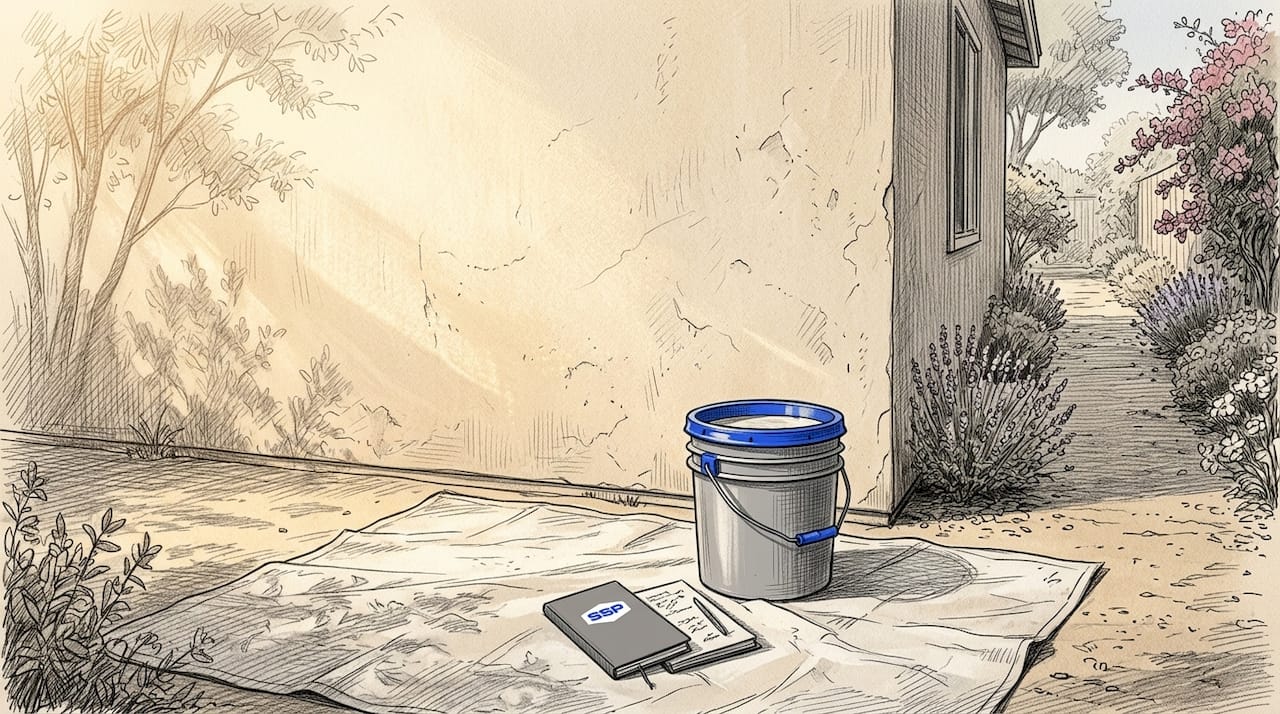
Low humidity in South Bay summers reduces some moisture-related paint failures, such as blistering or mold growth behind the film. However, low humidity also means caulk joints dry out faster and crack more readily. Proper caulking at trim lines, window frames, and penetrations becomes a maintenance priority rather than an afterthought.
| Climate factor | Impact on paint | Recommended response |
|---|---|---|
| Intense afternoon sun | Accelerated fading and film breakdown | UV-stable acrylic with high resin content |
| Mild temperatures | No freeze-thaw cracking | Standard exterior acrylic performs well |
| Low humidity summers | Faster caulk drying and cracking | Annual caulk inspection and resealing |
| Infrequent rain | Reduced moisture intrusion risk | Focus prep on sun-side walls |
Pro Tip: Check your south- and west-facing walls first when assessing paint condition. Those surfaces age two to three times faster than north-facing walls in South Bay's sun pattern.
Why substrate preparation is the most critical step
Substrate preparation is the dominant factor influencing both the cost and durability of South Bay exterior painting projects. A premium paint applied over poorly prepped stucco or wood will fail within a few years. The substrate, not the paint brand, determines the foundation.
Stucco and wood siding require completely different preparation approaches. Getting them confused, or skipping steps, leads directly to peeling, bubbling, and early color loss.
Stucco preparation
- Inspect all cracks and apply a crack-bridging elastomeric primer or filler before painting
- Clean the surface with a pressure washer to remove chalking, dirt, and loose paint
- Caulk all control joints, window frames, and penetrations with a paintable, flexible sealant
- Allow the surface to dry fully before priming, typically 24–48 hours after washing
- Apply a bonding primer if the existing surface is heavily chalked or previously unpainted
Wood siding preparation
- Sand rough or peeling areas down to bare wood or a stable paint layer
- Spot-prime all bare wood with an oil-based or shellac-based primer to seal grain
- Replace any rotted boards before painting, since paint cannot stabilize deteriorated wood
- Caulk all seams, butt joints, and trim intersections with a flexible paintable caulant
- Apply a full coat of exterior primer before the finish coat
Insufficient substrate prep leads to premature paint failures that cost more to fix than the prep would have cost in the first place. Labor costs in South Bay run above inland valley averages, so a failed paint job means paying twice for the same work.
Pro Tip: When reviewing a painting estimate, ask the contractor to list prep steps by substrate type. If the estimate groups all prep into a single line item without distinguishing stucco from wood, that is a warning sign.
When is the best time to paint in South Bay?
Timing a paint job correctly in South Bay is simpler than in many other regions, but it still requires attention to temperature and humidity windows. Ideal exterior painting conditions call for air temperatures between 50–85°F and relative humidity below 80%. South Bay delivers those conditions reliably in late spring and early fall.
-
Late spring (april through may): Temperatures are moderate, humidity is low, and rain is rare. Morning fog burns off early, leaving long dry windows for application and curing. This is the most consistent painting season in South Bay.
-
Early fall (september through october): Summer heat has passed, but temperatures remain warm enough for proper film formation. Rain is still infrequent, and the lower sun angle reduces surface overheating on west-facing walls.
-
Midsummer caution: Painting in direct sun with surface temperatures above 90°F causes poor film formation, lap marks, and early failure. Professional painters in South Bay schedule crews to follow the shade around the building throughout the day, starting on the east side in the morning and moving west in the afternoon.
-
Winter painting: South Bay winters are mild enough for exterior painting during dry stretches, but rain within 24–48 hours after application causes film defects including blocking, lap marks, and peeling. Always check a 48-hour forecast before starting.
-
Avoid high-humidity windows: Humidity above 80% during and after application hinders film formation even when temperatures are ideal. Morning coastal fog can push humidity above that threshold, so starting work after 9:00 AM is a reliable practice in fog-prone neighborhoods.
What paint types work best for South Bay homes?
Premium acrylic paints with high resin content and UV-stable pigments significantly extend paint life on sun-exposed South Bay homes compared to lower-cost alternatives. The chemistry matters. High-resin acrylics form a denser, more flexible film that resists cracking as surfaces expand and contract through daily temperature swings.
UV-stable pigments are the second key variable. Cheaper paints use organic pigments that break down under prolonged solar exposure, causing the chalking and fading you see on older homes with bargain paint jobs. Inorganic pigments, common in premium exterior lines, resist that breakdown and hold color depth for years longer.
South Bay homes with specific architectural features benefit from targeted product choices. Flat-roof fascias and horizontal surfaces collect heat and UV exposure from above and below, making a higher-resin formula worth the added cost. Homes with large glass walls or metal-framed windows, a common feature in mid-century modern properties throughout the area, need flexible caulants paired with paint that can handle the thermal movement of those materials.
The benefits of painting in South Bay with a quality product are measurable in repaint cycles. A premium acrylic applied over properly prepped substrate can last eight to ten years in South Bay conditions. A budget product on the same surface may need repainting in three to four years. The math on total cost over a decade consistently favors the premium option.
Pro Tip: Ask your paint supplier for the product's LRV (Light Reflectance Value) rating. Higher LRV means the surface reflects more heat, which reduces thermal stress on the paint film and extends its life on south-facing walls.
Key Takeaways
Exterior paint durability in South Bay depends on UV-stable acrylic products, substrate-specific preparation, and scheduling work during the 50–85°F temperature window of late spring or early fall.
| Point | Details |
|---|---|
| UV resistance is the top priority | Choose high-resin acrylic paints with UV-stable pigments to resist South Bay's intense afternoon sun. |
| Substrate prep determines longevity | Stucco needs crack bridging and caulking; wood needs sanding, priming, and sealing before any finish coat. |
| Timing protects the paint film | Paint between 50–85°F with humidity below 80%; late spring and early fall are the most reliable windows. |
| Sun-side walls age fastest | South- and west-facing surfaces need closer inspection and may require more frequent maintenance cycles. |
| Quality paint pays over time | Premium acrylics last significantly longer than budget alternatives, lowering total cost across a decade. |
What I've learned from South Bay painting projects
After working on South Bay properties across a range of substrates and neighborhoods, one pattern stands out clearly. Homeowners consistently underestimate how much the sun-side prep matters relative to everything else. They focus on color selection, HOA approval timelines, and price per gallon. Those things matter. But the condition of the stucco on the west wall, and whether the cracks were properly bridged before painting, determines whether the job holds for eight years or falls apart in three.
HOA color approval processes in South Bay master-planned communities add a scheduling layer that catches homeowners off guard. Approvals can take two to four weeks, and starting the project before approval is confirmed creates real problems. Factor that timeline into your planning before you book a crew.
The other thing I see regularly is homeowners trying to balance labor costs against paint quality. South Bay labor rates are not cheap, and the instinct to save money on materials to offset that is understandable. It is also the wrong trade-off. The labor cost is largely fixed by the scope of work. The paint cost is a fraction of the total. Spending more on a premium product adds relatively little to the total invoice but adds years to the result.
The climate impact on paint durability in South Bay is real and specific. It rewards homeowners who treat the project as a long-term investment rather than a short-term expense.
— Ryan
Southshorepaint's approach to South Bay exterior painting
South Bay homes deserve paint jobs built to last, not just look good on day one. Southshorepaint specializes in residential exterior painting for South Bay properties, with a process grounded in proper substrate preparation, premium UV-stable materials, and scheduling that accounts for local weather patterns.
Every project starts with a thorough substrate inspection before a single drop of paint is applied. Southshorepaint's crews distinguish between stucco and wood prep requirements, address cracks and caulking failures, and select coatings matched to each surface's sun exposure. If you are planning an exterior project and want a result that holds up through South Bay summers, connect with Southshorepaint for a consultation and detailed estimate.
FAQ
What makes South Bay climate hard on exterior paint?
The primary stressor is intense afternoon sun, with surface temperatures on south- and west-facing walls reaching 110–130°F in summer. UV radiation breaks down paint pigments and film structure faster than moisture or temperature swings.
How often should South Bay homeowners repaint their exteriors?
Premium acrylic paints applied over properly prepped substrates typically last eight to ten years in South Bay conditions. Budget paints on the same surfaces may require repainting in three to four years.
What is the best time of year to paint a South Bay home exterior?
Late spring and early fall offer the most reliable conditions, with temperatures in the 50–85°F range and humidity below 80%. Midsummer painting is possible but requires scheduling crews to follow shade and avoid surface temperatures above 90°F.
Does stucco or wood siding require more prep work?
Both require thorough preparation, but stucco demands crack bridging and flexible caulking at all joints, while wood requires sanding, spot priming of bare areas, and sealing of all seams. Skipping either process leads to premature paint failure.
Do HOA rules affect paint project timelines in South Bay?
HOA color approval in many South Bay communities takes two to four weeks. Homeowners should submit color selections for approval before scheduling a painting crew to avoid delays or required repaints.