
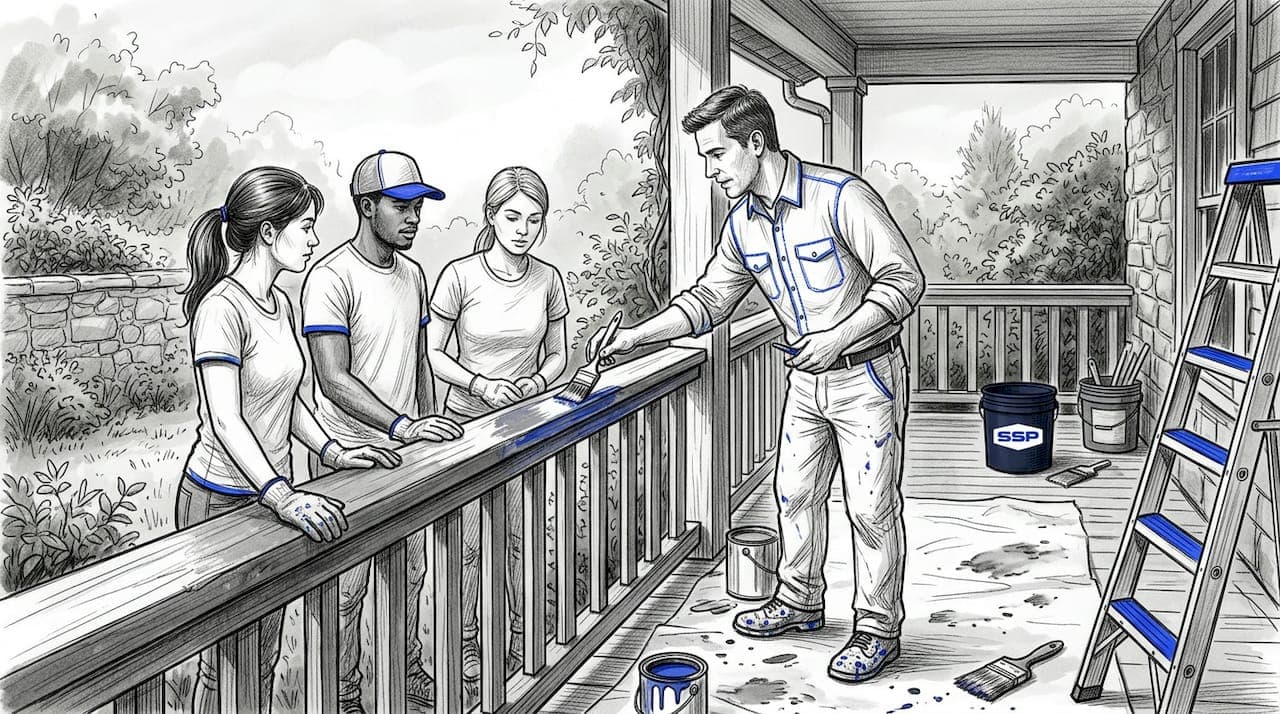
Crew training is the single most reliable driver of quality, safety, and profitability in a painting business. When you invest in structured workforce development, also called painter apprenticeship training or crew skills development in the industry, you build a team that delivers consistent results, avoids costly errors, and meets legal requirements on every job. The reasons to train painters go well beyond technique: they include regulatory compliance, workforce retention, and measurable income growth. This article breaks down the core benefits of painting crew training and gives you a practical framework for putting a program in place.
Why train painting crews in the first place?
Training painting crews is the foundation of every high-performing painting operation, and the business case is stronger than most owners realize. Untrained crews produce inconsistent finishes, skip surface preparation steps, and create liability exposure on every job they touch. Trained crews, by contrast, understand why each step matters, from primer adhesion to curing times, and that understanding translates directly into fewer callbacks and higher customer satisfaction.
The benefits of painting crew training fall into four clear categories:
- Quality of finish: Crews trained in surface preparation, paint selection, and application technique produce results that last. Proper prep alone accounts for the majority of a coating's lifespan, and that knowledge only comes through deliberate instruction.
- Safety compliance: Painting involves solvent exposure, working at height, and, on older properties, lead paint hazards. Trained workers follow safety protocols that protect both themselves and the occupants of the homes and buildings they work in.
- Customer trust and repeat business: Clients notice the difference between a crew that works with precision and one that rushes through a job. Training builds the habits that distinguish professional crews from cut-rate operators.
- Reduced rework costs: Errors in painting, whether runs, lap marks, or peeling caused by poor adhesion, are expensive to fix. Training reduces the frequency of those errors before they reach the customer.
Pro Tip: Track your callback rate before and after implementing a structured training program. A measurable drop in rework requests is the clearest financial signal that training is paying off.
The importance of training painting teams becomes obvious when you look at the cost of not doing it. One botched exterior repaint on a commercial property can wipe out the margin on three other jobs.
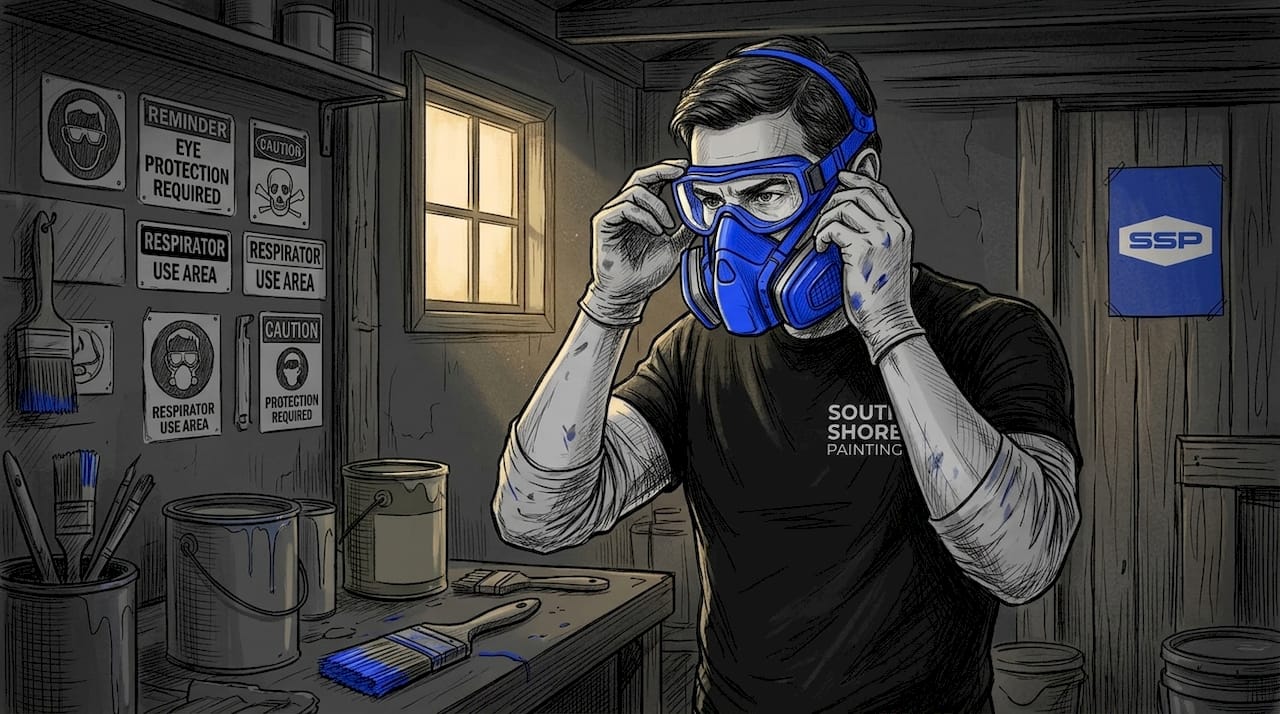
How does regulatory compliance drive the need for crew training?
Regulatory requirements make training painting workers effectively a legal obligation on many projects, not just a business preference. The most significant federal rule affecting painting contractors in the United States is the EPA's Renovation, Repair and Painting Rule, commonly called the RRP Rule.
Here is what the RRP Rule requires in practice:
- Certified Renovator on every covered job: Any firm working on pre-1978 housing must have at least one Certified Renovator on-site, trained through an EPA-accredited program. This is not optional.
- Lead-safe work practices throughout the project: The Certified Renovator is responsible for supervising the entire crew's compliance with containment, cleaning, and waste disposal procedures.
- Post-work cleaning and verification: After the job, the Certified Renovator conducts a cleaning verification process and maintains documentation that can be reviewed by regulators.
- Daily onboarding of crew members: The Certified Renovator's role extends to briefing and training other workers on-site each day, making crew-level training a continuous, documented activity.
"Lead-safe training fundamentally safeguards worker and occupant health, beyond just improving paint finish quality." — EPA RRP Program Guidance
Failing to comply with the RRP Rule exposes your firm to significant fines and potential legal action. Beyond the financial risk, a compliance failure on a lead-safe job can permanently damage your reputation in a local market. Training is the mechanism that keeps your documentation current, your crew informed, and your business protected.
What role does culture and mentorship play in crew training?
Technical skills can be taught in a classroom or on a jobsite, but attitude and work ethic must be cultivated through culture. This distinction matters enormously for painting business owners because the crews that cause the most problems are rarely the ones who lack technique. They are the ones who cut corners when no one is watching, show up late, or resist feedback.
Research on culture-driven workforce development confirms that companies investing in mentorship and culture systems experience reduced turnover and higher productivity. The mechanism is straightforward: when new hires are paired with experienced mentors, they absorb not just technique but professional standards and problem-solving habits. That transfer of values is faster and more durable than any written policy.
Effective culture-building in a painting crew involves several interconnected practices:
- Mentorship pairings: Assign new hires to experienced painters for the first 60 to 90 days. The mentor is accountable for the new hire's performance, which creates a shared investment in success.
- Production-based incentives: Payroll structures that reward production and team accountability shift crew behavior more effectively than rules alone. When workers earn more by doing the job right and efficiently, quality becomes self-reinforcing.
- Autonomous problem-solving: Train crews on principles, not just procedures. A crew that understands why a surface needs a specific primer can adapt when they encounter an unusual substrate. A crew that only knows the steps cannot.
- Regular feedback loops: Weekly check-ins between supervisors and crew members keep standards visible and give workers a channel to raise concerns before they become problems.
Pro Tip: When you hire, prioritize attitude over experience. A motivated new hire with no painting background will outperform a technically skilled worker with a poor attitude within six months, given proper mentorship.
The qualities that define top painters are largely behavioral, not technical. Culture-building is how you develop those qualities at scale across your entire crew.
What evidence shows the economic impact of structured training programs?
The economic case for training painting workers effectively is not theoretical. Structured programs produce measurable outcomes in income, savings, and career advancement for the workers who complete them, and those outcomes translate directly into business value for the owners who employ them.
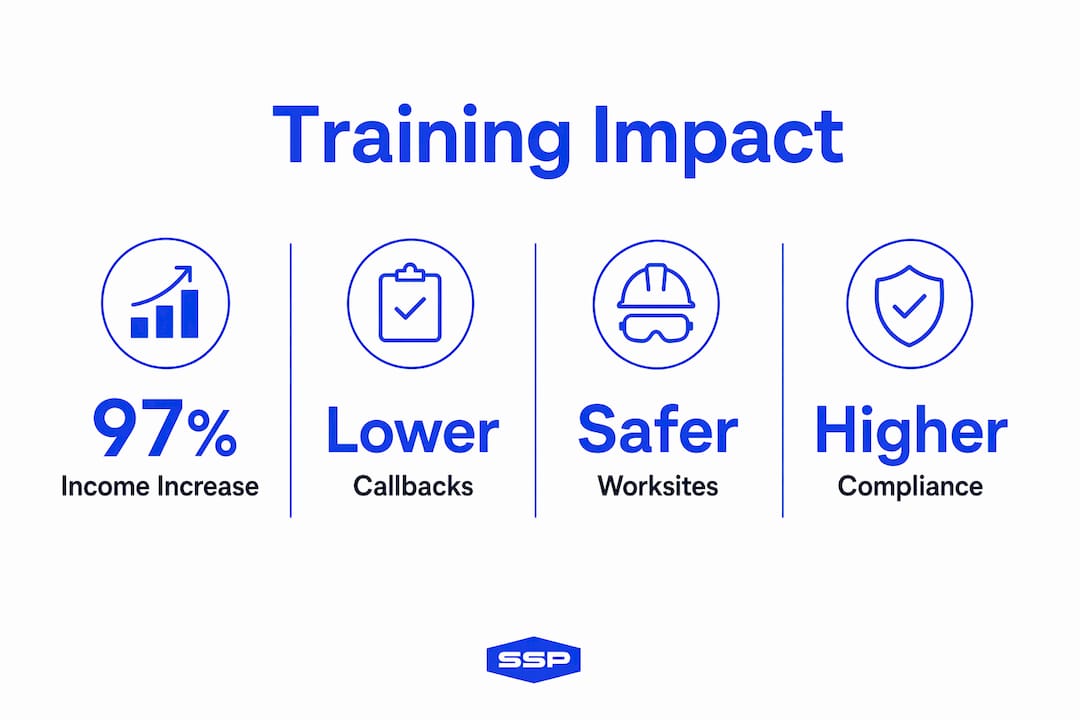
The Berger Paints iTrain program provides the most detailed published data on this question. After completing structured crew training, 97% of participants reported higher income. Among those participants, 62% reported doubling their earnings, and 84.24% reported increased savings. These are not marginal improvements. They reflect a fundamental shift in what trained workers can deliver and charge for.
| Outcome | Result after training |
|---|---|
| Participants reporting income increase | 97% |
| Participants who doubled earnings | 62% |
| Participants reporting increased savings | 84.24% |
| Training model | Structured, multi-cycle program |
The data also supports a critical point about training design. Single-cycle training has limits; repeated training and peer engagement produce the best skill retention and performance over time. A one-day orientation is not a training program. A program that includes recurring instruction, peer review, and updated content as products and techniques evolve is what drives sustained economic results.
For painting business owners, the implication is direct. Crews that receive ongoing training command higher rates, produce better work, and stay with your company longer. Each of those outcomes improves your margin. The painting career path also offers accessible entry without a college degree, which means a well-structured training program is one of your strongest recruitment tools in a competitive labor market.
How can business owners implement effective painting crew training programs?
Implementing a training program does not require a large budget or a dedicated training department. It requires a clear structure, consistent execution, and a commitment to treating training as an ongoing resource rather than a one-time event.
Follow this sequence to build a program that works:
- Map your current skill gaps. Before designing any training content, assess where your crews are weakest. Common gaps include surface preparation standards, paint mixing and thinning ratios, and safe handling of solvents. Use callback data and supervisor observations to identify priorities.
- Combine classroom instruction with on-the-job application. Painter apprenticeship programs that integrate classroom learning with real workflow application produce stronger performance than either approach alone. Teach the theory, then apply it on an active job under supervision.
- Include EPA RRP certification where required. If your firm works on any pre-1978 residential or commercial properties, at least one crew member must hold current Certified Renovator status. Build that certification into your onboarding process, not as an afterthought.
- Assign mentors and set accountability milestones. Pair every new hire with an experienced crew member and define clear performance benchmarks at 30, 60, and 90 days. Mentors should report on progress, not just supervise.
- Schedule recurring training cycles. Quarterly or semi-annual refreshers keep crews current with new products, updated safety standards, and evolving techniques. The exterior painting workflow and interior finishing methods both evolve as new coatings enter the market.
- Tie training completion to compensation. Workers who complete training modules and demonstrate proficiency should see a direct reward in their pay or advancement opportunities. This closes the loop between learning and motivation.
The goal is a self-sustaining system where experienced crew members train new hires, supervisors reinforce standards daily, and the business owner sets the culture from the top.
Key takeaways
Training painting crews produces measurable gains in quality, safety, compliance, and worker income, making it the highest-return investment available to painting business owners.
| Point | Details |
|---|---|
| Regulatory compliance is mandatory | EPA RRP Rule requires a Certified Renovator on all pre-1978 housing jobs, making training a legal requirement. |
| Economic returns are documented | 97% of Berger Paints iTrain participants reported income increases after completing structured training. |
| Culture matters as much as technique | Mentorship and production-based incentives build the attitudes and habits that technical instruction alone cannot. |
| Ongoing cycles outperform one-time training | Repeated training and peer engagement sustain skill retention and keep crews current with new products. |
| Implementation follows a clear sequence | Map skill gaps, combine classroom and on-the-job learning, certify where required, and tie completion to compensation. |
Why I believe training is the sharpest competitive edge in painting today
From where I sit, the painting industry has a skills gap problem that most owners are not addressing directly. They hire based on availability, put new workers on a job with a brush in their hand, and wonder why quality is inconsistent. The honest answer is that you cannot build a reliable crew by accident.
What I have seen work, time and again, is treating training as a system rather than an event. The businesses that grow steadily are the ones where experienced painters actively mentor new hires, where safety briefings happen every morning on lead-risk jobs, and where workers know that doing the job right is how they earn more. That is not a soft cultural idea. It is a business model.
The Berger Paints data makes the economic argument clearly, but the real insight is simpler: trained workers stay longer, produce better results, and attract better clients. Untrained crews create a cycle of callbacks, turnover, and reputation damage that no amount of marketing can fix. If you are a painting business owner deciding where to put your next dollar of investment, put it in your people. The return is more predictable than any equipment purchase.
— Ryan
How Southshorepaint approaches crew quality and training

At Southshorepaint, every project reflects the standard that proper preparation, skilled application, and trained crews produce results that last. We do not treat training as a checkbox. It is built into how we work, from surface prep protocols to safety compliance on every job we take on. If you are a painting business owner or property manager looking for a partner who understands what a trained crew actually delivers, the Southshorepaint blog covers practical guidance on crew performance, project workflows, and quality standards. For property managers specifically, our South Bay property manager tips address the operational questions that matter most when managing multiple painting projects. Reach out to Southshorepaint to see what a properly trained crew looks like on your next project.
FAQ
Why is training painting crews important for business owners?
Training painting crews directly improves quality, reduces rework costs, and protects your business from regulatory liability. Owners who invest in structured training programs report fewer callbacks and higher customer retention.
What is the EPA RRP Rule and how does it affect painting contractors?
The EPA Renovation, Repair and Painting Rule requires firms working on pre-1978 housing to have a Certified Renovator on-site who supervises lead-safe work practices. Non-compliance exposes your firm to fines and legal action.
How often should painting crews receive training?
Single-cycle training produces limited long-term retention. Quarterly or semi-annual refreshers, combined with ongoing mentorship, sustain skill levels and keep crews current with new products and safety standards.
What is the economic return on investing in crew training?
Data from the Berger Paints iTrain program shows that 97% of participants reported higher income after completing structured training, with 62% doubling their earnings. For business owners, trained crews command higher rates and reduce costly errors.
How do mentorship and culture fit into a painting crew training program?
Technical skills cover the mechanics of the job, but attitude and accountability must be developed through culture. Pairing new hires with experienced mentors and linking pay to performance outcomes builds the behavioral standards that training alone cannot instill.