

Painting your apartment walls is entirely doable, but only after you have written landlord approval in hand. The core apartment painting procedures follow a clear sequence: secure written permission, plan and prepare the space, paint ceilings first, then trim, then walls, and clean up properly before restoring the room. Skipping the permission step puts your security deposit at serious risk. Unauthorized painting in bold or non-neutral colors typically results in deposit deductions to cover repainting costs.
- Get written landlord approval before purchasing a single can of paint
- Confirm approved colors, paint quality standards, and restoration obligations in writing
- Follow the ceiling-to-trim-to-walls sequence for professional results
- Protect belongings, repair wall damage, and ventilate properly throughout
- Document wall condition with photos before and after painting
How to get landlord approval before you paint anything
Written consent is the single most protective step a renter can take. A verbal "go ahead" from a landlord carries almost no legal weight if a dispute arises at move-out. Your written request should specify the rooms you plan to paint, the colors you intend to use, the paint brand and finish, and whether you will restore the original color before leaving.
A mutual painting agreement that specifies responsibilities, timing, costs, and quality standards is the strongest protection available to renters. Ask your landlord to sign an addendum to the lease rather than relying on an email thread alone.
- Send a formal written request by email and follow up in writing
- Specify exact paint colors (include manufacturer color codes when possible)
- Clarify whether you must repaint to the original color at move-out
- Ask about acceptable paint quality and finish types
- Request a signed copy of any agreement for your records
Pro Tip: Attach a color swatch or manufacturer color card to your written request. It removes ambiguity and gives the landlord a concrete reference to approve or reject, which protects you both.
Planning and preparing your apartment before you start painting
Preparation accounts for the majority of a quality paint job's success. Measure each wall's height and width, then calculate square footage to estimate how much paint you need accurately. Choosing the right paint type matters just as much. For rental spaces, rental-appropriate paint types with low VOC content and washable finishes tend to satisfy landlord requirements while holding up to daily wear.
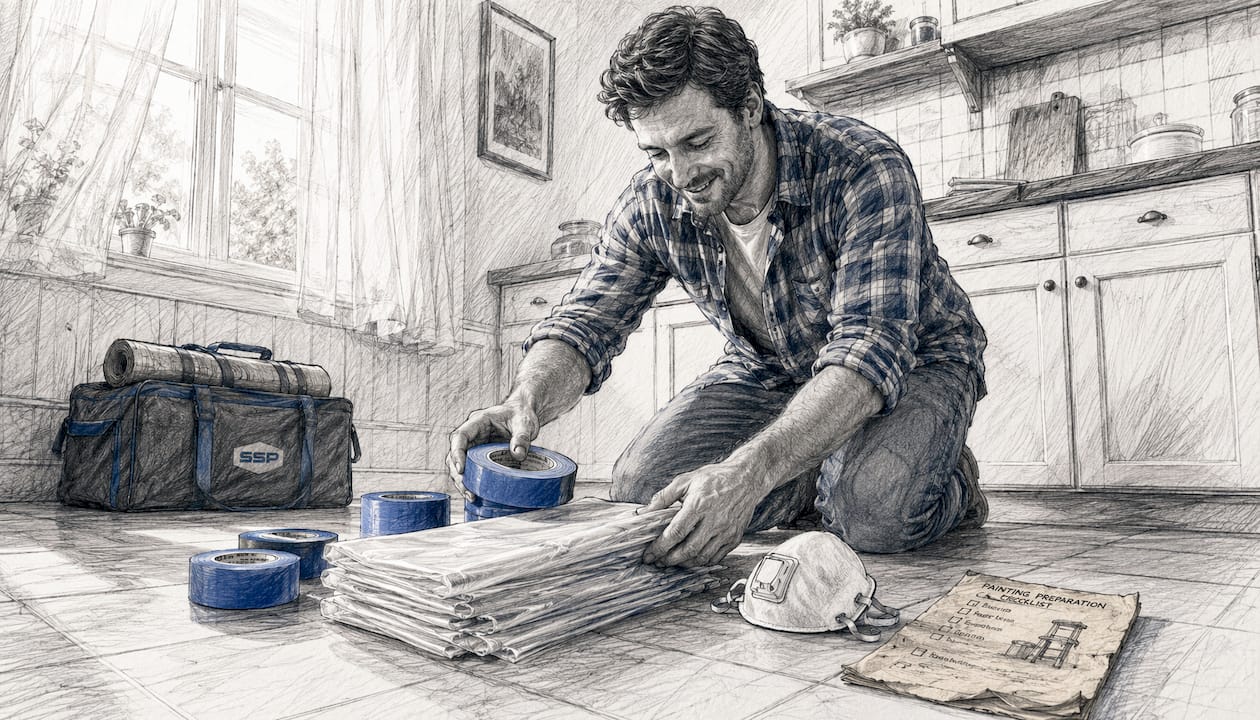
Wall and room preparation:
- Move furniture to the center of the room and cover it with drop cloths
- Remove outlet covers, switch plates, and any wall-mounted hardware
- Fill nail holes and small cracks with spackling compound, then sand smooth once dry
- Wipe walls with a damp cloth to remove dust, grease, and residue before priming
- Apply painter's tape along baseboards, door frames, and ceiling edges
Safety checklist before you open any paint can:
- Open windows and run fans to maintain steady airflow throughout the room
- Wear an N95 respirator mask, especially in smaller or poorly ventilated spaces
- Keep children and pets out of the area until paint is fully dry
- Have a fire extinguisher accessible if using any solvent-based products
Proper ventilation and masks protect you from paint fumes during indoor painting, particularly in apartments where airflow is often limited by shared walls and smaller windows.
How to execute the painting: ceilings, trim, and walls in the right order
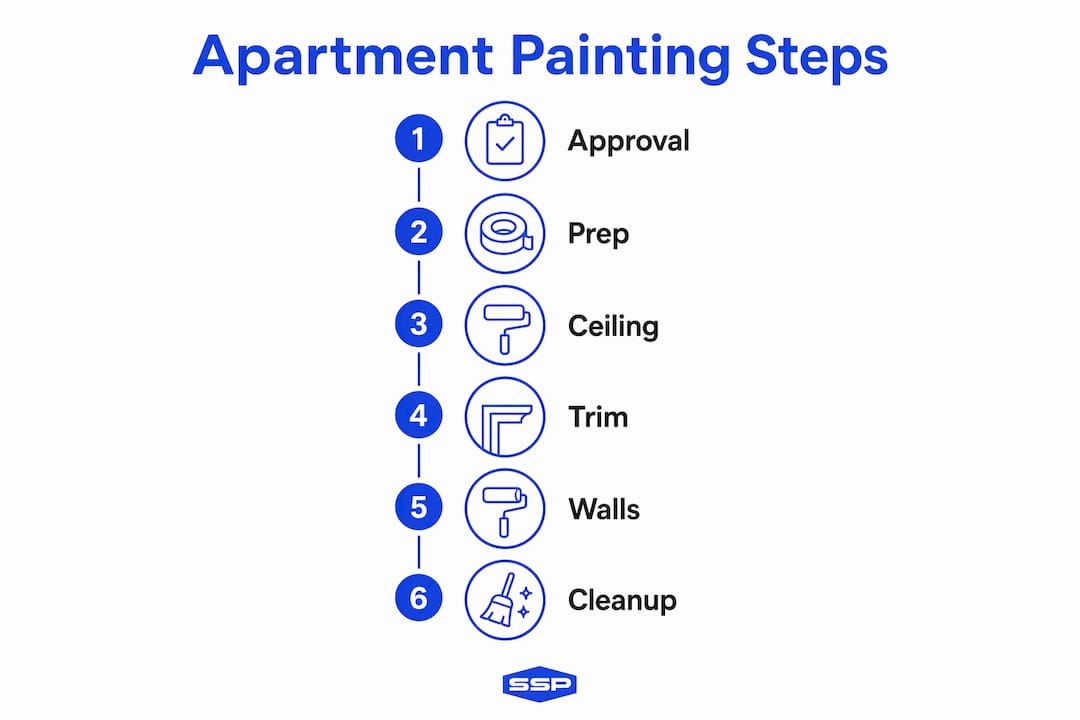
The professional sequence exists for a practical reason. Painting ceilings first prevents drips from landing on finished walls, and letting each coat dry fully before moving to the next surface is what separates a clean result from a patchy one.
Ceiling painting:
- Use a roller with an extension pole for flat ceiling areas
- Cut in along the ceiling edges with a 2-inch angled brush before rolling
- Apply paint in a W or M pattern across the ceiling for even coverage
- Allow the first coat to dry completely before applying a second
Trim and molding:
- Use a 1.5-inch or 2-inch angled sash brush for baseboards, door frames, and window casings
- Apply trim paint in long, smooth strokes following the grain or direction of the surface
- Mask adjacent wall areas with painter's tape to keep edges sharp
Walls:
- Cut in along all edges with a brush before rolling the main wall surfaces
- Load the roller evenly and apply paint in overlapping vertical strokes
- Work in sections of roughly 3-by-3 feet to maintain a wet edge and avoid lap marks
- Let the first coat dry fully before assessing coverage and applying a second coat
- Remove painter's tape at a 45-degree angle while the final coat is still slightly tacky
For detailed guidance on interior wall techniques that produce lasting results, Southshorepaint's blog covers the full process with professional-level depth.
Cleanup procedures and final touch-ups after painting
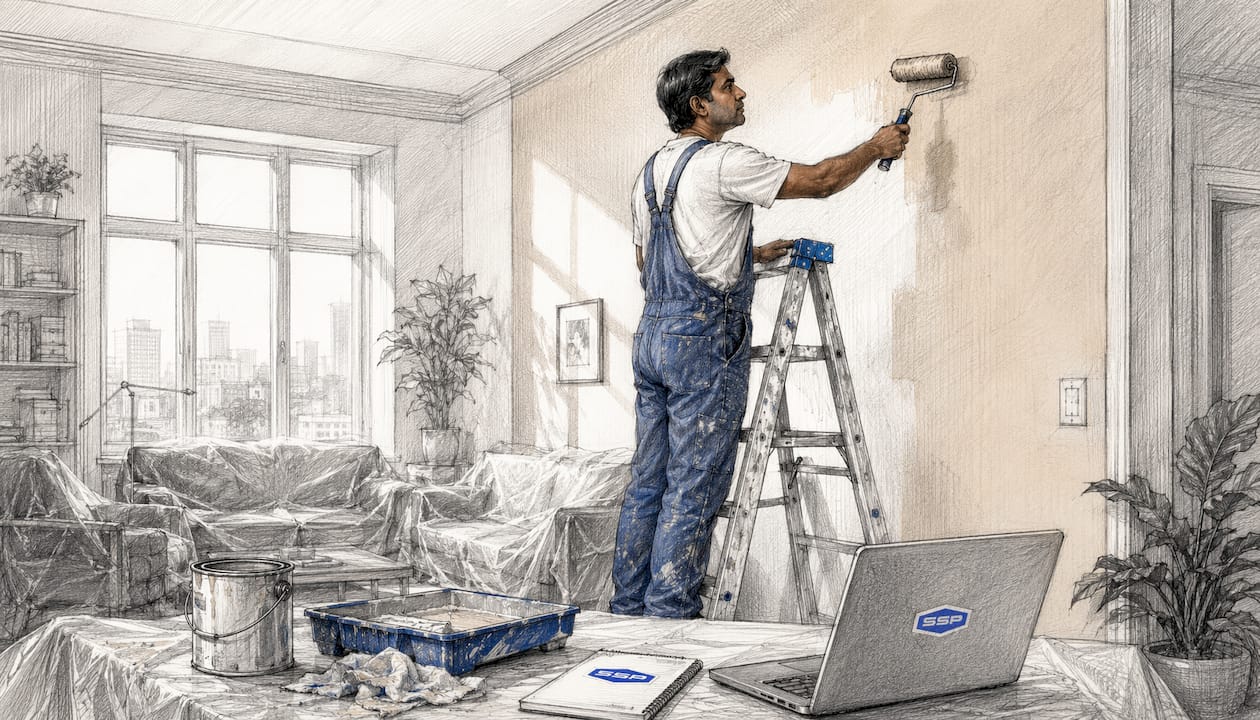
Cleanup done right protects both your tools and your apartment. Removing tape carefully, washing tools according to paint type, and disposing of materials properly are all part of leaving the space in good condition.
- Pull painter's tape slowly at a 45-degree angle to avoid lifting fresh paint
- Touch up any thin spots or missed edges with a small brush before the paint fully cures
- Wash latex paint from brushes and rollers with warm water and mild soap; use mineral spirits for oil-based paint
- Allow brushes to dry fully before storing them flat or hanging them bristle-down
- Seal leftover paint tightly, label it with the color name and room, and store it upright in a cool, dry location
- Dispose of empty cans and dried paint according to your local municipality's guidelines
- Reinstall outlet covers, switch plates, and hardware once walls are completely dry
- Run fans and keep windows open for at least 24 hours after the final coat to clear residual odors
How often should you repaint, and can you use spray paint in an apartment?
Repaint frequency in a rental depends on three factors: visible wear, your lease terms, and your landlord's standards. Most residential interior paint holds up for several years under normal conditions, though high-traffic areas like hallways and kitchens tend to show wear faster. Check your lease before assuming any repainting is permitted, even if you are simply touching up the existing color.
Spray paint in apartments:
Spray paint is generally a poor choice for apartment interiors. The overspray is difficult to contain, the odor is intense and slow to dissipate, and most lease agreements either explicitly prohibit aerosol applications or fall under a general "no alterations" clause that covers them. If your landlord has approved a specific project where spray paint might be considered, discuss it explicitly and get written sign-off before proceeding.
Low-VOC and low-odor alternatives:
- Water-based latex paints with low or zero VOC ratings are the standard choice for rental interiors
- Milk paint and chalk-style paints produce minimal odor and work well on accent areas
- Eggshell and satin finishes clean more easily than flat paint, making them practical for living areas and bedrooms
- Check tenant-friendly paint options that balance durability with landlord-friendly color ranges
All paint methods, including low-odor alternatives, require landlord pre-approval before application.
Understanding tenant legal risks and how to protect your security deposit
Most leases include a "no alterations without written consent" clause, and painting falls squarely within that language. Security deposits cannot be withheld for normal wear and tear, which includes faded paint, minor scuffs, and small nail holes. However, unauthorized color changes or paint damage that requires professional correction are legitimate grounds for deductions.
The distinction between normal wear and tenant damage is where most disputes actually happen. Faded or lightly scuffed paint after years of ordinary living is the landlord's cost of doing business. Bold unauthorized colors, large wall damage, or paint applied over surfaces the landlord did not approve are a different matter entirely.
- Photograph every wall at move-in and move-out with timestamped images stored in cloud backup
- Keep a copy of any signed painting agreement alongside your lease documents
- Request an itemized statement if any deposit deduction is made for painting
- Compare deduction amounts against the paint's remaining useful life, not the full cost of a fresh repaint
Pro Tip: A signed painting agreement that specifies the approved color, finish, paint quality, and restoration procedure is your strongest defense in any deposit dispute. Without it, your position in a disagreement is significantly weaker regardless of how well the work was done.
A mutual agreement document covering color, finish, and restoration terms gives renters clear standing if a landlord attempts to withhold deposit funds for painting that was properly approved and executed.
Key Takeaways
Following proper apartment painting procedures from approval through cleanup protects both your security deposit and your relationship with your landlord.
| Point | Details |
|---|---|
| Written approval is mandatory | Always get landlord consent in writing before purchasing paint or starting any work. |
| Preparation determines quality | Cleaning, patching, and priming walls before painting produces a finish that lasts and satisfies landlord inspection. |
| Paint in sequence | Ceilings first, then trim, then walls. Each coat must dry fully before moving to the next surface. |
| Document everything | Timestamped photos at move-in and move-out are your primary protection in any deposit dispute. |
| Spray paint carries real risk | Aerosol applications in apartment interiors create overspray and odor issues and typically violate lease terms. |