
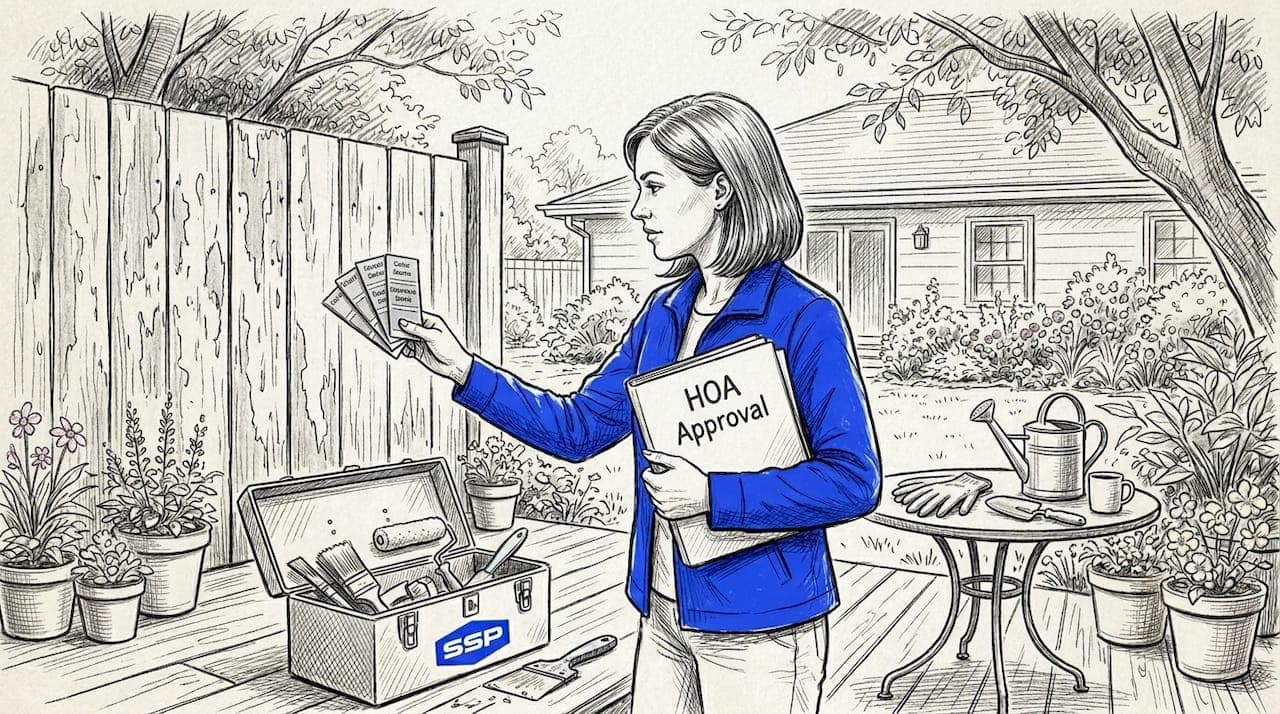
Painting the exterior of your home in an HOA community should be straightforward. In practice, it often isn't. Many homeowners submit color requests only to face delays, rejections, or correction notices because the approval process is more detailed than it looks. A solid hoa painting guide saves you from those frustrations by giving you the right information before you spend a dollar on paint or labor. This article walks you through the full process: understanding regulations, choosing approved colors, submitting a complete application, hiring the right contractors, and keeping your property in compliance long term.
Table of Contents
- Key takeaways
- Your HOA painting guide: regulations and approvals
- Choosing HOA-approved exterior colors
- Submitting your HOA painting approval request
- Working with painters who know HOA rules
- Common mistakes, disputes, and long-term maintenance
- My take on HOA painting projects after years in the field
- How Southshorepaint helps you paint with confidence
- FAQ
Key takeaways
| Point | Details |
|---|---|
| Start with your CC&Rs | Review your HOA's governing documents before selecting any color or contacting a painter. |
| Submit a complete package | Incomplete applications reset the review clock and cause the longest delays. |
| Stick to approved palettes | HOA color palettes are non-negotiable; verify current lists before repainting, even with an existing color. |
| Hire HOA-experienced painters | Contractors familiar with HOA requirements reduce compliance risk and prevent costly repaints. |
| Document everything in writing | Keep approvals, correspondence, and color records to protect yourself in future disputes. |
Your HOA painting guide: regulations and approvals
The first thing to understand is that HOA painting rules are not suggestions. They are enforceable requirements written into your community's Covenants, Conditions, and Restrictions (CC&Rs) and administered by an Architectural Control Committee (ACC) or Architectural Review Committee (ARC). Before you open a paint chip booklet, you need to read those documents.
ACC approval is typically required for virtually all exterior painting projects, including cases where you plan to repaint using the exact same color you already have. The committee needs to verify that your planned work meets current standards, which may have changed since your last project. Submitting the official request form with full details and photos is not optional. Work cannot legally begin until written approval is in hand.
Most HOA review timelines run between 30 and 60 days. California Civil Code §4765 requires that architectural review procedures be fair, reasonable, and conducted in a timely manner, though the specific 45-day statutory deadline applies to post-disaster reconstruction rather than standard cosmetic reviews. Other states have similar consumer protections, so it's worth checking your local statutes.
One distinction that catches many homeowners off guard is the difference between a minor touch-up and a full repaint. Minor touch-ups typically don't require approval, but a full repaint or any color change almost always does. When in doubt, ask your HOA in writing before you start.
Pro Tip: Request a written confirmation from your HOA office clarifying whether your specific scope of work requires formal ACC approval. This takes five minutes and can save you weeks of back-and-forth later.
It's also worth knowing that architectural committees derive authority from your CC&Rs, and any secondary guidelines that conflict with those documents may not be fully enforceable. If a rule feels unreasonable or contradicts your CC&Rs, you have grounds to ask questions before complying.
Choosing HOA-approved exterior colors
Color selection in an HOA community is not a creative free-for-all. Most communities maintain a predetermined color palette, often developed with input from a design professional, and your choices must come from that list. You can usually find the current approved palette in your HOA welcome packet, on the community's resident portal, or by requesting it directly from your management company.
Here is a quick breakdown of how HOA color rules typically apply to different parts of your home's exterior:
| Surface | Typical HOA rule |
|---|---|
| Siding | Neutral or light tones from approved palette only |
| Trim | Must match or complement siding; often must match gutters |
| Gutters | Generally required to match trim color |
| Front door | One approved accent color permitted |
| Shutters | Accent color allowed; usually same as front door |
| Murals or stenciling | Almost universally prohibited |
Bright neon or fluorescent colors are disallowed across virtually every HOA community. Accent colors are typically permitted only on front doors and shutters, and even those must come from a restricted list. The logic is straightforward: uniformity protects property values across the entire community, not just your home.
A few HOA painting tips on sheen and finish are worth noting. Many communities restrict high-gloss finishes on siding, even when the color itself is approved. Flat or eggshell sheens tend to be the default for siding, while semi-gloss is often permitted for trim and doors. Verify this in your architectural guidelines, because painting with the wrong sheen can trigger a correction notice even if your color was approved.
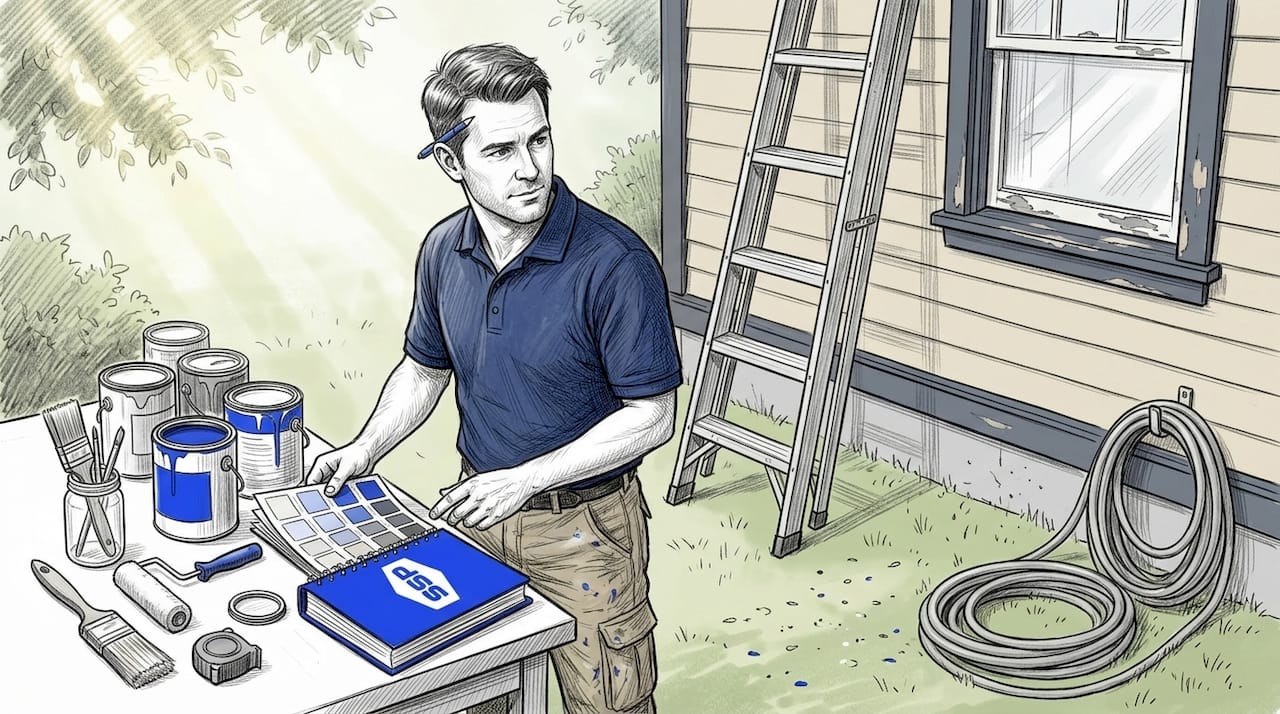
One detail that surprises many homeowners: even repainting with the same color can require approval if the HOA's approved palette has been updated since your last project. A color that was on the list five years ago may no longer be. Always verify against the current palette before scheduling any work.
Submitting your HOA painting approval request
A rejected or stalled application almost always comes down to missing information. A submission is not considered complete until all required documents are included, and the review clock does not start until that threshold is met. Submitting a thorough package upfront is the single most effective thing you can do to speed up approval.
Here is what a review-ready application typically includes:
- Completed official Architectural Request Form obtained from your HOA or management company.
- Paint manufacturer name and product line so the committee can verify the product meets quality standards.
- Exact color name and color code for every surface being painted (siding, trim, door, shutters, gutters).
- Current photographs of your home's exterior taken from the street, front angle, and any side elevations being painted.
- Color placement diagram showing which color applies to which surface, either marked on a photo or sketched on a simple drawing.
- Samples or paint chips in the actual colors selected, attached to the form or included in the envelope.
The depth of detail required by a review-ready application may feel excessive, but the committee is comparing your selections against the community's standards across dozens of homes. Giving them everything they need in one submission eliminates the need for a back-and-forth that can add weeks to your timeline.
If you have documented approvals from previous painting projects, include copies with your application. This demonstrates good faith and gives the committee useful context about your home's exterior history.
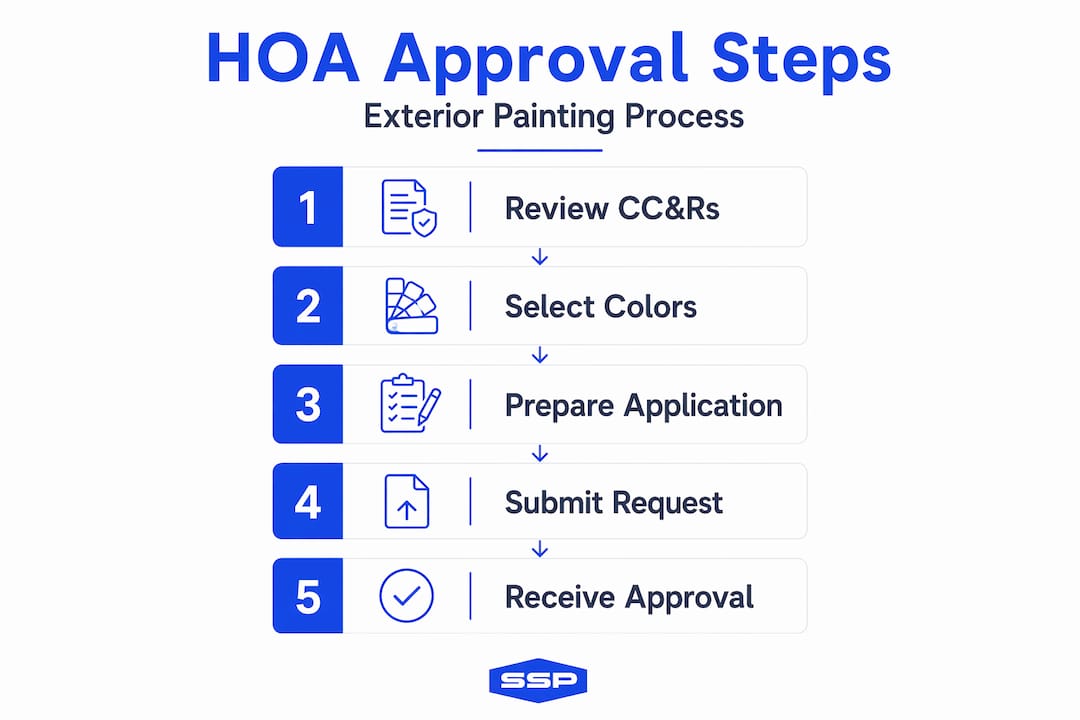
Pro Tip: After receiving written approval, photograph it alongside the actual paint chips you used and store both together. If a future ownership transfer or committee turnover creates a dispute about your colors, that record is your best defense.
Working with painters who know HOA rules
Choosing a painter without HOA experience can be one of the most expensive mistakes in this process. Hiring painters familiar with HOA policies improves compliance and reduces the risk of fines or mandatory repainting that wipes out any savings from a cheaper bid.
When vetting painters for HOA work, look for these qualities:
- Valid contractor's license and general liability insurance. Your HOA may actually require proof of both before allowing any work to begin on the property.
- Documented HOA project experience. Ask for examples of previous HOA community projects and whether they've navigated approval processes before.
- Clear communication about restrictions. A good contractor will ask to review your approval documents before starting, not after.
- Familiarity with scheduling rules. Many HOAs restrict work to specific hours (typically 8 a.m. to 5 p.m. on weekdays), prohibit work on holidays, and may limit outdoor painting during certain seasons.
- Quality materials standard. Ask which paint lines they use and why. Premium exterior paints with longer warranties protect your investment better and tend to satisfy HOA maintenance standards over time.
For a deeper look at why professional help pays off, the advantages of hiring professional painters in HOA communities go well beyond color compliance. Proper surface preparation, priming, and application technique determine how long the finish lasts, which directly affects your next repainting timeline and cost.
Pro Tip: Share your written HOA approval, the approved color codes, and any finish restrictions directly with your painter before the job begins. Confirming these details in your written contract means accountability is shared if a correction notice arrives.
Common mistakes, disputes, and long-term maintenance
Most HOA painting problems are preventable. Frequent causes of HOA painting disputes include painting without approval, selecting non-approved colors, and submitting applications that are missing key information. The consequences range from a written warning to a mandatory repaint at your own expense.
Here is what to do if things go wrong:
- Received a denial: Ask the committee in writing for specific reasons. Many denials are fixable by revising your color selection or resubmitting with missing documents.
- Received a correction notice after painting: Stop work immediately, document everything with photos, and request a meeting with your ACC representative before spending money on corrections.
- Believe the rule is unfair or misapplied: Review your CC&Rs directly to see if the guideline being cited is actually recorded there. Guidelines that conflict with CC&Rs may not be enforceable.
- Facing escalating fines: Consult a real estate attorney with HOA experience before the situation worsens. Many states have mandatory HOA dispute resolution processes that must be offered before fines can escalate further.
"Disputes can be minimized by keeping good records and clear communication with the architectural committee." — HOA Architectural Control Committees
On the maintenance side, most HOAs expect homeowners to repaint on a schedule, often every 7 to 10 years, or sooner if the paint shows visible fading, peeling, or chalking. Keeping your exterior paint maintained is not just about curb appeal. Letting it deteriorate can trigger HOA violations just as easily as choosing the wrong color. Annual inspections of caulking, trim joints, and painted wood surfaces help catch problems before they become compliance issues.
My take on HOA painting projects after years in the field
I've worked on exterior painting projects in HOA communities across the South Bay for years, and the pattern is consistent. Homeowners who struggle most with the approval process are almost always the ones who tried to shortcut the preparation phase. They picked a color they liked, bought the paint, and then called us to start. By the time we sorted out the approval requirements, the project was already delayed by three weeks or more.
The homeowners who sail through the process do one thing differently: they treat the application like a job interview for their home. They gather every document the committee could possibly want before submitting, and they submit it all at once. That approach alone cuts the typical approval timeline nearly in half, in my experience.
What surprises people is how approachable most ACC committees actually are when you treat the process with respect. I've seen homeowners get informal guidance on color choices directly from committee members before filing an application, which essentially pre-approves their direction and makes the formal review a formality. That kind of proactive communication is underused and undervalued.
The misconception I push back on most often is the idea that HOA painting rules are arbitrary obstacles. They exist to protect your investment as much as your neighbors'. A community with consistent, well-maintained exteriors holds its property values better than one without standards. Once you internalize that, the process stops feeling adversarial and starts feeling like a system worth working with.
— Ryan
How Southshorepaint helps you paint with confidence
Painting within HOA guidelines takes more than a steady hand and the right color chip. It takes experience with the process, knowledge of what committees expect, and the kind of workmanship that holds up through your next HOA inspection.

Southshorepaint specializes in exterior painting for residential communities, including HOA-governed properties throughout the South Bay. The team knows how to read approval documents, match exact manufacturer color codes, and coordinate directly with architectural committees when questions arise. Every project starts with thorough surface preparation and uses premium materials selected for durability, not just appearance. If you want a licensed, insured painting team that treats HOA compliance as part of the job rather than an afterthought, get a project estimate from Southshorepaint and start your project the right way.
FAQ
Does repainting with the same color require HOA approval?
In most HOA communities, yes. Even repainting with an existing color requires formal ACC approval because the approved palette may have changed since your last project. Always verify the current approved list before scheduling work.
How long does HOA painting approval take?
Review timelines typically run 30 to 60 days, depending on the HOA's specific procedures. Submitting a complete application with all required documents upfront prevents delays that reset the review clock.
What colors are typically not allowed by HOAs?
Bright neon or fluorescent colors are almost universally prohibited. Most HOAs restrict siding to neutral or light tones from a predetermined palette, with accent colors limited to front doors and shutters only.
What happens if I paint without HOA approval?
Painting without approval is one of the most common causes of HOA disputes and can result in written warnings, fines, or a mandatory repaint at your expense. Always obtain written approval before any work begins.
Can HOA painting guidelines be challenged?
Yes. Architectural committees derive authority from your CC&Rs, and secondary guidelines that conflict with those recorded documents may not be fully enforceable. If a rule seems inconsistent with your CC&Rs, consult a real estate attorney familiar with HOA law before complying.