

Multi-family painting is defined as the professional painting and maintenance of residential buildings containing multiple dwelling units, including apartments, condominiums, and townhomes, aimed at preserving appearance and property value across the entire building. Unlike single-family residential painting, this work operates at scale, requiring standardized processes, regulatory compliance, and crews experienced in managing occupied buildings. Property owners and managers who treat painting as a systematic program, rather than a reactive fix, protect their investment and keep units leasing faster.
What is multi-family painting and how does it differ from residential painting?
Multi-family painting is a specialized trade category that covers all interior and exterior painting work on buildings with two or more residential units. The industry term used by contractors, regulators, and property management professionals is "multi-family property painting," and it carries distinct obligations that standard residential painting does not.
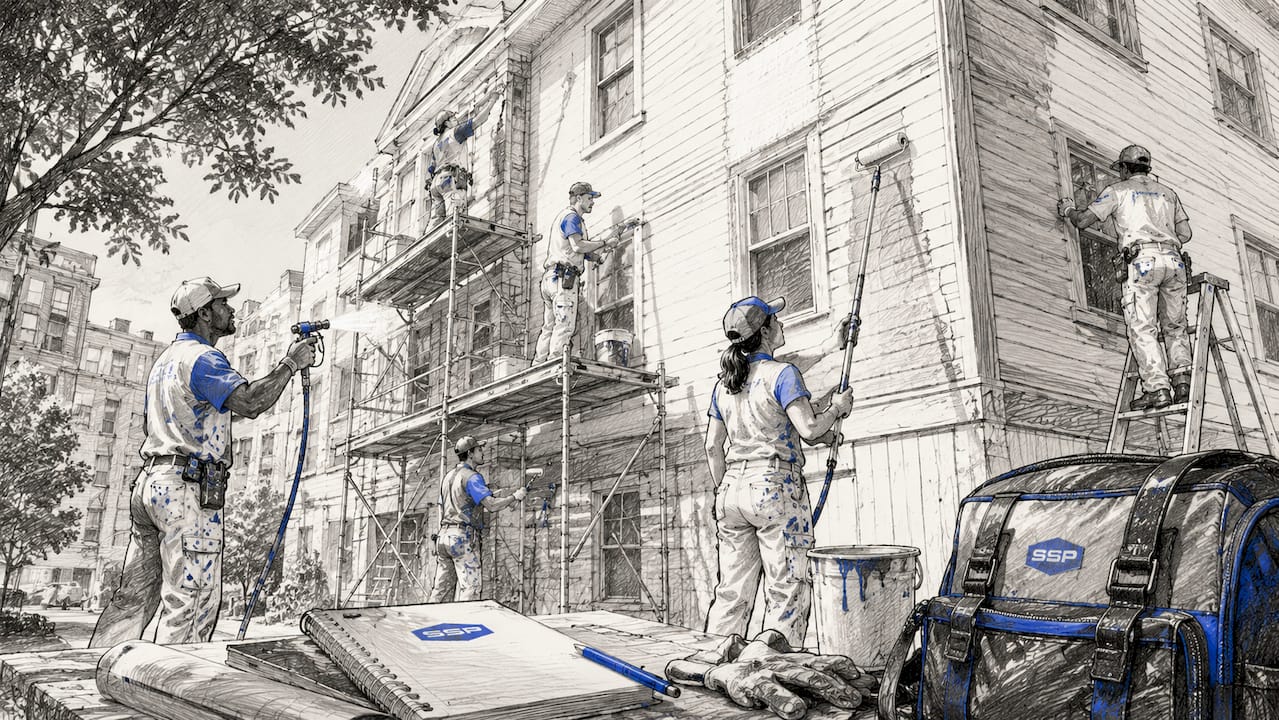
The most immediate difference is scale. Multi-family projects require crews of six or more to meet the quality and scheduling demands of large properties. A single-family painter working alone or with one helper cannot replicate that capacity, and contractors without multi-family experience generally cannot meet the logistical demands these projects require.
Regulatory compliance is the second major difference. Multi-family properties with four or more units typically fall under commercial construction regulations, which means OSHA construction safety standards under 29 CFR 1926 apply on site. Contractors must also comply with the EPA Renovation, Repair, and Painting (RRP) Rule under 40 CFR Part 745 when working on buildings constructed before 1978. These are not optional considerations. Violations carry real financial and legal liability.
Scheduling is the third differentiator. Multi-family painting contractors phase work around occupancy agreements and respect tenant noise ordinances, which requires documented project timelines and active communication with property management. A single-family painter has no equivalent constraint.
- Scale: Projects require large, coordinated crews and multi-site logistics planning.
- Compliance: EPA RRP certification and OSHA 29 CFR 1926 standards govern occupied multi-unit buildings.
- Scheduling: Work phases around tenant leases, turnover cycles, and noise ordinances.
- Standardization: Color palettes and coating specifications must stay consistent across all units.
- Expertise: Specialized contractors bring professional-grade equipment that in-house maintenance teams lack.
Pro Tip: Ask any contractor bidding on your property whether they hold EPA RRP certification. If they cannot produce it, they are not legally qualified to work on pre-1978 buildings, and your liability exposure is significant.
What types of services do multi-family painting projects include?
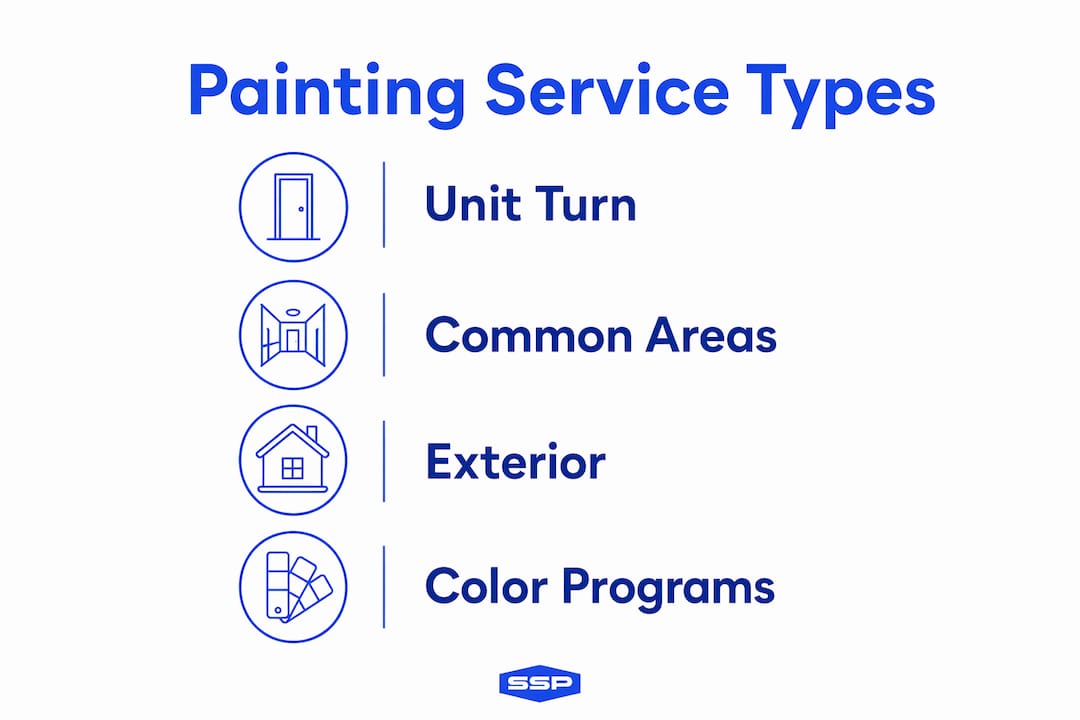
Multi-family painting services cover four distinct categories, each with its own timing, materials, and scope.
Unit turn painting
Unit turn painting is the most frequent service in multi-family property painting. It occurs after a tenant vacates and before the next resident moves in. A 200-unit community with 50% annual turnover will paint approximately 100 units per year to prepare for new residents. That volume demands a contractor with a reliable crew, a documented color palette, and a fast turnaround process. Delays in unit turns directly delay leasing revenue.
Common area and amenity painting
Hallways, lobbies, fitness centers, leasing offices, and stairwells all require regular painting to maintain a consistent property image. These spaces see more foot traffic than individual units and show wear faster. Painting common areas on a defined schedule, rather than waiting for visible deterioration, keeps the property looking managed and well maintained.
Exterior painting and protective coatings
Exterior surfaces on multi-family buildings include wood siding, stucco, EIFS, metal railings, balconies, and trim. Exterior painting typically occurs every 5–10 years depending on the substrate and local weather exposure. Specialized coatings are required for each surface type. Metal railings need rust-inhibiting primers. Stucco requires elastomeric coatings that flex with temperature changes. Applying the wrong product shortens the paint life and accelerates substrate damage.
Standardized color programs
Most multi-family properties use 2–4 neutral colors community-wide for efficient ordering and a consistent appearance. Standardization reduces paint inventory costs and eliminates the guesswork of matching colors between units. It also makes unit turns faster because crews do not need to custom-mix or source new colors for each job.
| Service type | Typical frequency | Key materials |
|---|---|---|
| Unit turn painting | After each vacancy | Interior latex, low-VOC finishes |
| Common area painting | Every 2–4 years | Scrubbable eggshell or satin |
| Exterior painting | Every 5–10 years | Elastomeric, rust-inhibiting coatings |
| Maintenance touch-ups | As needed | Matched stock colors from palette |
What are the benefits of professional multi-family painting?
Professional multi-family painting delivers measurable returns across leasing performance, tenant retention, and long-term maintenance costs. Fresh paint is one of the highest-ROI improvements for leasing performance and curb appeal. Prospective residents judge properties within seconds of arrival, and faded or peeling paint signals neglect before they ever step inside a unit.
The benefits extend well beyond first impressions.
- Faster unit turns: Professional crews complete unit turn painting on tight timelines, reducing vacancy days and protecting rental income.
- Tenant retention: Well-maintained interiors and common areas contribute to resident satisfaction, which reduces costly turnover.
- Asset preservation: Regular exterior painting prevents moisture intrusion, substrate rot, and structural damage that cost far more to repair than to prevent.
- Consistent property image: Specialized crews deliver consistent finishes across all units and common areas, which in-house maintenance teams cannot reliably replicate.
- Market competitiveness: A visually consistent, well-maintained property commands stronger rents and attracts higher-quality applicants.
Property managers who implement systematic painting programs improve resident satisfaction and protect asset value more effectively than those who paint reactively. Recurring maintenance tied to turnover cycles and exterior weathering is not a cost center. It is revenue preservation.
The quality of materials also matters. Professional multi-family painters use commercial-grade coatings with higher durability ratings than consumer-grade products. That translates directly to longer intervals between repaints and lower total cost over the life of the building.
What regulatory and safety requirements apply to multi-family painting?
Regulatory compliance in multi-family painting is not optional, and the consequences of non-compliance are serious. Two federal frameworks govern most projects.
The EPA RRP Rule requires that contractors working on pre-1978 buildings be EPA RRP certified under 40 CFR Part 745. Lead paint hazards in older multi-family housing are a documented public health risk, particularly for children. Certified contractors follow specific containment, work practice, and cleanup procedures to prevent lead dust from spreading to occupied units.
OSHA construction safety standards under 29 CFR 1926 apply to painting operations in occupied buildings. These standards cover containment measures, worker training, fall protection, and site hazard controls. Compliance protects both workers and tenants.
Key compliance requirements for property owners to verify before hiring:
- EPA RRP certification: Required for any painting or renovation work on pre-1978 buildings.
- OSHA 29 CFR 1926 compliance: Covers site safety, fall protection, and hazard controls on construction sites.
- Lead paint testing: Pre-project testing identifies hazards and determines the level of containment required.
- Containment procedures: Plastic sheeting, negative air pressure, and HEPA vacuuming protect occupied units during work.
- Documentation: Certified contractors provide written records of compliance, which protects property owners from liability.
Pro Tip: Request copies of a contractor's EPA RRP certification and OSHA safety program before signing any contract. Reputable contractors provide these documents without hesitation. If a contractor hesitates, that is a red flag.
How should property owners plan and manage a multi-family painting project?
Effective planning separates a smooth painting program from a disruptive, over-budget project. Property owners and managers who approach multi-family painting with a documented plan consistently achieve better outcomes.
Start by evaluating contractors on multi-family-specific criteria. General residential painters are not equipped for this work. Look for contractors with documented experience on properties of similar size, verifiable EPA RRP certification, and references from property management companies rather than individual homeowners. Contractors lacking scale and multi-family experience generally cannot meet the quality and scheduling demands these projects require.
Build a standardized painting program before the first brush hits the wall. Define your community-wide color palette, specify the coating products for each surface type, and document the expected recoat intervals. This program becomes the baseline for every future project and every contractor bid, which makes cost comparisons accurate and prevents scope creep.
Coordinate painting schedules with your lease renewal and turnover calendar. Unit turns should be scheduled the moment a notice to vacate is received. Exterior painting should be planned for dry seasons and communicated to residents at least 30 days in advance. Tenant communication is critical to minimizing disruption, and professional contractors have established procedures for notifying residents about noise, access restrictions, and parking impacts.
Cost control comes from consistency, not from cutting quality. Standardized palettes reduce material costs. Bundling unit turns with a single contractor reduces mobilization fees. Scheduling exterior work during off-peak contractor seasons often yields better pricing without sacrificing workmanship.
For property managers looking for painting tips specific to South Bay properties, local climate and substrate conditions add another layer of planning that a regional specialist handles better than a generalist contractor.
Key Takeaways
Multi-family painting is a specialized, compliance-driven service that directly protects property value, leasing performance, and tenant satisfaction when managed as a systematic program rather than a reactive expense.
| Point | Details |
|---|---|
| Scale requires specialized crews | Projects need six or more workers and documented processes that general residential painters cannot provide. |
| Regulatory compliance is mandatory | EPA RRP certification and OSHA 29 CFR 1926 compliance are required on most multi-family painting projects. |
| Unit turns drive leasing revenue | Painting 100 units per year in a 200-unit community directly affects vacancy rates and rental income. |
| Standardized palettes reduce costs | Using 2–4 community-wide colors cuts inventory costs and speeds up unit turn timelines. |
| Systematic programs outperform reactive painting | Property managers who plan painting around turnover cycles protect asset value more effectively. |
Why in-house painting almost always costs more than you think
The instinct to handle painting in-house is understandable. It looks cheaper on a spreadsheet. But after working with property owners across a range of building types, I have seen the same pattern repeat: in-house maintenance teams produce inconsistent results, and those inconsistencies compound over time.
The problem is not effort. In-house staff often work hard. The problem is equipment, process, and scale. A maintenance technician with a roller and a can of paint from the supply closet cannot match the output of a professional crew with commercial sprayers, documented color specs, and a unit-turn checklist. The inconsistent finishes from in-house teams create a patchwork appearance across the property that prospective residents notice immediately, even if they cannot articulate why the building feels dated.
The second hidden cost is time. Every day a unit sits unpainted is a day it cannot be leased. Professional crews move faster because that is their only job. They are not splitting time between painting, plumbing calls, and landscaping requests.
The third cost is liability. An in-house employee painting a pre-1978 building without EPA RRP certification exposes the property owner to federal fines and potential tenant health claims. That risk is rarely factored into the "savings" calculation.
My honest recommendation: treat multi-family painting as a professional service with a defined budget line, a qualified contractor, and a documented program. The advantages of hiring professional painters are not abstract. They show up in vacancy rates, lease renewal numbers, and the long-term condition of your building envelope.
— Ryan
Southshorepaint's approach to multi-family property painting
Southshorepaint works with property owners and managers who want painting done right the first time, not redone six months later. Our crews specialize in multi-family interior and exterior painting, from unit turns to full exterior recoats, with the scheduling discipline and quality standards that occupied properties demand.
We understand that every vacant day costs money and that tenant disruption affects renewals. That is why we build our project timelines around your leasing calendar, not the other way around. Whether you manage a 20-unit building or a 200-unit community, Southshorepaint delivers consistent finishes, compliant processes, and workmanship built to last. Contact us through our main services page to request a consultation and get a quote tailored to your property's scope and schedule.
FAQ
What is multi-family painting?
Multi-family painting is the professional painting and maintenance of residential buildings with two or more units, including apartments, condominiums, and townhomes. It covers unit turn painting, common area painting, and exterior maintenance using standardized processes and commercial-grade coatings.
How often should multi-family properties be repainted?
Interior units are typically repainted after each tenant vacancy. Exterior surfaces require repainting every 5–10 years depending on the substrate material and local weather conditions.
Do multi-family painting contractors need special certifications?
Yes. Contractors working on buildings constructed before 1978 must hold EPA RRP certification under 40 CFR Part 745. All multi-family painting operations in occupied buildings must also comply with OSHA construction safety standards under 29 CFR 1926.
What is the cost of multi-family painting?
The cost of multi-family painting varies by project scope, building size, surface type, and regional labor rates. Unit turn painting is typically priced per unit, while exterior projects are quoted by square footage and substrate type. Standardizing your color palette and bundling work with a single contractor reduces overall cost.
Why do property managers use professional multi-family painters instead of in-house staff?
Professional multi-family painters deliver consistent finishes, faster unit turns, and regulatory compliance that in-house maintenance teams cannot reliably provide. Specialized crews use commercial-grade equipment and documented processes that directly reduce vacancy time and protect property value.