
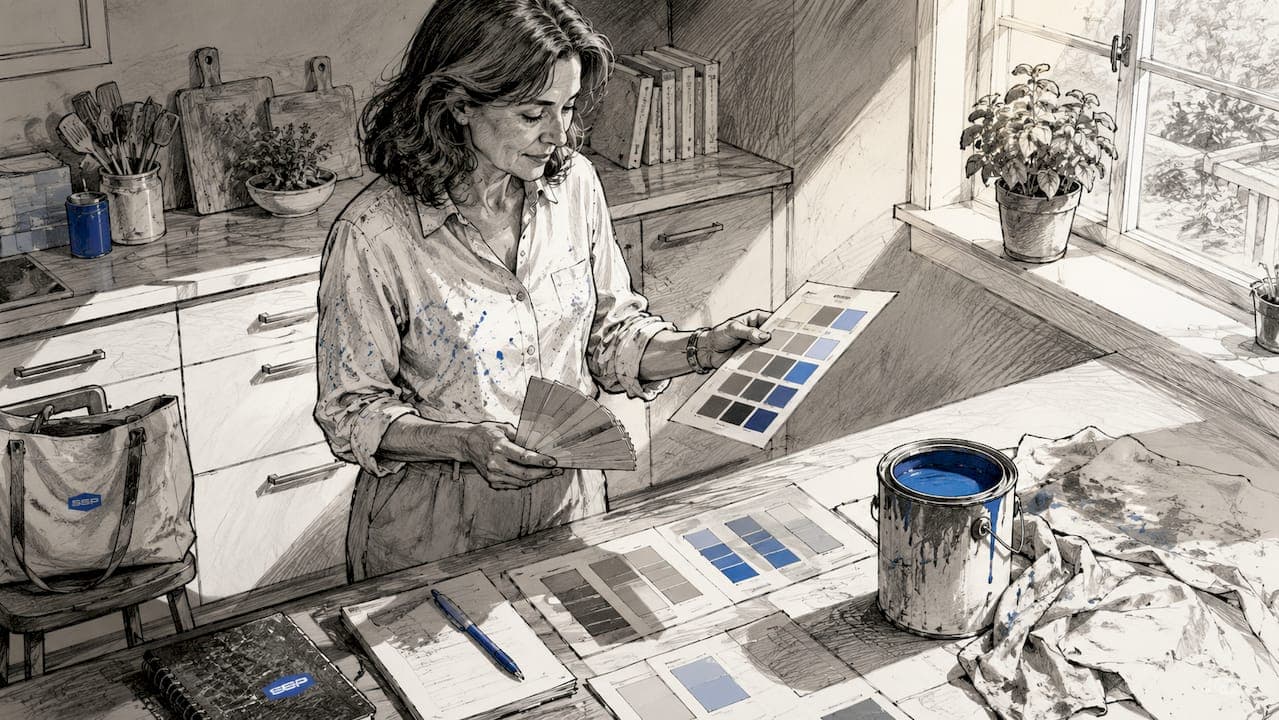
Paint finish is defined as the level of sheen a dried coat of paint produces on a surface, directly controlling how light reflects, how durable the surface is, and how easy it is to clean. Choosing the right types of paint finishes is one of the most consequential decisions in any home project. The wrong sheen on a high-traffic wall or a moisture-prone bathroom will cost you in premature repainting. Southshorepaint works with homeowners every day to match the right finish to the right surface, and the guidance below reflects that real-world experience.
1. Matte (flat) finish
Matte finish sits at the lowest end of the sheen scale, measuring 0–10 gloss units at a 60-degree angle. That near-zero reflectance is what makes it so effective at hiding surface imperfections like small cracks, nail pops, and uneven texture. The tradeoff is cleanability. Flat paint scrubs poorly, and repeated wiping can remove the paint film itself.
Matte is the standard choice for ceilings, where flat finishes minimize glare and draw zero attention to the surface. It also works well on low-traffic bedroom walls and formal dining rooms where aesthetics matter more than durability.
- Best for: Ceilings, adult bedrooms, formal rooms
- Avoid in: Kitchens, bathrooms, hallways, children's rooms
2. Eggshell finish
Eggshell registers 10–25 gloss units and gets its name from the subtle, soft sheen of an actual eggshell. It hides imperfections nearly as well as matte but tolerates light cleaning without damage. That balance makes it the most widely used finish for interior walls in residential homes.
Eggshell is forgiving on walls with minor texture variations, and it holds up to occasional wiping with a damp cloth. Living rooms, dining rooms, and adult bedrooms all benefit from eggshell. It delivers a polished look without the high-maintenance demands of glossier options.
- Best for: Living rooms, dining rooms, adult bedrooms
- Avoid in: Wet areas or surfaces that need frequent scrubbing
Pro Tip: If your walls have minor dings or uneven plaster, eggshell is your best friend. It softens the look of surface texture without completely hiding the wall's character the way flat paint does.
3. Satin finish
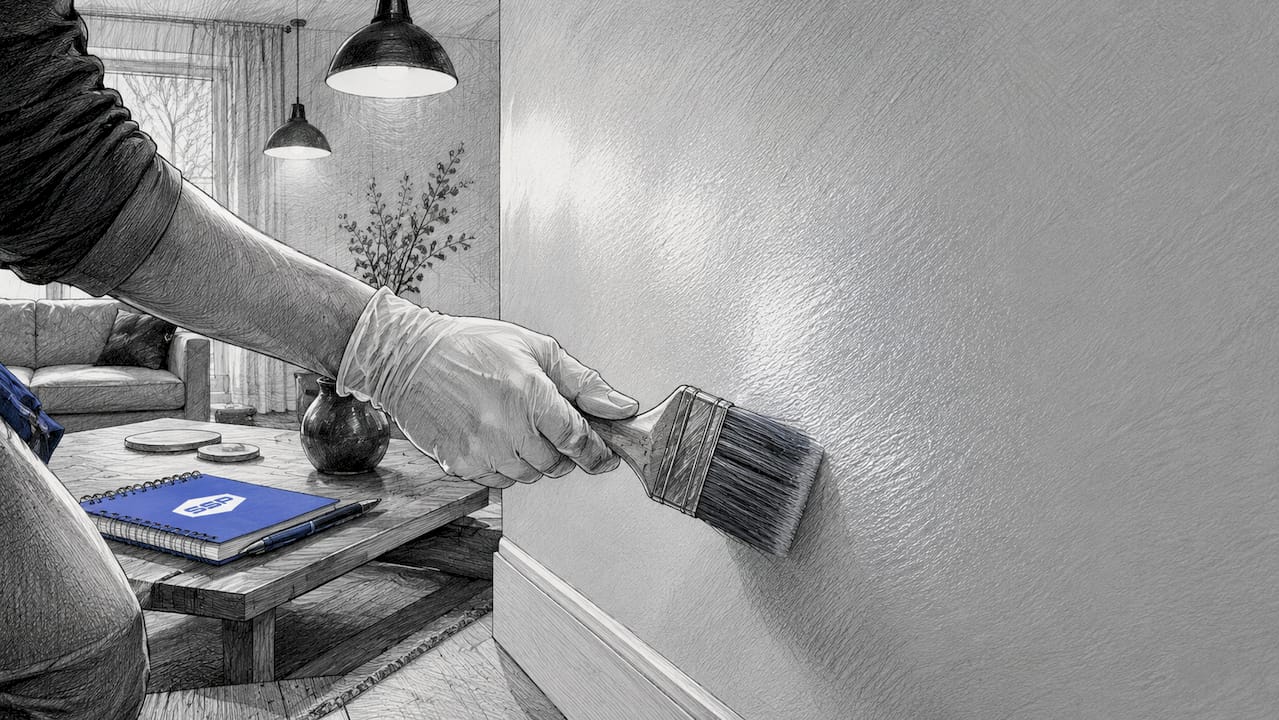
Satin falls in the 25–35 gloss unit range and produces a smooth, velvety sheen that reflects light noticeably more than eggshell. It is significantly more durable and washable for high-traffic areas, making it the go-to finish for family-oriented spaces. Kitchens, bathrooms, hallways, and children's rooms all benefit from satin's ability to handle repeated cleaning.
The slight sheen does mean surface imperfections become more visible than with eggshell. Proper surface prep before painting is critical when using satin on walls with texture or patching work. Southshorepaint consistently recommends satin for any room where kids, cooking, or moisture are regular factors.
- Best for: Kitchens, bathrooms, hallways, children's rooms
- Avoid in: Rooms with heavily textured or patched walls where prep is incomplete
4. Semi-gloss finish
Semi-gloss measures 35–65 gloss units and is the standard finish for trim, doors, and cabinetry in American homes. Its high washability and moisture resistance make it practical for surfaces that take daily contact. Baseboards, window casings, and kitchen cabinet doors all hold up well under semi-gloss because the finish resists scuffs and cleans easily.
The higher sheen does reveal surface flaws clearly. Surface preparation and sanding are critical before applying semi-gloss, since every bump and brushstroke becomes visible once the paint dries. Skipping prep with this finish produces results that look worse than a flat finish applied carelessly.
- Best for: Trim, doors, window casings, cabinets, bathrooms
- Avoid on: Walls with unrepaired damage or heavy texture
5. High-gloss finish
High-gloss finishes exceed 70 gloss units and produce a mirror-like surface that reflects light dramatically. This finish is the most durable and washable of all sheen levels, but it magnifies every bump and brushstroke on the surface. That quality makes it unsuitable for most walls.
High-gloss works best as an accent finish. Front doors, furniture pieces, and architectural details like columns or built-ins benefit from the drama and durability of high-gloss. Think of it as a statement tool rather than a wall covering.
- Best for: Front doors, furniture, accent pieces, built-ins
- Avoid on: Standard interior walls, ceilings, or any surface with visible imperfections
6. How to choose the right paint finish for each room
The core rule professional painters follow is straightforward: more contact and moisture requires higher sheen. A bathroom wall that faces daily steam and splashing needs satin or semi-gloss. A formal living room wall that nobody touches can stay at eggshell or even matte.
Here is a practical room-by-room breakdown:
- Ceilings: Flat or matte in every room. Ceilings rarely need cleaning, and flat finishes eliminate glare from overhead lighting.
- Bedrooms: Eggshell for adults, satin for children's rooms where walls take more abuse.
- Living and dining rooms: Eggshell is the standard. Satin works if the room sees heavy foot traffic.
- Kitchens: Satin on walls, semi-gloss on cabinets and trim.
- Bathrooms: Satin or semi-gloss throughout. Moisture resistance is non-negotiable.
- Trim, doors, and baseboards: Semi-gloss across the board.
- Accent pieces and front doors: High-gloss for maximum impact and durability.
Pro Tip: Mixing sheens across a single room creates depth and visual interest. The classic combination of flat on the ceiling, eggshell on the walls, and semi-gloss on trim is a proven formula that professional painters use to give rooms a finished, layered look without any renovation.
7. Interior vs. exterior paint finishes: key differences
Interior and exterior paints are not interchangeable. Exterior paints contain strong binders and additives designed to resist UV radiation, temperature swings, and moisture. Interior paints focus on washability, low odor, and low volatile organic compound (VOC) levels for indoor air quality.
Using interior paint outside leads to rapid peeling and fading because the formula cannot handle weather stress. Using exterior paint inside creates a different problem. Exterior paints carry higher chemical additive levels necessary for weather resistance, and those additives produce fumes and hardness unsuitable for enclosed living spaces.
The sheen options for exterior surfaces follow similar logic to interior choices, but the stakes are higher. Types of exterior coatings must resist moisture intrusion and UV degradation over years, not just months. Satin and semi-gloss are the most common types of exterior paint finishes for siding and trim because they shed water effectively and hold color longer than flat exterior paints. Using the wrong paint type accelerates deterioration and raises long-term costs significantly.
For a deeper look at how exterior formulations affect longevity, Southshorepaint's guide on exterior paint durability factors covers the specifics in detail.
8. Maintenance and longevity by finish type
Higher sheen finishes tend to last longer with proper maintenance, but surface prep and paint quality heavily influence longevity regardless of sheen level. A premium eggshell applied over properly primed, sanded walls will outlast a budget semi-gloss applied over bare drywall.
Knowing when to clean versus when to repaint is a practical skill. Here are the key signals and care tips by finish type:
- Flat and matte: Dust with a dry microfiber cloth. Avoid wet scrubbing. Repaint when stains appear that cannot be removed without damaging the film.
- Eggshell: Wipe with a lightly damp cloth. Works well for most routine cleaning. Touch up when scuffs become noticeable.
- Satin: Handles regular cleaning with mild soap and water. Watch for sheen loss in areas of heavy scrubbing, which signals it is time for a touch-up.
- Semi-gloss and high-gloss: The most washable finishes. Clean with mild detergent without worry. Repaint when the surface shows chipping, peeling, or visible wear at edges.
Surface prep before any repaint extends the life of the new coat dramatically. Southshorepaint's guide on surface prep and priming walks through the exact steps needed before applying any finish. For touch-up work specifically, the paint touch-up tips guide covers how to match sheen and blend repairs so they disappear into the existing wall.
Key takeaways
The most effective approach to choosing paint finishes is to match sheen level to surface moisture, traffic, and cleaning needs before considering aesthetics.
| Point | Details |
|---|---|
| Sheen follows function | Higher traffic and moisture demand higher sheen for durability and wipeability. |
| Gloss units are measurable | Sheens range from 0–10 (matte) to 70+ (high-gloss) measured at a 60-degree angle. |
| Interior and exterior differ | Never substitute interior paint outside or exterior paint inside; formulations are incompatible. |
| Mix sheens intentionally | Flat ceilings, eggshell walls, and semi-gloss trim create a professional layered result. |
| Prep determines longevity | Surface preparation matters more than sheen level for how long any finish lasts. |
Why I think homeowners overcomplicate paint finish choices
Most homeowners I talk to assume glossier always means better. That instinct makes sense on the surface. Gloss reads as quality, as durability, as premium. The reality is more nuanced, and getting it wrong is an expensive mistake.
High-gloss on a wall with any texture at all looks worse than flat paint applied to the same surface. The sheen amplifies every flaw. I have seen beautifully renovated rooms undermined by a high-gloss wall finish that turned every patch and skim coat into a spotlight moment. The fix required sanding, repriming, and repainting. That is a preventable cost.
The other myth worth addressing is that matte paint is low-quality. Flat finishes are a deliberate, professional choice for ceilings and low-contact walls. They absorb light in a way that makes rooms feel calm and finished. The key is knowing where each finish belongs, not ranking them by sheen level.
My honest advice: choose your finish based on how the room actually gets used, not how you want it to look in theory. A family kitchen with kids and cooking needs satin on the walls and semi-gloss on the cabinets. A guest bedroom that sees traffic twice a year is a perfect candidate for eggshell. Lifestyle drives the decision. Aesthetics follow from there.
— Ryan
Southshorepaint's resources for choosing the right finish
Selecting the right finish for every surface in your home takes more than a general rule. Southshorepaint specializes in high-quality interior and exterior finishes built on proper prep, premium materials, and workmanship designed to last. Whether you are painting a single room or the full exterior of your home, the right finish choice makes a measurable difference in how long the result holds up.

The Southshorepaint blog covers every stage of the process, from why surface quality matters for a lasting finish to selecting the right sheen for your specific rooms. If you want guidance tailored to your home, Southshorepaint's team is available to help you make the right call before you open a single can.
FAQ
What are the main types of paint finishes?
The five main paint finishes are matte, eggshell, satin, semi-gloss, and high-gloss. Each is measured in gloss units at a 60-degree angle, ranging from 0–10 for matte to 70+ for high-gloss.
How do I choose the right paint finish for a room?
Match sheen to moisture and traffic levels. High-contact, high-moisture rooms like kitchens and bathrooms need satin or semi-gloss, while low-traffic rooms like bedrooms work well with eggshell or matte.
Can I use the same paint finish inside and outside?
No. Interior and exterior paints use different formulations. Exterior paints contain UV and moisture-resistant additives that make them unsuitable indoors, and interior paints lack the durability to survive outdoor weather conditions.
What finish should I use on trim and doors?
Semi-gloss is the standard finish for trim, doors, and baseboards. It is highly washable, moisture-resistant, and durable enough to handle daily contact, though it requires thorough surface prep to avoid showing imperfections.
Does paint finish affect how easy a wall is to clean?
Yes, directly. Higher sheen finishes like satin and semi-gloss resist moisture and wipe clean easily. Flat and matte finishes absorb stains and can be damaged by scrubbing, making them better suited to low-contact surfaces.